

Maddy summaryHB 276 expands the definition of "killed in the line of duty" for firefighters to include deaths caused by specific cancers that previously qualified them for benefits under North Carolina's Firefighters' Cancer Insurance Program. The bill adds seven specific cancers (like mesothelioma and testicular cancer) to the list and includes any cancer diagnosis that already provided benefits under the existing program. It also formally links the Firefighters' Health Benefits Pilot Program to the Cancer Insurance Program, ensuring consistent coverage, and appropriates $2 million annually for related death benefits starting July 1, 2025. This change directly affects firefighters diagnosed with covered cancers and their families, who will now qualify for death benefits under the Public Safety Employees' Death Benefits Act.
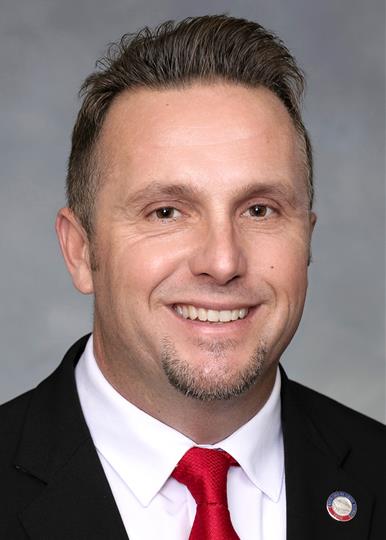
Rep. Brian Biggs
Sponsored bills
Maddy summaryHB 52, the "Protect Those Who Serve and Protect Act of 2025," increases penalties for assaults against public safety personnel and their animals. It creates a new Class I felony offense for throwing, spraying, or projecting substances (like water) at public safety officers or law enforcement/search and rescue animals while they are on duty or due to their role. The bill also prohibits intentionally pointing laser devices at these protected individuals or animals during duty. These changes update existing assault laws to explicitly cover a wider range of emergency workers (including firefighters, medical staff, National Guard members, and school employees) and add specific protections for animals used in public safety.
Maddy summaryHB 11 would allow North Carolina taxpayers to deduct overtime pay, up to $2,500 in bonus pay (defined as cash awards for workplace dedication), and reported tips from their taxable income. It applies to individuals and married couples filing jointly, with each spouse eligible for separate deductions. The bill specifically defines "bonus pay" to exclude tips and requires taxpayers to provide documentation to claim the deduction. This policy change would take effect for tax returns filed in 2025.
Maddy summaryHB 2 requires North Carolina public high schools to accept cash for admission to interscholastic athletic events and provide free entry to seniors with a Tar Heel Card (issued by the Department of Health and Human Services). It directly affects students, families, and seniors attending high school sports events by changing payment rules for admission fees. The bill mandates that schools must accept cash at the gate and honor Tar Heel Cards for free admission upon presentation. These requirements apply starting the 2025-2026 school year. The law amends state education rules governing athletic activity fees.
Maddy summaryHB 289 adds one new seat to North Carolina's Criminal Justice Education and Training Standards Commission, specifically allowing the North Carolina Police Benevolent Association (PBA) to select a full-time sworn law enforcement officer to serve on the Commission. This amendment increases the Commission's membership from 35 to 36 members by adding the PBA representative to the existing list of appointed positions. The initial appointee selected by the PBA would serve a three-year term beginning July 1, 2025, with subsequent appointees serving three-year terms as determined by the PBA. The bill does not change training standards or requirements, only the composition of the Commission that oversees them.
Maddy summaryHB 296 establishes a $89.5 million program to provide financial assistance to North Carolina corn farmers who suffered crop losses due to 2024 disasters like drought and hurricanes in USDA-designated disaster counties. Farmers must verify losses using USDA forms or equivalent documentation within 45 days, with payments calculated using county yield averages and state price data. Funds can only be used for agricultural recovery expenses like replanting or equipment repair, and recipients must provide proof of eligible spending. The program builds on existing state disaster funds and requires strict documentation to prevent misuse, with potential audits and repayment for inaccurate claims.
Maddy summaryHB 299 increases the property tax exemption for disabled veterans in North Carolina from $45,000 to $54,000 of a home's appraised value. It directly affects qualifying disabled veterans who own and occupy their primary residence, allowing them to exclude a larger portion of their home's value from property taxes. The bill amends Section 105-277.1C of state law to reflect this higher exclusion limit, while maintaining that recipients cannot claim other property tax relief. This change takes effect for property taxes due on or after July 1, 2025.
Maddy summaryHB 310 proposes a constitutional amendment to North Carolina that would require all eminent domain takings (government seizure of private property) to serve a "public use" and mandate fair compensation determined by a jury. It directly affects property owners, local governments, and utilities by restricting when property can be taken and ensuring compensation is set through a jury trial. The bill also updates existing law (G.S. 40A-3) to clarify which entities (like utilities or local governments) may exercise eminent domain for specific projects. The amendment must be approved by voters in the 2026 general election to take effect.
Maddy summaryHB 142 requires North Carolina state agencies to adopt zero-based budgeting for the 2031-2033 fiscal biennium, starting with a phased implementation beginning July 1, 2027. This means agencies must justify every funding request from scratch each budget cycle - starting with a $0 baseline - rather than carrying over previous appropriations. Agencies must submit detailed justifications for each budget item, including explanations of their functions, performance data, and goals. The bill directly affects all state agencies in the executive branch, requiring them to re-evaluate all programs and costs annually. The full zero-based budget will apply to the entire state budget starting in 2031-2033.
Maddy summaryHB 222 appropriates $217 million from the State Emergency Response Fund to North Carolina's Office of Recovery and Resiliency (NCORR) for homeowner recovery projects related to Hurricanes Matthew and Florence. The bill requires NCORR to submit detailed monthly reports on fund usage, including expenditures and project progress, and mandates weekly financial reports to the State Auditor for oversight. It also establishes a public online dashboard tracking funds versus actual spending and includes a clawback provision to return unused funds to the Savings Reserve after projects conclude. The law revises NCORR's responsibilities, ending its role in future storm recovery programs.