

Maddy summaryHouse Bill 146 amends North Carolina's driver's license renewal process. It allows active duty members of the U.S. Armed Forces, or reserve components serving on active duty and stationed outside North Carolina, to renew their driver's licenses remotely multiple times in a row. Currently, a remote renewal requires the previous renewal to have been done in person, but this bill removes that restriction for eligible military personnel. This change aims to make it easier for these individuals to maintain their licenses while serving away from the state. The act becomes effective October 1, 2025, applying to licenses renewed on or after that date.
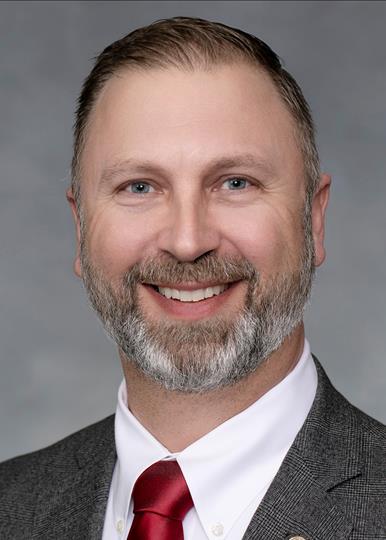
Rep. Matthew Winslow
Sponsored bills
Maddy summaryHB 649 directs the North Carolina Collaboratory to study the state's county tier designation system. The study will examine potential changes to the criteria used for ranking counties, how tier designations are assigned, and the ranking timeframe. It will evaluate the impact of these changes on all 100 counties, programs that use the tier system, and the ease of doing business in the state. The Collaboratory is required to submit a preliminary report by December 2025 and a final report by December 2026.
Maddy summaryHB 570, the "Responsible Firefighting Foam Management Act," restricts the use of firefighting foams containing PFAS chemicals for training and testing. It prohibits any person, local government, or state agency from discharging Class B firefighting foam with intentionally added PFAS for training or practice purposes. For testing, these foams are also prohibited unless required by law or an authority, and the testing facility has implemented measures to prevent environmental releases. The bill mandates the use of non-fluorinated alternatives for training and is set to become effective on December 1, 2025.
Maddy summaryHB 729, titled the "Farmland Protection Act," makes several changes related to solar energy development. It reduces the property tax exclusion for solar energy electric systems from 80% to 40% of their appraised value, which will increase the taxable value of these systems. The bill also prohibits the construction of new utility-scale solar projects that are not qualifying facilities under federal law, unless they are sited on specific types of land such as brownfields, non-agricultural land, or clear-cut timberland. Additionally, it updates the effective dates for requirements regarding financial assurance and decommissioning plans for utility-scale solar projects, affecting both existing and new facilities.
Maddy summaryHouse Bill 703 allows State veterans cemeteries to sell monuments and memorials directly to honor individuals interred within them. This bill permits the sale of items such as memorial trees, granite or marble markers, and benches, though not headstones. State veterans cemeteries can establish stylistic guidelines for these items and must not charge more than the market rate. The funds generated from these sales will be retained by the selling cemetery and dedicated solely to its maintenance, improvement, and care. This act becomes effective on October 1, 2025.
Maddy summaryHB 135 establishes labeling requirements for "manufactured-protein food products," which include items made from cell cultures, insects, or plants that resemble traditional meat or poultry. The bill mandates that if these products use identifying meat or poultry terms, their labels must also prominently display a "qualifying term" like "cell-cultured" or "plant-based" in a specific font size and location to prevent misbranding. Additionally, the bill aims to prohibit public educational institutions from purchasing certain food products and proposes an environmental investment assessment on specific animal-derived and analogous food products.
Maddy summaryHouse Bill 432 aims to provide various forms of property tax relief to North Carolina homeowners. It increases the property tax exclusion amounts for qualifying elderly or disabled homeowners and expands the exclusion for disabled veterans, allowing more of their home's value to be exempt from taxation. The bill also establishes a new "Homeowner Advantage Property Tax Relief Program" designed to cap the annual increase in a permanent residence's taxable value, based on inflation and a cumulative limit. To qualify for this program, homeowners must have occupied their residence for at least two years. Additionally, the bill creates an "Elderly Property Tax Homestead Circuit Breaker Program" and exemptions from the forced sale of a homestead.
Maddy summaryHouse Bill 592, known as the Toxic-Free Medical Devices Act of 2025, aims to prohibit the use of a chemical called DEHP in certain medical devices within North Carolina. Specifically, it bans the manufacturing, selling, and distributing of intravenous solution containers and intravenous tubing that are intentionally made with DEHP. The prohibition for IV solution containers takes effect on January 1, 2030, and for IV tubing on January 1, 2035. The bill also prevents replacing DEHP with other similar chemicals in these devices and sets limits for unintentionally present DEHP, while exempting certain blood-related products. Violations of these provisions could lead to administrative penalties.
Maddy summaryHouse Bill 650, titled "No Interchange Fees on Sales Tax or Tips," prohibits payment card networks, issuer banks, and acquirer banks from charging interchange fees on the sales tax or gratuity portions of electronic payment transactions. This directly affects merchants by reducing the processing fees they pay on these specific amounts. Merchants must provide the tax or gratuity data during the transaction authorization or settlement process, or submit documentation later to receive a credit for any fees charged. The bill also includes measures to prevent entities from adjusting other fees to circumvent this prohibition. Violations can result in injunctive relief, civil penalties, and refunds to affected merchants.
Maddy summaryHB 985 increases the criminal penalty for assaulting a school employee or volunteer in North Carolina. It reclassifies such assaults from a Class A1 misdemeanor to a Class I felony when the incident occurs while the individual is performing their duties or as a result of their duties. The bill broadly defines "school employee or volunteer" to include staff, independent contractors, and adult volunteers involved in school activities. It also protects school personnel from civil or criminal liability for taking reasonable actions to end student fights. Finally, the bill updates supervisor reporting requirements for assaults and prohibits intimidating employees from reporting these incidents.