

Maddy summaryThis bill revives and expands a program that allows eligible retired educators to return to work in high-need schools. It defines "high-need retired teachers" as beneficiaries of the Teachers' and State Employees' Retirement System who meet specific retirement and service criteria, and are reemployed by local boards of education. A key provision ensures that earnings from this reemployment do not count against post-retirement earnings limits, allowing these teachers to receive both their full retirement allowance and a salary. The Department of Public Instruction is tasked with certifying these teachers, and local boards must report their employment status to the Retirement System.
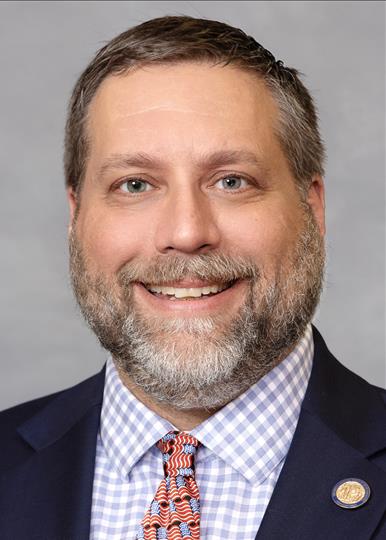
Rep. David Willis
Sponsored bills
Maddy summaryHB 424 exempts casual board, card, or tile games (like bridge or mahjong) played in private homes, residences, or community clubs from North Carolina's gambling laws, provided specific conditions are met. It directly affects social groups hosting these games, prohibiting the use of electronic devices, commercial betting, or profit for hosts or players beyond personal winnings. Key provisions require all players to face equal risks of winning or losing, ban slot machines or video games entirely, and prevent hosts from receiving any financial benefit. The law takes effect December 1, 2025, and applies only to non-commercial, private social gatherings.
Maddy summaryHB 671 establishes a four-year pilot program (2025-2026 through 2028-2029) that provides grants to North Carolina public high schools (grades 9-12) to form or support competitive speech and debate teams. Schools can receive up to $10,000 per team annually, covering coach stipends (capped at $2,500 for lead coaches and $1,500 for assistants) and competition expenses like travel and league fees. Participating schools must join the Tarheel Forensic League and National Speech and Debate Association, and the program allows students from schools without teams to join the nearest team (with students covering their own transportation). Funded by $500,000 yearly from the General Fund, the Department of Public Instruction will administer the program and report annually on grant usage and student academic outcomes.
Maddy summaryHB 978 establishes the North Carolina Commission on Youth Mentoring within the Department of Health and Human Services to administer grants supporting local youth mentoring programs. The bill allocates $1.5 million annually from 2025-2027 to fund small-to-medium nonprofit organizations providing mentoring services, with specific goals to increase quality mentoring, reduce youth safety risks, and strengthen community connections. The Commission, composed of 15 appointed members including youth participants and community representatives, will manage the grant program, develop application processes, and submit annual reports on funding distribution and social impact to legislative committees. This legislation directly affects North Carolina-based youth mentoring nonprofits and aims to expand accessible, high-quality mentoring opportunities for young people across the state.
Maddy summaryHB 966, the College Cost Reduction Act, prohibits all University of North Carolina (UNC) schools from requiring students to pay extra for mandatory course software (Learning Management Systems or LMS). It directly affects UNC students by banning any requirement for paid LMS access beyond existing, approved student fees. The bill mandates the UNC Board of Governors to create a policy ensuring professors or courses cannot force students to pay for LMS services - only free or fee-covered options may be required. The rule takes effect for the 2025-2026 academic year.
Maddy summaryHB 149 creates a pilot program allowing eligible North Carolina school districts (those with at least 5,000 students and tax authority) to submit a Financial and Hiring Flexibility Plan (FHFP) to the State Board of Education. The plan permits districts to use state funds more flexibly and hire up to 50% unlicensed teachers (who must complete specific training in disability education, behavior management, and safety) while meeting defined academic goals by 2030-2031, such as 100% student career planning and 90% teacher retention. The State Board reviews plans annually and can terminate them if districts fail to meet goals, violate fiscal rules, or have low-performing schools. This program aims to give districts operational flexibility to improve student outcomes, subject to state oversight and performance metrics.
Maddy summaryHB 878 requires North Carolina public schools to post lesson plans and course materials online within 10 days of use. Schools must display links to instructional materials (like textbooks and digital resources), procedures for reviewing materials, and teacher training details on their websites, organized by subject and grade level. The law applies to all public schools except those with fewer than 30 students total, and teachers may request to use only their last initial for privacy. It does not require posting the actual materials themselves, only links and descriptions, and maintains the information online for two years. This policy directly affects parents, educators, and community members seeking transparency about classroom content.
Maddy summaryHB 846 provides tuition discounts for children of teachers with significant experience in North Carolina public schools. Specifically, it offers a 50% tuition discount for children of 12-year teachers, a 75% discount for children of 16-year teachers, and full tuition waivers for children of 20-year teachers (defined as teachers with 20+ years of service). The discounts apply to children aged 17-24 enrolled in college, limited to 54 months for bachelor's degrees or program completion. The bill appropriates $2 million for the 2025-2026 fiscal year to fund these waivers and requires a report on costs by February 2026. It does not address the broader "retention and recruitment" elements mentioned in the title, as the provided text focuses solely on tuition provisions.
Maddy summaryThis bill requires North Carolina state agencies and local governments to only purchase U.S. and North Carolina flags made entirely in the United States using domestically grown or produced materials. It prohibits using public funds for any U.S. or state flags not 100% manufactured in America from domestic materials. The rule applies to all new flag purchases starting October 1, 2025. It directly affects all government offices responsible for buying flags with public money.
Maddy summaryHB 800 directs North Carolina's Department of Health and Human Services to study the effectiveness of state child care programs like NC Pre-K and Smart Start, including funding allocation and quality rating systems, with findings due by April 2026. It also allocates $10 million for a pilot program that automatically enrolls preschool-age children (8 weeks-5 years) of full-time licensed child care teachers in state subsidy programs, provided teachers commit to completing early childhood education coursework within 18 months. The pilot targets counties with the highest historical child care capacity loss, requires centers to accept standard subsidy rates without extra fees, and mandates quarterly participation reports starting in 2026. This directly affects licensed child care teachers and their preschool children, aiming to improve child care access and workforce retention.