

Maddy summaryHB 84 restricts the sale and use of neonicotinoid pesticides (honeybee-killing chemicals like imidacloprid) in North Carolina. It bans retail sales to the general public, allowing only licensed pesticide applicators or farmers using them for crop production to purchase these chemicals. The law also requires the state pesticide board to monitor federal EPA assessments of these pesticides and study whether to regulate seeds treated with systemic insecticides. These changes take effect October 1, 2025.
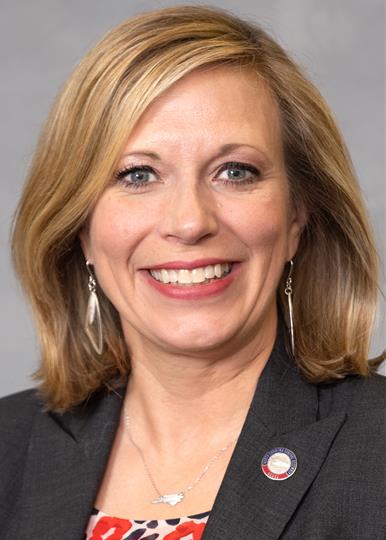
Rep. Sarah Crawford
Sponsored bills
Maddy summaryHB 77 requires North Carolina state agencies to evaluate the cumulative environmental impact of proposed permits on minority and low-income communities before approving them. It directly affects developers seeking permits for mining, solid waste facilities, hazardous waste sites, and other projects, as well as the communities near these sites. Key provisions mandate that agencies deny permits if proposed actions would disproportionately harm these communities when considering existing pollution sources in the area, and require detailed impact analyses in all relevant reports and plans. The law takes effect July 1, 2025, applying to pending permit applications on that date.
Maddy summaryHB 90 provides a 3% cost-of-living adjustment (COLA) to retirement allowances for retirees in North Carolina's Teachers', State Employees', Judicial, Legislative, and Local Governmental Retirement Systems. The increase applies to retirees who retired on or before specific dates (ranging from July 1, 2024, to January 1, 2025), with those who retired later receiving a proportional increase based on months served during 2024-2025. The bill appropriates $250 million from the General Fund to fund this adjustment, effective July 1, 2025. It directly affects current retirees in these five systems by increasing their monthly payments.
Maddy summaryHB 68 restores local government authority to initiate down-zoning in Granville and Vance Counties without requiring written consent from all affected property owners. It amends state law to clarify that down-zoning (reducing development density or permitted land uses) can be initiated by local governments, overriding a previous requirement for unanimous owner consent. This change applies specifically to Granville and Vance Counties and their municipalities, and takes effect retroactively to December 11, 2024, making any affected ordinances valid as if they had always been enforceable. The bill directly affects property owners in these counties and local governments' zoning planning powers.
Maddy summaryHB 60 increases Medicaid dental reimbursement rates from 35% to 46% of average dentist charges (2023 rates) to align with neighboring states. The bill allocates $52 million annually from North Carolina's General Fund, matched by $95 million in federal funds, to cover this rate increase starting July 1, 2025. It directly affects dentists who accept Medicaid patients and Medicaid beneficiaries seeking dental care, aiming to boost provider participation and prevent costly emergency treatments. The change addresses years of stagnant rates that reduced dental provider enrollment in Medicaid.
Maddy summaryHB 39 excludes motor vehicles owned by veterans with a 100% disability rating certified by the U.S. Department of Veterans Affairs from North Carolina property tax. It amends state tax law to add these vehicles as a designated exempt class under G.S. 105-275. The exclusion applies to vehicles registered on or after January 1, 2026. This policy directly affects eligible disabled veterans who own motor vehicles, reducing their property tax burden. The bill does not change eligibility criteria or tax rates for other vehicle classes.
Maddy summaryHB 55 appropriates $250,000 annually from the General Fund to the Department of Health and Human Services for the Autism Society of North Carolina's IGNITE Program. The funds will support activities and education groups designed to help young adults with autism develop independence and social skills during their transition to adulthood. This recurring funding applies to the 2025-2027 fiscal biennium and becomes effective July 1, 2025. The bill directly affects the Autism Society of North Carolina and the young adults with autism it serves through the IGNITE Program.
Maddy summaryHB 54 allocates $125,000 annually from the General Fund (2025-2027) to fund training programs developed by the NC Association of People Supporting Employment First (NC APSE). The training, delivered via online modules, will help employers, service providers, and other entities support individuals with serious mental illness, intellectual disabilities, or developmental disabilities in finding and keeping competitive jobs. It focuses on evidence-based supported employment practices to improve job placement and retention. The bill directly affects individuals with these disabilities and the organizations that serve them, with training available statewide starting July 1, 2025.
Maddy summaryHB 20, the "Fair Maps Act," proposes amending the North Carolina Constitution to establish an independent redistricting process. It would create a Citizens Redistricting Commission to redraw congressional and state legislative districts after each federal census, removing the General Assembly and Governor from the process. The bill requires districts to be contiguous, avoid splitting counties, and ensure equal population representation, with changes taking effect only after voter approval in 2026. This directly affects all North Carolina voters by changing how electoral districts are drawn for state and federal offices. The amendment must be ratified by voters in November 2026 before it becomes effective.
Maddy summaryThis bill updates North Carolina's sex crime laws by creating new offenses for sexual extortion and refining definitions related to the sexual exploitation of minors. It specifically addresses the threat of sharing private images to force someone into acts, defining "private images" to include those created or modified by artificial intelligence, and establishes felony penalties for adults while imposing stricter penalties on repeat offenders. Additionally, the legislation clarifies what constitutes an "identifiable minor" in digital media and expands the scope of protected material to include computer-generated depictions, ensuring that laws cover images produced through modern technology.