

Maddy summaryHB 267 automatically expunges court records for certain eviction cases in North Carolina, directly affecting tenants (defendants) in summary ejectment proceedings. It requires clerks to automatically delete records 30 days after cases are voluntarily dismissed before a possession order is issued. For cases where defendants win on the merits or lose but wait three years, they may petition for expungement after proving housing stability (e.g., consistent rent payments and no new eviction filings). The bill takes effect October 2025, with required court forms to be developed by September 2025.
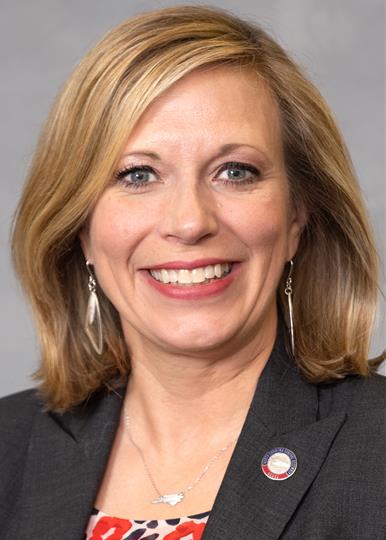
Rep. Sarah Crawford
Sponsored bills
Maddy summaryHB 278, "Protect Military Votes," removes a photo ID requirement for military personnel and their families voting by mail from overseas. It directly affects North Carolina voters serving in the military abroad who cast ballots using the military-overseas ballot process. The bill amends election law to permanently codify that these voters no longer need to submit a photo ID copy or affidavit when mailing their ballots, which was previously allowed under a temporary rule. This change ensures military voters face no additional documentation barriers when voting by mail.
Maddy summaryHB 281 restores local government authority to initiate "down-zoning" in six North Carolina municipalities (Morehead City, Beaufort, Bogue, Cape Carteret, Cedar Point, and Newport) without requiring written consent from all affected property owners. The bill amends state law to clarify that down-zoning - defined as reducing development density, limiting permitted land uses, or creating nonconforming features - can be enacted by a municipality itself. This reverses a prior change (S.L. 2024-57) that required property owner consent, making the new rule retroactive to December 11, 2024. The law directly affects property owners and developers in these specific towns by changing how zoning changes can be implemented.
Maddy summaryHB 274 appropriates $5 million from the General Fund for the 2025-2026 fiscal year to Crossnore Communities for Children, a nonprofit organization, to fund foster care services across North Carolina. The bill directs funds toward specific programs including family reunification, youth independent living, trauma resilience initiatives, and community engagement, all delivered from Crossnore's locations in Winston-Salem, Crossnore, and Hendersonville. These services are designed to support children in foster care and their families statewide. The appropriation is nonrecurring and becomes effective July 1, 2025.
Maddy summaryHB 262 designates a specific overpass on Interstate 74 crossing South Main Street in Laurinburg, Scotland County, as the "Chief Robert Lee Malloy Overpass." The bill requires the North Carolina Department of Transportation to formally name the structure in honor of Chief Malloy, a local law enforcement officer. This is a ceremonial naming resolution with no policy changes or financial impact, directly affecting the public infrastructure location. The bill is procedural and non-substantive, focusing solely on commemoration.
Maddy summaryHB 263 restores local government authority to change zoning to less dense or fewer permitted uses (down-zoning) in Durham and Person Counties and the Cities of Durham and Roxboro, without requiring written consent from all affected property owners. The bill rewrites state law to allow counties or cities to initiate down-zoning amendments directly, reversing a previous requirement (from S.L. 2024-57) that mandated owner consent. This change applies retroactively to December 11, 2024, meaning zoning ordinances affected by the prior law will revert to their pre-December 11 status. The bill directly affects local governments’ zoning powers and property owners in the specified jurisdictions, without altering other zoning processes.
Maddy summaryHB 253 restores Henderson County's authority to implement down-zoning (reducing development density or permitted land uses) with a key exception: it requires written consent from all affected property owners unless the down-zoning serves farmland preservation in agricultural districts or floodplain mitigation in FEMA-designated flood areas. The bill directly affects Henderson County property owners and local government officials, limiting down-zoning actions without consent except for these two specific purposes. It applies only to Henderson County, including its municipalities, and takes effect retroactively to December 11, 2024, to revert zoning changes made after that date under previous law. The bill defines "down-zoning" as decreasing density, reducing permitted uses, or creating nonconformities on land.
Maddy summaryHB 245 modifies North Carolina's low-income housing tax credit program to prioritize affordable housing development in rural communities and counties with higher poverty rates. It requires the state housing committee to adopt allocation rules that favor projects within 10 miles of amenities (like grocery stores) in towns under 10,000 people, measure distances by straight-line radius (not driving routes), and use poverty levels as a tiebreaker when projects score equally. The bill directs the committee to publish proposed rules for public comment and hold hearings before finalizing annual allocation plans. This policy change redirects existing housing tax credits toward qualifying rural and high-poverty areas without creating new funding. The bill takes effect October 1, 2025, for future allocation plans.
Maddy summaryHB 248 exempts owner-occupied single-family homes in North Carolina from live/work building code requirements when used for permitted home-based businesses. It defines "home business use" as owner-operated activities incidental to residential living (e.g., consulting, crafts), requiring the owner to reside there, comply with local zoning, and not lease the business space. The bill prevents local governments from reclassifying these homes as commercial or mixed-use solely due to the home business, ensuring they remain subject only to standard single-family dwelling building codes. It does not override private HOA restrictions or exempt businesses from other state/federal licenses, safety rules, or local zoning prohibitions.
Maddy summaryHB 256 repeals North Carolina's current ban on public employee collective bargaining, allowing state and local government workers (like teachers, police, and administrative staff) to negotiate wages and working conditions with their employers. The bill removes existing legal restrictions (Article 12 of Chapter 95) and explicitly states that public employees' bargaining rights apply to all state and local government employers. It does not create new benefits or funding but aligns public sector bargaining rights with those already available to private sector employees. The bill’s key provision is the repeal of the prohibition, enabling public employees to collectively bargain under existing state law.