

Maddy summaryHB 683 expands North Carolina's property tax exclusion for disabled veterans by removing the $45,000 cap and excluding the **entire appraised value** of a qualifying veteran's primary residence from property taxes. It directly affects **disabled veterans** (with VA-certified service-connected disabilities) and their **unremarried surviving spouses**, who previously could only exclude the first $45,000 of their home's value. The bill requires the state to **reimburse local governments** for lost tax revenue through a "hold harmless amount" calculated by multiplying the excluded value by the local tax rate, with counties reporting this by September 1 and receiving funds by December 31 annually. This change takes effect for taxes due in 2026 and ensures no net revenue loss for local governments.
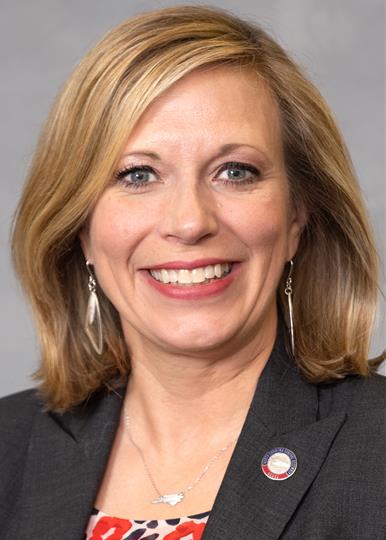
Rep. Sarah Crawford
Sponsored bills
Maddy summaryHB 691, the "Voter Protection and Reliance Act," ensures voters' ballots are counted based on election-day rules by prohibiting the exclusion of valid ballots cast under procedures in place on election day. It requires courts and election officials to apply election rules as they existed on election day, not later changes, and mandates that technical registration errors (like incomplete forms) cannot invalidate a ballot if the voter relied on the process. The bill also creates expedited court procedures for election challenges filed within 90 days before an election or after an election concludes, directing such cases to Wake County Superior Court for faster resolution. This directly affects voters, election officials, and courts by prioritizing ballot integrity based on election-day procedures over post-election interpretations.
Maddy summaryHB 685, the Rural NC Reinvestment Act, allocates $605 million in nonrecurring state funds for rural North Carolina communities during the 2025-2026 fiscal year. It provides grants for water/sewer infrastructure ($200M), law enforcement/fire equipment ($10M), economic development land ($20M), rural school construction ($200M), broadband expansion ($50M), early childhood education ($100M), and physician placement ($5M). Local governments, schools, emergency services, and healthcare providers in rural areas directly receive these funds, with allocations prioritized based on need, efficiency, and community impact. The bill becomes effective July 1, 2025, focusing on tangible infrastructure and service improvements without creating new regulations.
Maddy summaryHB 677 requires North Carolina movie theaters with more than 10 weekly showings to provide open captioning (on-screen text for dialogue and sounds) for at least one-fourth of showings for movies with four or more showings per week. Theaters must advertise captioned showings in the same way as other showings, keep compliance records for three years, and face $100-$500 penalties per violation for noncompliance. This applies to theaters showing movies with four or more weekly showings, excluding films produced without captioning. The law takes effect October 1, 2025, and focuses on ensuring accessible viewing during peak attendance hours where possible.
Maddy summaryHB 669 establishes a temporary reimbursement program for North Carolina volunteer firefighters, allowing them to be paid back for mileage to emergency scenes and costs of personal equipment used during responses. The program, funded by $1 million for 2025-2026, reimburses at the IRS business mileage rate and covers equipment like safety gear used to secure scenes or treat individuals. Volunteer organizations must collect claims within 60 days, and the Division of Emergency Management will oversee the program until it ends June 30, 2026. A report to lawmakers by that date will evaluate participation and recommend whether to expand or make the program permanent.
Maddy summaryHB 709 establishes a pilot program to fund additional teacher assistants in North Carolina public schools for kindergarten through third grade. It provides $14.8 million annually (2025-2027) to cover the cost of teacher assistants based on specific ratios: one assistant per K-2 class and one per three third-grade classes. The program will select 16 schools (eight districts, one district school and one charter school per district) to participate, with funds distributed based on average class size and salary costs. The bill aims to directly support early-grade classrooms by increasing adult-to-student ratios, effective July 1, 2025.
Maddy summaryHB 686, the Safe Cosmetics Act, prohibits the sale or distribution of cosmetic products in North Carolina containing specific restricted substances - such as PFAS, heavy metals, parabens, phthalates, formaldehyde, and asbestos - as intentionally added chemicals, nonfunctional by-products, or nonfunctional contaminants above measurable limits. The bill defines "practical quantification limit" as the lowest reliably measurable concentration and requires manufacturers to provide a compliance certificate if the Board of Agriculture suspects violations. It directly affects cosmetic manufacturers and retailers selling products in North Carolina, mandating adherence to these chemical restrictions starting January 1, 2026. The law aims to reduce consumer exposure to chemicals linked to health concerns by banning them in cosmetics above specified thresholds.
Maddy summaryHB 684 establishes North Carolina's first formal environmental justice framework to address disproportionate health and environmental risks faced by BIPOC, low-income, and marginalized communities. The bill defines key terms like "communities of color" (40%+ nonwhite residents or 10% higher than county/state) and "disproportionate impact" to guide state agencies. It requires all state agencies to identify and reduce environmental health disparities by considering environmental justice in decision-making, ensuring equitable distribution of benefits like clean air, green spaces, and renewable energy. The law aims to create consistent standards for addressing pollution burdens and health inequities across North Carolina.
Maddy summaryHB 738 restores specific definitions for wetland protections in North Carolina by repealing prior legislative changes and reinstating the 2010 North Carolina Wetland Assessment Manual definitions. It explicitly defines "isolated wetlands" to include those confirmed by the U.S. Army Corps of Engineers before June 2020 and wetlands classified as basins or bogs under the state's 2010 manual (excluding man-made stormwater features). The bill also clarifies that "wetlands" include waters meeting federal definitions (33 C.F.R. § 328.3 and 40 C.F.R. § 230.3) and the reinstated isolated wetland category. This directly affects developers, landowners, and local governments by determining which projects require wetland permits under state law. The policy change reinstates pre-2020 regulatory boundaries without creating new restrictions.
Maddy summaryHB 710 establishes a three-year pilot program to fund mental health crisis units in North Carolina public schools. It allocates $2 million total (up to $250,000 annually per district) to select up to eight school districts starting in 2025-2026, prioritizing those with high student mental health needs or trauma history. Each participating district must staff units with at least a school nurse, social worker, and licensed counselor to provide crisis intervention during school hours and rotate across schools. The program requires annual reports on participating districts and student mental health impacts, ending June 30, 2028.