

Maddy summaryHouse Joint Resolution 379 is an application from the State of North Carolina to the U.S. Congress. It requests that Congress call a "convention of the states" as outlined in Article V of the U.S. Constitution. The purpose of this convention would be to propose new amendments to the Constitution. These amendments would focus on imposing fiscal restraints on the federal government, limiting its power, and setting term limits for federal officials and members of Congress. This application is considered ongoing until two-thirds of the states submit similar requests.
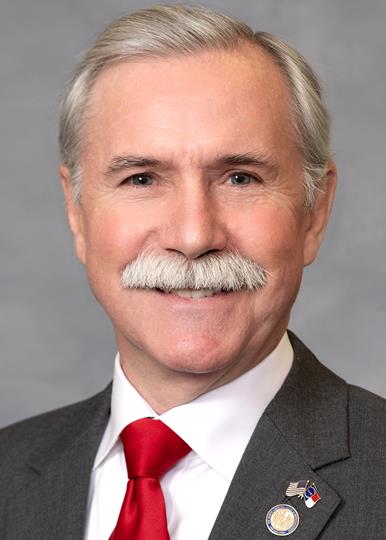
Rep. Dennis Riddell
Sponsored bills
Maddy summaryHouse Bill 818 aims to standardize access to new birth certificates for adopted individuals, making the process similar to those who are not adopted. It directs the State Registrar to prepare a new birth certificate for adoptees that lists their adoptive parents and contains no reference to the adoption itself. The bill specifies that certified copies of these new birth certificates can be provided to the adoptee, their children, adoptive parents, and other immediate adoptive family members. It also ensures original birth certificates and adoption records remain sealed, while counties receive copies of the new certificate to replace the original. This act is intended to apply to new birth certificates for persons adopted before, on, or after October 1, 2025.
Maddy summaryHouse Bill 214, known as the "Faithful Article V Commissioner Act," creates rules for North Carolina's participation in a convention for proposing amendments to the U.S. Constitution. It outlines how commissioners and alternates are to be selected by the General Assembly, their qualifications, and their ethical obligations. The bill strictly defines the scope of authority for these commissioners, limiting them to the specific issues outlined in their commission and the convention's call. Commissioners must take an oath to abide by these limits, and exceeding their defined authority is deemed a Class I felony.
Maddy summaryHB 606 amends North Carolina's civil procedure statute regarding the time limits for filing lawsuits (accrual of action). The bill establishes specific new rules for malpractice actions related to services facilitating or perpetuating gender transition. For these cases, a lawsuit must be started either within 25 years from the claimant turning 18, or four years from the discovery of both the injury and its causal link to the treatment, whichever is later. Additionally, the bill prohibits medical professionals or entities from contractually waiving liability for these specific actions and states that general medical malpractice damages caps will not apply to them.
Maddy summaryHB 121 provides local boards of education with additional flexibility in adopting their school calendars. It removes the current state-mandated earliest opening date for students (the Monday closest to August 26) and the latest closing date (the Friday closest to June 11). This change allows local boards to determine the specific opening and closing dates for public schools under their authority. The bill directly affects public schools and students in North Carolina and would apply starting with the 2025-2026 school year.
Maddy summaryHB 772, titled the North Carolina Student Lifeline Act, requires public schools and community colleges in North Carolina to provide students with the Suicide and Crisis Lifeline phone number. It mandates that institutions display the phrase "To reach the Suicide and Crisis Lifeline, call 988 or text HOME to 741741." in several locations. These locations include new student identification cards issued to students in grades six through 12, the school website, and the home screen of any electronic device issued to students. The information must also appear on school agendas or calendars, documents used during suicide awareness activities, and registration documents. Additionally, schools are required to annually verify the accuracy of the Lifeline contact information.
Maddy summaryHouse Bill 4, also known as "Sam's Law," aims to improve seizure preparedness and response in North Carolina schools. The bill requires public school units, charter schools, and other educational institutions to develop individualized Seizure Action Plans for students diagnosed with seizure disorders, in collaboration with their parents. It mandates annual seizure education programs for all K-12 school personnel and requires principals, school counselors, and teachers to complete an annual self-study on seizure disorders. Furthermore, the bill ensures at least one employee in each school is trained to administer seizure medication and requires the posting of seizure first aid information in visible areas. Various educational boards are tasked with adopting policies to implement these requirements, with $50,000 appropriated to the Department of Public Instruction for development costs.
Maddy summaryHouse Bill 618, the "Ivermectin Access Act," directs the State Health Director to issue a statewide standing order that allows licensed pharmacists to dispense ivermectin for human use. Under this order, pharmacists would be authorized to provide ivermectin without requiring a written prescription or consultation from a healthcare professional. The bill also grants immunity from civil or criminal liability to the State Health Director for issuing the order and to any pharmacist who dispenses ivermectin in accordance with it. The State Health Director is required to issue this statewide standing order by October 1, 2025.
Maddy summaryHB 94 allows disabled veterans and their unremarried surviving spouses to prequalify for the disabled veteran property tax homestead exclusion. This means individuals can apply to determine their eligibility for the tax benefit before they purchase a permanent residence. Applicants submit a prequalification form with their disability certification, and the county assessor must notify them of their eligibility within 30 days. The bill aims to help taxpayers and lenders account for this tax relief when making home purchase decisions. After prequalification, a separate application for the exclusion is still required once a permanent residence is acquired.
Maddy summaryHB 97 adds stomach cancer (gastric cancer) to the list of occupationally related cancers that qualify firefighters for "killed in the line of duty" benefits under North Carolina's Public Safety Employees' Death Benefits Act. This means firefighters who die from stomach cancer directly linked to their firefighting duties will automatically be eligible for death benefits, easing the process for families seeking compensation. The bill appropriates $500,000 annually from 2025-2027 to cover these benefits. It takes effect July 1, 2025, applying to qualifying deaths occurring on or after that date.