

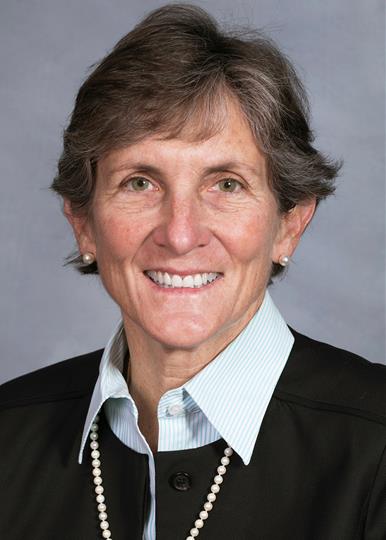
Photo of Pricey Harrison
D North Carolina House · District 61 On the 2026 ballot

Rep. Pricey Harrison

Compare
Total votes
8,396
all sessions
Attendance
97%
229 missed
Near the chamber average
With party
90%
of cast votes
Lower than 94% of chamber peers
Bipartisan score
5%
crosses aisle rarely
Higher than 93% of chamber peers
Sponsored
5,877
bills & resolutions
Higher than 99% of chamber peers
Committees
13
assignments
5,877 bills and resolutions

Sponsored bills

Total
5,877
Primary
530
Co-sponsor
5,347
This page
5,877
matching current filters
Co-sponsor HB 1198
In committee · North Carolina House · Co-sponsor
Sexual Assault Nurse Examiners Nurses Data/Registration Information Requirements.

Maddy summaryThis North Carolina bill requires training programs for sexual assault nurse examiners to submit annual reports to the state Board of Nursing regarding graduate employment details. It also mandates that active nursing licensees register with the Board to provide and update their training credentials and practice locations. The legislation creates a database for this information and allocates $50,000 to help the Board implement these reporting requirements. These changes take effect in 2026 and apply to active nurses and their training programs within the state.

In committee May 5, 2026 1 co-sponsor
Co-sponsor HB 1212
In committee · North Carolina House · Co-sponsor
Homeowners' Associations Accessory Limitation Ban.

Maddy summaryThis bill prevents homeowners' associations and unit owners' associations in North Carolina from restricting residents from installing, maintaining, or using solar panels, edible gardens, and certain accessory dwelling units. The law specifically prohibits these groups from enforcing rules against solar energy systems, gardens located within a property owner's boundaries, and secondary housing units that comply with building codes and zoning laws. Additionally, the legislation allocates $100,000 to the Department of Justice to educate the public about these new restrictions. The changes take effect immediately upon becoming law.

In committee May 5, 2026 1 co-sponsor
Co-sponsor HB 1176
In committee · North Carolina House · Co-sponsor
North Carolina-Ireland Trade Commission.

Maddy summaryThis bill establishes a new North Carolina-Ireland Trade Commission to strengthen economic and cultural connections between the state and Ireland. The commission will be composed of seven members appointed by state legislative leaders and the governor, including representatives from business, education, and Irish-American civic organizations. Its primary responsibilities include encouraging trade and investment, facilitating exchanges, and submitting annual reports to the state legislature. The state will allocate $10,000 for administrative support, and the commission is set to begin operations in October 2026.

In committee May 4, 2026 1 co-sponsor
Co-sponsor HB 1172
In committee · North Carolina House · Co-sponsor
The Ciji Graham Act.

Maddy summaryHB 1172, known as the Ciji Graham Act, establishes a High-Risk Pregnancy Care Navigation Program in North Carolina to assist patients with high-risk pregnancies by providing licensed nurse consultants who help coordinate care and address access barriers. The bill also creates a statewide pregnancy consultation hotline for healthcare providers and community organizations to offer real-time clinical guidance and referrals, alongside a centralized digital hub containing clinical guidelines and provider directories. Funded through the state's General Fund starting in the 2026-2027 fiscal year, these measures aim to improve maternal health outcomes and reduce disparities by ensuring timely access to specialized care and resources.

In committee May 4, 2026 1 co-sponsor
Co-sponsor HB 1161
In committee · North Carolina House · Co-sponsor
Omnibus Artificial Intelligence Protections.

Maddy summaryHB 1161 establishes state protections for artificial intelligence across elections, education, employment, courts, and insurance. In elections, the bill bans the use of AI-generated images, videos, voices, or text in political advertisements and imposes severe penalties, including donation freezes, for violations. For schools, it empowers local districts to restrict student access to AI tools and allows for disciplinary action, while also mandating new middle school courses on critical thinking and technology awareness. The legislation appropriates funds to help implement these measures and applies to political ads immediately and to school policies starting in the 2026-2027 academic year.

In committee May 4, 2026 1 co-sponsor
Co-sponsor HB 1164
In committee · North Carolina House · Co-sponsor
Insufficient Funds for Taxes Penalty Modification.

Maddy summaryThis bill modifies the penalty charged to taxpayers in North Carolina when their checks or electronic payments for taxes bounce due to insufficient funds. Instead of the current rule that imposes the greater of a flat $25 fee or 10% of the payment amount, the new law sets a tiered penalty structure based on how often a person bounces payments within a five-year period. For the first two violations, the fee will be $25 plus 1% of the payment amount, while any subsequent violation will incur a $50 fee plus 2% of the payment amount, with a maximum penalty cap of $1,000. The legislation also includes an exemption for taxpayers who had sufficient money in their accounts but accidentally failed to initiate the transaction, and it provides funding to help educate the public and tax collectors about these changes.

In committee May 4, 2026 1 co-sponsor
Co-sponsor HB 1142
In committee · North Carolina House · Co-sponsor
Expand Quantum Computing Education.

Maddy summaryThis North Carolina bill aims to increase access to quantum computing education by funding STEM programs in public schools, particularly those near military bases. It allocates $2.6 million to hire specialized teachers and create hands-on learning opportunities for students, while also establishing a $200,000 grant program for universities to partner with high schools on research projects. Additionally, the legislation creates an income tax credit for businesses that participate in these educational initiatives, though the specific details of the tax credit are not fully shown in the provided text.

In committee May 4, 2026 1 co-sponsor
Primary HB 1135
In committee · North Carolina House · Lead sponsor
Modify Mileage and Per Diem.

Maddy summaryThis bill updates the mileage and per diem reimbursement rates for North Carolina state legislators to match the 2025 federal standards. It directly affects all members of the General Assembly by establishing that their travel pay for 2027 will be based on the Internal Revenue Service's business standard mileage rate and specific federal per diem amounts. The legislation also allocates $100,000 from the state's General Fund to cover the costs associated with implementing these rate changes.

In committee May 4, 2026 0 co-sponsors
Co-sponsor HB 1181
In committee · North Carolina House · Co-sponsor
Property Tax Modifications.

Maddy summaryHB 1181 modifies North Carolina's property tax relief programs for seniors and disabled individuals by increasing the income limit for married couples and eliminating deferred tax liability under the homestead circuit breaker. The bill expands eligibility for the circuit breaker to include homeowners earning up to 70% of the area median income and introduces an alternative tax calculation for those who have owned their homes for at least 10 years. Additionally, the legislation appropriates funds to assist counties with property reappraisals and imposes an excise tax on the transfer of controlling interests in entities that hold real property interests.

In committee May 4, 2026 1 co-sponsor
Primary HB 1132
In committee · North Carolina House · Lead sponsor
Law Enforcement Officers Facial Coverings and Identifications.

Maddy summaryThis North Carolina bill prohibits law enforcement officers from wearing opaque facial coverings, such as balaclavas or tactical masks, while performing their duties, unless specific exceptions apply. The law allows for exceptions during active undercover operations, tactical situations requiring physical safety protection, and when protecting an officer's identity during prosecution, while also permitting religious head coverings and medical masks. To enforce this rule, agencies must create and publicly post written policies that prioritize transparency and limit the use of coverings to clearly defined circumstances. Additionally, the bill requires officers to clearly display their agency identification on uniforms and to identify themselves by name or badge number upon request. The legislation also includes a provision that removes certain legal protections for officers who commit specific torts, like assault or false imprisonment, while knowingly violating the facial covering ban.

In committee May 4, 2026 0 co-sponsors
Showing 61 to 70 of 5,877 bills
Previous 1 … 6 7 8 … 588 Next