

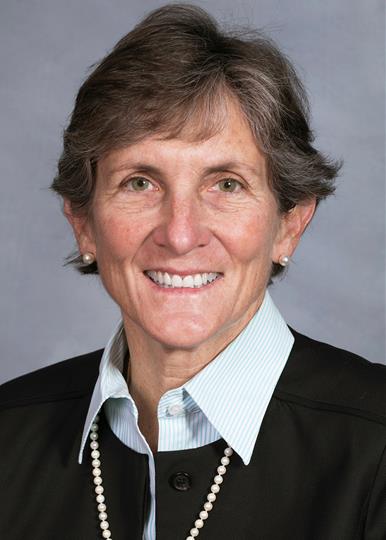
Photo of Pricey Harrison
D North Carolina House · District 61 On the 2026 ballot

Rep. Pricey Harrison

Compare
Total votes
8,717
all sessions
Attendance
97%
242 missed
Near the chamber average
With party
90%
of cast votes
Among the lowest in the chamber
Bipartisan score
5%
crosses aisle rarely
Higher than 99% of chamber peers
Sponsored
5,877
bills & resolutions
Higher than 99% of chamber peers
Committees
13
assignments
5,877 bills and resolutions

Sponsored bills

Total
5,877
Primary
530
Co-sponsor
5,347
This page
5,877
matching current filters
Co-sponsor HB 353
In committee · North Carolina House · Co-sponsor
Fair Minimum Wage Act.

Maddy summaryHB 353, the Fair Minimum Wage Act, raises North Carolina's state minimum wage in staged increases, starting at $10 per hour on January 1, 2026, and reaching $18 per hour by January 1, 2030. After 2030, the wage will automatically adjust annually based on inflation using the Consumer Price Index. The bill directly affects hourly workers and employers across North Carolina, requiring higher pay for all covered employees. It also adds provisions allowing workers to recover unpaid wages plus interest, attorney fees, and court costs if employers fail to pay correctly.

In committee Mar 11, 2025 1 co-sponsor
Co-sponsor HB 351
In committee · North Carolina House · Co-sponsor
Recovery-Friendly Workplace Program/Funds.

Maddy summaryHB 351 establishes North Carolina's Recovery-Friendly Workplace Program, which helps employers support employees in addiction recovery. Employers (both public and private) can become "participants" or earn "certified" status by completing training, adopting inclusive policies (like flexible leave and confidential treatment access), and implementing evidence-based practices. The program, funded with $300,000 from the Opioid Settlement Fund, provides employers with advisors, model policies, and annual reviews to maintain certification. It directly affects all North Carolina employers covered by workers' compensation and their employees seeking recovery support. The program becomes effective July 1, 2025.

In committee Mar 11, 2025 1 co-sponsor
Primary HB 339
In committee · North Carolina House · Lead sponsor
Economic Security Act.

Maddy summaryHB 339, the Economic Security Act, raises North Carolina's minimum wage to $22 per hour effective January 2026, with annual inflation adjustments based on the Consumer Price Index. It mandates equal pay for equal work, requires paid sick leave and family medical leave for all employees, and strengthens workplace safety protections. The bill also restores inflation-adjusted unemployment benefits, ends wage theft, removes criminal history questions from job applications ("banning the box"), and expands tax credits for childcare and low-income workers. Additionally, it creates a presumption that essential workers infected with COVID-19 contracted it on the job and appropriates funds for cost-of-living adjustments for public retirees.

In committee Mar 11, 2025 0 co-sponsors
Primary HB 350
In committee · North Carolina House · Lead sponsor
Report Lost/Stolen Firearm Within 24 Hours.

Maddy summaryHB 350 requires North Carolina firearm owners to report lost or stolen firearms to local law enforcement or the State Bureau of Investigation within 24 hours of discovery. Owners must provide specific details like the firearm’s make, model, serial number, and circumstances of the loss or theft. Law enforcement must then enter key details into the National Crime Information Center database. Violations are punishable as a Class 3 misdemeanor for a first offense, escalating to a Class I felony for repeat violations. The law takes effect December 1, 2025.

In committee Mar 11, 2025 0 co-sponsors
Co-sponsor HB 340
In committee · North Carolina House · Co-sponsor
Universal Academically or Intellectually Gifted Screening in Middle Schools.

Maddy summaryHB 340 requires North Carolina's State Board of Education to develop or purchase a screening assessment to identify academically or intellectually gifted students in all sixth-grade classrooms across public middle schools. The bill directly affects all sixth graders in North Carolina public middle schools by mandating universal screening for gifted identification. Key provisions include appropriating $7 million in recurring state funds for the 2025-2026 fiscal year to cover assessment costs and requiring the screening to be administered to every sixth grader. The law becomes effective July 1, 2025, with the Department of Public Instruction responsible for implementing the screening process.

In committee Mar 11, 2025 1 co-sponsor
Co-sponsor HB 341
In committee · North Carolina House · Co-sponsor
Disabled Veterans Tax Relief Bill.

Maddy summaryHB 341 increases property tax relief for disabled veterans in North Carolina by expanding the homestead exclusion on their primary residence. The bill sets exclusion amounts based on disability rating: $100,000 for 70%+ disability, $75,000 for 50-69%, $50,000 for 30-49%, and $25,000 for 10-29%. Surviving spouses qualify for the greater of the veteran’s exclusion amount or $45,000, provided the veteran’s death resulted from a service-connected condition. This policy directly affects qualifying disabled veterans and their surviving spouses who own and occupy their primary residence, effective for taxes due in 2025.

In committee Mar 11, 2025 1 co-sponsor
Co-sponsor HB 342
In committee · North Carolina House · Co-sponsor
Guilford County Schools Funding Requests.

Maddy summaryThis bill allocates $8.3 million in state funds to Guilford County Schools for the 2025-2026 school year to support two specific academic programs. $5 million will fund high-dosage tutoring by hiring additional tutors, expanding subject areas, and increasing session availability. $3.3 million will support learning hubs that provide personalized academic assistance to students at risk of not graduating, helping them complete required coursework. The funding directly targets Guilford County Schools students and aims to strengthen academic support and graduation outcomes.

In committee Mar 11, 2025 1 co-sponsor
Co-sponsor HB 344
In committee · North Carolina House · Co-sponsor
Litter Reduction Act of 2025.

Maddy summaryHB 344, the Litter Reduction Act of 2025, requires a deposit on most beverage containers (like soda, water, and alcohol in glass, plastic, or metal) sold in North Carolina, with refunds available at certified redemption centers. It directly affects beverage distributors, retailers (excluding small businesses selling under 250,000 containers yearly), and consumers who purchase these products. The bill establishes a system where consumers pay a deposit at purchase and can return empty containers to redemption centers for a refund, aiming to reduce roadside litter from beverage containers. Key provisions include defining "beverage container," requiring redemption centers to accept containers, and setting recycling standards to avoid downcycling or waste-to-energy processing.

In committee Mar 11, 2025 1 co-sponsor
Co-sponsor HB 343
In committee · North Carolina House · Co-sponsor
Advocacy for Long-Term Care Residents Act.

Maddy summaryHB 343 appropriates $380,000 for 2025-26 and $397,000 for 2026-27 to create four full-time ombudsman positions within North Carolina’s Long-Term Care Ombudsman Program. This directly affects residents of nursing homes, adult care homes, and family care homes by enhancing advocacy for their rights and care quality. The bill’s key provision funds staff to move the state’s program toward national standards for resolving facility issues without formal complaints. It becomes effective July 1, 2025, with no advocacy language - only a concrete funding mechanism for expanded protections.

In committee Mar 11, 2025 1 co-sponsor
Primary HB 322
In committee · North Carolina House · Lead sponsor
Make General Assembly Records Public.

Maddy summaryHB 322 modifies North Carolina's public records law to require the General Assembly to follow the same record retention and disposal rules as other state agencies. It mandates that legislative records must be preserved for at least 10 years after a legislator leaves office (or until they have no further official use, whichever is longer) and requires the Legislative Services Officer to work with the Department of Natural and Cultural Resources to create an inventory of these records. The bill repeals previous exemptions that allowed the General Assembly to unilaterally control its own records and ensures these records are subject to public access standards. This directly affects North Carolina legislators, their offices, and the Department of Natural and Cultural Resources, which will oversee record preservation and public access.

In committee Mar 10, 2025 0 co-sponsors
Showing 541 to 550 of 5,877 bills
Previous 1 … 54 55 56 … 588 Next