

Maddy summaryHB 916 strengthens North Carolina's Do Not Call and Do Not Text Registry by requiring telemarketers to remove registered numbers from their contact lists within 30 business days when a resident requests no further calls, reducing the previous timeframe from 60 days. It directly affects North Carolina residents who have registered their phone numbers and telemarketers operating in the state, including partner companies. Key provisions include clarifying that "telephone solicitation" covers text messages and automated calls, and holding companies jointly liable if they accept sales leads generated by illegal telemarketing calls. The bill updates state law to align with federal telemarketing rules and enforce stricter compliance.
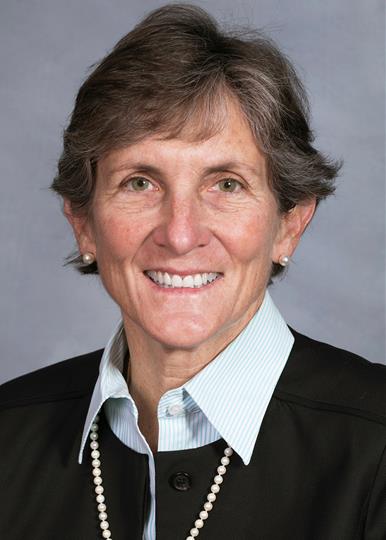
Rep. Pricey Harrison
Sponsored bills
Maddy summaryHB 911 requires North Carolina local school boards to create and publicly share experience-based salary schedules for full-time occupational and physical therapists employed in public schools, ensuring these pay scales align with existing noncertified education salary ranges. For the 2025-2026 school year, therapists must receive at least the higher of their current salary or the new schedule amount, plus a monthly supplement equal to 10% of a teacher's salary for five additional years plus $350. School boards must also submit annual workforce reports detailing therapist staffing levels, contractor use, and vacancies to the state education department. The bill directly affects school-employed therapists and local school boards, with supplements contingent on legislative funding.
Maddy summaryHB 942 allocates $10 million in recurring state funds for the 2025-2026 fiscal year to the North Carolina Coalition Against Sexual Assault. This funding will be distributed by the Coalition to partner organizations, including domestic violence programs, rape crisis centers, and child advocacy centers. The bill directs these organizations to use the funds for victim advocacy services, such as counseling and support for survivors of sexual assault. The legislation becomes effective July 1, 2025, and directly supports survivors by strengthening local victim services.
Maddy summaryThis bill establishes the Free to Learn Library Bill of Rights Act in North Carolina to protect residents' rights to access information, maintain privacy, and participate in library services without discrimination or undue restriction. It applies to all public libraries, including their online services and digital resources, and outlines specific rights such as unrestricted access to materials regardless of viewpoint, protection from surveillance and intimidation, confidentiality of library records, and fair access for all patrons regardless of personal characteristics. The legislation also includes anti-retaliation protections for library employees and volunteers who report violations, requires regional library systems to document compliance, and mandates strict data privacy practices for online usage tracking. Additionally, the bill appropriates funds to support implementation and directs the State Library to provide model language for interlocal agreements to ensure consistent compliance across the state.
Maddy summaryHB 957 creates a study committee to examine infrastructure challenges at North Carolina's HBCUs and MSIs, including building conditions, environmental risks, and maintenance needs. It establishes a $5 million Completion Assistance Program to provide up to $1,000 annually per student at six UNC HBCUs (Elizabeth City State, NC A&T, UNC Asheville, UNC Greensboro, UNC Pembroke, and Winston-Salem State) for tuition/fee balances, targeting students with Pell Grants who need financial aid to graduate on time. The bill also allocates specific infrastructure funds, including $5.1 million for Winston-Salem State's Hauser Hall renovations and $8 million for emergency steam repairs. These provisions directly affect students and campus facilities at the six designated institutions through financial aid and physical infrastructure support.
Maddy summaryHB 955, the NC Junk Fee Prevention Act, requires businesses like short-term lodging providers (e.g., Airbnb), telecom companies (internet, mobile, voice services), and ticket sellers to show the full price - including all mandatory fees - before a purchase. It bans deceptive or excessive fees, such as surprise resort charges or hidden ticket costs, and mandates that total prices displayed at the start of a transaction cannot increase during checkout. Businesses must clearly disclose all fees (e.g., processing or delivery charges) upfront and cannot charge unreasonable early termination fees for telecom services. This law directly affects consumers buying lodging, telecom services, or event tickets by ensuring transparent pricing and preventing hidden costs.
Maddy summaryHB 979 updates North Carolina's system for volunteer advocates supporting nursing home residents. It requires nursing homes to not impede designated volunteer ombudsman representatives who help residents report concerns without fear of retaliation. The bill formalizes that these volunteers must be certified and designated by the State Long-Term Care Ombudsman Program, and establishes new rules for community advisory committees in counties with nursing homes. This directly affects nursing home residents, facilities, and the state's oversight program by strengthening resident advocacy mechanisms.
Maddy summaryHB 974 requires North Carolina's Department of Health and Human Services (DHHS) to study how hospice care facilities handle complaints from patients and families. The study will analyze complaint data, engage hospice administrators and care associations, and identify common issues and best practices for improving complaint procedures, investigations, communication, and family involvement. DHHS must submit findings and recommendations to legislative committees by April 2026, focusing on actionable steps for hospice facilities to enhance accountability. This bill does not change current laws but mandates a review to inform future policy.
Maddy summaryHB 978 establishes the North Carolina Commission on Youth Mentoring within the Department of Health and Human Services to administer grants supporting local youth mentoring programs. The bill allocates $1.5 million annually from 2025-2027 to fund small-to-medium nonprofit organizations providing mentoring services, with specific goals to increase quality mentoring, reduce youth safety risks, and strengthen community connections. The Commission, composed of 15 appointed members including youth participants and community representatives, will manage the grant program, develop application processes, and submit annual reports on funding distribution and social impact to legislative committees. This legislation directly affects North Carolina-based youth mentoring nonprofits and aims to expand accessible, high-quality mentoring opportunities for young people across the state.
Maddy summaryHB 961, the "Hate Crimes Prevention Act," increases sentencing for felony convictions where the victim was targeted due to their race, ethnicity, religion, nationality, country of origin, or gender. If proven, the offender faces a sentence one felony class higher than the original charge (e.g., Class C felony becomes Class B). The bill requires the indictment to allege the bias motivation, and the state must prove it beyond a reasonable doubt during the same trial. It takes effect December 1, 2025, applying to offenses committed after that date.