

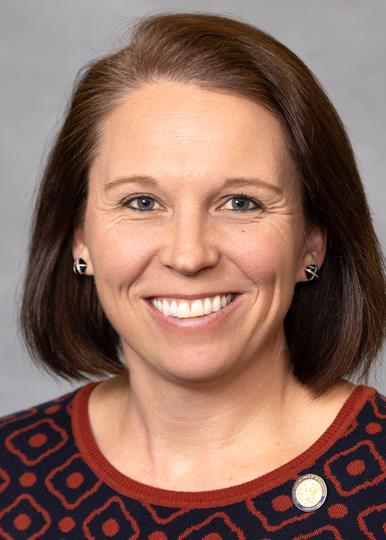
Photo of Tracy Clark
D North Carolina House · District 57 On the 2026 ballot

Rep. Tracy Clark

Compare
Total votes
502
all sessions
Attendance
97%
17 missed
Near the chamber average
With party
96%
of cast votes
Near the chamber average
Bipartisan score
2%
crosses aisle rarely
Near the chamber average
Sponsored
290
bills & resolutions
Higher than 85% of chamber peers
Committees
5
assignments
290 bills and resolutions

Sponsored bills

Total
290
Primary
24
Co-sponsor
266
This page
290
matching current filters
Co-sponsor HB 1074
In committee · North Carolina House · Co-sponsor
Prescription Drug Expenses Tax Deduction.

Maddy summaryThis North Carolina bill allows taxpayers to deduct up to $5,000 of unreimbursed costs for prescribed medications and pharmacy fees from their state income tax. The deduction applies to expenses not covered by tax-advantaged accounts like Flexible Spending or Health Savings Accounts and prevents double-dipping if a federal deduction is already claimed for the same year. Effective for tax years starting on or after January 1, 2026, the measure directly affects individuals paying out-of-pocket for prescription drugs who itemize their state taxes.

In committee May 12, 2026 1 co-sponsor
Co-sponsor HB 1090
In committee · North Carolina House · Co-sponsor
Revitalizing, Uplifting Regions and Access Local (RURAL) Care Act.

Maddy summaryThis bill creates a new Rural Healthcare Infrastructure Fund in North Carolina to help build, repair, and modernize healthcare facilities in rural areas. The fund will provide money through grants and low-interest loans to support construction and renovation projects, while also replacing an older stabilization program. A state council must first develop and get approval for a detailed plan outlining how the fund will be managed and who can apply before any money is awarded. The bill also updates the duties of the state health council and requires annual reports on how the fund is being used.

In committee May 12, 2026 1 co-sponsor
Co-sponsor HB 433
Signed into law · North Carolina House · Co-sponsor
State Fiscal Recovery Fund/NC Pandemic Recovery Office Revisions.

Maddy summaryHouse Bill 433 allows licensed registered nurses (RNs) to serve as school nurses in North Carolina public schools. The bill prohibits the State Board of Education from requiring a four-year degree for school nurse employment. It specifies that RNs with at least two years of experience in a hospital or health clinic can work as school nurses without needing additional certifications or licenses. These qualified registered nurses will be paid under the certified school nurse pay scale.

Signed into law May 12, 2026 1 co-sponsor
Co-sponsor HB 390
Passed · North Carolina House · Co-sponsor
Medicaid Prepaid Health Plan Practices.

Maddy summaryHouse Bill 390, titled "Alleviate the Dangers of Surgical Smoke," establishes new standards for surgical smoke evacuation in North Carolina. This bill requires all licensed hospitals and ambulatory surgical facilities to adopt and implement policies mandating the use of a smoke evacuation/filtering system during surgical procedures likely to generate surgical smoke. A smoke evacuation/filtering system is defined as equipment that captures, filters, and eliminates surgical smoke at its origin. The Department of Health and Human Services is authorized to take adverse action against facilities that violate these new requirements. This act is scheduled to become effective on January 1, 2026.

Passed May 12, 2026 1 co-sponsor
Co-sponsor HB 1229
In committee · North Carolina House · Co-sponsor
Strip Corporations of Political Spending.

Maddy summaryThis bill proposes amending the North Carolina Constitution to ban corporations from spending money to influence election outcomes. It directly affects business entities by stating that only human beings can exercise political spending power within the state. The measure includes specific exceptions for political committees and news organizations owned by parties or candidates, while threatening to revoke corporate legal protections like limited liability for any violations. Because the bill requires voter approval, it will be placed on the November 2026 ballot for a public referendum rather than becoming law immediately.

In committee May 11, 2026 1 co-sponsor
Co-sponsor HB 1192
died · North Carolina House · Co-sponsor
Energy and Housing Affordability Act.

Maddy summaryHB 1192, known as the Energy and Housing Affordability Act, modifies how electric utilities in North Carolina handle changes in fuel costs and establishes rules for on-site power generation by large customers. The bill requires utilities to provide detailed data on fuel usage and emissions treatment to the Public Service Commission, which will then use a new sharing mechanism to adjust customer rates. Under this mechanism, if fuel costs rise or fall from a baseline, customers and utility shareholders will split the financial impact, with customers covering eighty percent and shareholders absorbing the remaining twenty percent of any variance. Additionally, the act appropriates funds to support a workforce housing loan program aimed at improving housing affordability.

died May 7, 2026 1 co-sponsor
Co-sponsor HB 1195
In committee · North Carolina House · Co-sponsor
MOMnibus 3.5.

Maddy summaryThis bill establishes a grant program within the North Carolina Department of Health and Human Services to fund community organizations focused on improving maternal health outcomes for Black women. The program provides financial awards ranging from $10,000 to $50,000 to support initiatives that address social determinants of health, such as housing, transportation, nutrition, and access to childcare. Eligible applicants must be community-based groups led by Black women that offer evidence-based services including doula support, mental health care, and culturally respectful training for health workers. The legislation also requires the department to provide technical assistance to grant recipients and submit annual reports on fund usage and program effectiveness.

In committee May 5, 2026 1 co-sponsor
Co-sponsor HB 1196
In committee · North Carolina House · Co-sponsor
Require Free Water in Bars.

Maddy summaryThis bill requires bars and restaurants in North Carolina to provide free drinking water to any customer who asks for it. The rule applies only during hours when alcohol is legally sold and mandates that the water be safe and served in containers holding at least six fluid ounces. To inform the public, the state will distribute posters to these businesses that must be displayed prominently where customers can see them.

In committee May 5, 2026 1 co-sponsor
Co-sponsor HB 1208
In committee · North Carolina House · Co-sponsor
Community Safety Risk Protection Act.

Maddy summaryHB 1208, known as the Community Safety Risk Protection Act, requires individuals in North Carolina to surrender firearms, ammunition, and related permits to law enforcement when a civil no-contact order is issued against them. This measure applies to people who have threatened violence, made threats of suicide, or caused serious injury to a victim, and it mandates that these items be stored by the sheriff until the legal order expires or is denied. The bill also outlines a process for individuals to request the return of their surrendered items after the protective order is no longer in effect, provided they are not legally prohibited from owning a firearm.

In committee May 5, 2026 1 co-sponsor
Co-sponsor HB 1210
In committee · North Carolina House · Co-sponsor
Firearm and Conflict De-escalation Training Act.

Maddy summaryThis bill requires North Carolina public schools to provide annual firearm safety and conflict de-escalation training to students starting in kindergarten, with parents retaining the right to opt their children out of the instruction. The firearm safety component mandates teaching safe handling, storage, and emergency procedures without using live ammunition, while the de-escalation portion focuses on managing stressful situations through instruction from mental health professionals. Additionally, the legislation expands access to mental health records by requiring court clerks to conduct statewide searches when individuals apply for concealed handgun permits and modifying how judges issue involuntary commitment orders. The state will also allocate $250,000 to fund the development of these new curricula, which are scheduled to begin in the 2026-2027 school year.

In committee May 5, 2026 1 co-sponsor
Showing 31 to 40 of 290 bills
Previous 1 … 3 4 5 … 29 Next