

Maddy summaryHB 798 appropriates $1.72 million annually from the General Fund to create a Cold Weather Shelters Grant Program, administered by the Department of Health and Human Services, Division of Aging. The program provides grants to municipalities and nonprofits to establish or expand temporary emergency shelters for people experiencing homelessness during severe weather events. Grants are limited to $215,000 per recipient annually, with selection considering poverty rates in the service area and existing funding availability. Recipients must report annually on shelter usage, funds spent, and the number of people served, starting in 2027.
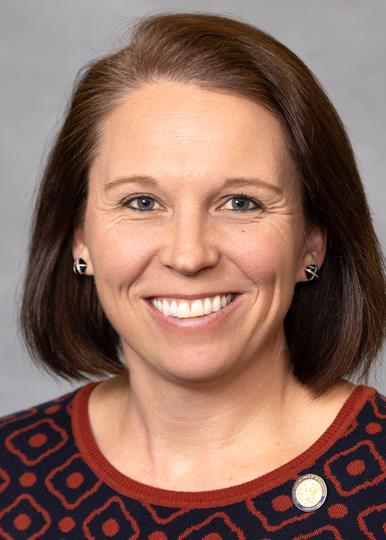
Rep. Tracy Clark
Sponsored bills
Maddy summaryHB 764 creates new criminal offenses for causing death or serious injury through reckless boating in North Carolina. It defines "Death by Reckless Boating" and "Serious Injury by Reckless Boating" as unintentionally harming others while operating a vessel recklessly (but not impaired), with "Aggravated" versions applying to those with prior reckless boating convictions within seven years. Penalties range from a Class A1 misdemeanor for basic death cases to a Class F felony for aggravated death incidents. The bill also prevents double prosecution for the same incident under both this law and manslaughter statutes. This directly affects boat operators whose reckless actions cause harm, establishing specific legal consequences for those offenses.
Maddy summaryHB 784 prohibits the manufacture, transfer, and possession of semiautomatic assault weapons (like AR-15s) and large-capacity ammunition magazines holding more than 10 rounds in North Carolina, effective December 1, 2025. The bill defines specific firearms and features (e.g., folding stocks, pistol grips) that classify weapons as "assault weapons," while setting a 10-round limit for magazines. Exceptions include existing owners of such weapons before the law’s effective date, law enforcement, antique firearms, and weapons that cannot accept large magazines. Violations are punishable as a Class E felony.
Maddy summaryHB 786, the "Working Families Act," reduces child care costs for low-income families by lowering parent copayments from 10% to 7% of income (effective 2025), reinstates a refundable state child tax credit with income-based payments (effective 2025), and phases up North Carolina’s minimum wage to $15/hour by 2030 with annual inflation adjustments. It also increases income limits for property tax relief, creates a homebuyers’ assistance program for public servants (like firefighters and EMTs) as first-time buyers, and establishes a paid family leave insurance program funded through an employer grant program. The bill directly affects working families, hourly workers, public-sector employees, and households using subsidized child care or property tax relief. Key mechanisms include phased wage increases, income-tiered tax credits, and targeted housing support, all designed to reduce financial strain on low-to-moderate-income households.
Maddy summaryHB 774 ("School Breakfast for All") mandates that all North Carolina public schools (pre-K through 12) provide free breakfast to every student, eliminating costs for families. It establishes a Farm-to-Table Initiative requiring schools to partner with local farmers for fresh, locally sourced ingredients in breakfast meals. The bill allocates $39 million in recurring state funds for the 2025-2026 fiscal year to cover program costs, while requiring annual reports on participation rates, costs, and impacts on student health and academic performance. This directly affects all public school students, school districts, and North Carolina agricultural producers.
Maddy summaryHB 766 appropriates $1.87 million to fund expanded Teen Mental Health First Aid (tMHFA) training for North Carolina high school students in grades 9-12 (ages 14-18). The bill directly affects students by providing evidence-based training to help them recognize, understand, and respond to peers' mental health and substance use challenges. Key provisions include funding for the Department of Health and Human Services to scale up tMHFA programs statewide, building on a pilot that trained 1,519 teens and showed a 50% increase in teens' willingness to seek adult support. The training focuses on connecting peers to trusted adults during crises, addressing high rates of unmet mental health needs among teens (64% don’t seek help, per the bill’s rationale).
Maddy summaryHB 713 mandates that all North Carolina public schools provide free breakfast and lunch to every student, eliminating meal fees for all. This affects every student enrolled in public schools, including those in charter schools and regional school units, starting with the 2025-2026 school year. The bill appropriates $144 million from the state General Fund to cover costs, with funds allocated based on school size, student eligibility for free/reduced meals, and nutritional quality standards. Schools must comply with federal nutrition guidelines while using state funds to supplement, not replace, existing meal program funding.
Maddy summaryHB 725, the "MOMnibus 3.0," establishes a state grant program to address preventable maternal health disparities affecting Black birthing people in North Carolina. The bill directs the Department of Health and Human Services to award competitive grants ($10,000-$50,000 per recipient) to community-based organizations focused on improving maternal health outcomes for Black women. Key provisions require grantees to address social barriers (like housing, transportation, and nutrition), provide culturally respectful care training for health workers, and offer services including mental health support, doula care, and evidence-based education. The program specifically prioritizes Black-led organizations serving communities with high maternal health disparities, aiming to reduce preventable deaths and complications through targeted community support.
Maddy summaryHB 732 requires permits and a 72-hour waiting period for purchasing assault weapons or long guns, prohibits sales to those under 21 for semi-automatic firearms, and bans bump stocks, ghost guns, and certain high-capacity magazines. It mandates safe firearm storage, repeals "stand your ground" laws, and requires firearm liability insurance for owners. The bill also prohibits leaving firearms unattended in vehicles, mandates reporting lost/stolen guns, and directs the state pension fund to divest from gun manufacturers. These provisions directly affect all firearm purchasers and owners in North Carolina.
Maddy summaryHB 715 appropriates $13.3 million annually from the General Fund to expand access to North Carolina's Prekindergarten (NC Pre-K) program for eligible children. The funding, allocated to the state's child development agency, will create additional program slots for children seeking enrollment starting July 1, 2025. This bill directly affects low-income 4-year-olds who qualify for the NC Pre-K program by increasing available spots through dedicated state funding. The legislation focuses solely on providing financial resources for program expansion, with no changes to eligibility criteria or program structure.