

Maddy summaryHB 39 excludes motor vehicles owned by veterans with a 100% disability rating certified by the U.S. Department of Veterans Affairs from North Carolina property tax. It amends state tax law to add these vehicles as a designated exempt class under G.S. 105-275. The exclusion applies to vehicles registered on or after January 1, 2026. This policy directly affects eligible disabled veterans who own motor vehicles, reducing their property tax burden. The bill does not change eligibility criteria or tax rates for other vehicle classes.
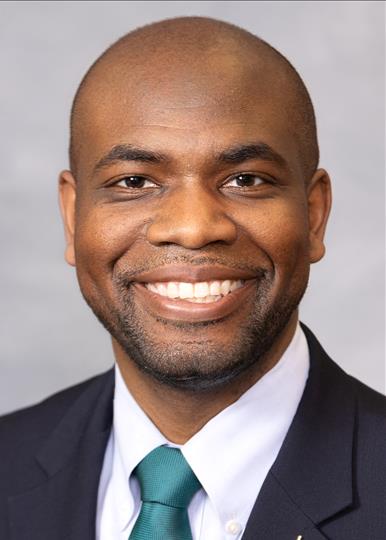
Rep. Allen Buansi
Sponsored bills
Maddy summaryHB 36 requires North Carolina's Department of Veterans and Military Affairs to improve maintenance at all four state veterans cemeteries, directly affecting veterans' families and cemetery operations. The bill mandates addressing specific issues like headstone installation delays, equipment damage to graves, drainage problems, debris, and poor grounds appearance, while allowing military groups to volunteer for upkeep. It also directs the department to review and adjust funeral service policies, including chapel-only options, service duration, attendee limits, and grave visitation rules during services. The department must submit a report on these changes to legislative committees by October 1, 2025.
Maddy summaryHB 20, the "Fair Maps Act," proposes amending the North Carolina Constitution to establish an independent redistricting process. It would create a Citizens Redistricting Commission to redraw congressional and state legislative districts after each federal census, removing the General Assembly and Governor from the process. The bill requires districts to be contiguous, avoid splitting counties, and ensure equal population representation, with changes taking effect only after voter approval in 2026. This directly affects all North Carolina voters by changing how electoral districts are drawn for state and federal offices. The amendment must be ratified by voters in November 2026 before it becomes effective.
Maddy summaryThis is a commemorative resolution (not a policy bill) honoring former North Carolina House Representative Joseph "Joe" Robert John, Sr., who served District 40 from 2017-2025 and died January 20, 2025. The resolution expresses the House's appreciation for his public service, extends sympathy to his family, and formally recognizes his contributions to North Carolina's judiciary, criminal justice, and community. It has no policy impact or new legal provisions - its purpose is solely to memorialize his career and legacy. The resolution was adopted unanimously by the House on January 29, 2025.
Maddy summaryThis bill amends the state constitution to eliminate the literacy test requirement for voting. By removing this specific provision, the legislation ensures that all eligible citizens can vote regardless of their reading or writing abilities. The change directly affects voters who previously might have been disenfranchised by this barrier. It does not alter other voting qualifications or the overall structure of the election process.
Maddy summaryThis bill officially renames the 2023 budget law to the "Current Operations Appropriations Act of 2024" and updates funding levels for the state's education system. It directly affects various institutions, including public universities, community colleges, and the University of North Carolina system, by specifying the exact amounts of state money they will receive for the 2024-2025 fiscal year. The legislation details how much money each entity gets after accounting for their own income, ensuring the state allocates its resources according to the approved budget plan.
Maddy summaryThis bill, titled the Health Care Omnibus, introduces several changes to North Carolina's healthcare regulations. It requires doctors and pharmacists to inform patients receiving opioid prescriptions about the risks of overdose, prevention methods, and the availability of reversal drugs. Additionally, the legislation clarifies that Medicaid benefits will continue for a limited time after individuals are released from prison or other incarceration facilities. The bill also expands access to mental health services by allowing reciprocal licensing for marriage and family therapists, reducing regulatory hurdles for master's level psychologists, and encouraging the use of tribal health facilities.
Maddy summaryThis North Carolina bill establishes a legal mechanism to hold manufacturers of per- and polyfluoroalkyl substances (PFAS) financially responsible for cleaning up contaminated drinking water. It defines "responsible parties" as companies that produce PFAS chemicals and orders them to pay for the actual costs public water systems incur to remove or fix contamination that exceeds safety limits. If a manufacturer refuses to pay, the state can take legal action in court to enforce the order, and the bill allows water systems to lower future customer rates if they recover these costs. The legislation also creates a special fund with initial funding to support implementation and requires the state to report annually on how these funds and enforcement orders are used.
Maddy summaryThis bill proposes adding a new section to the North Carolina Constitution to guarantee the public's right to access government records and attend public meetings. It declares that public records belong to the people and mandates that records and meetings for all state and local government branches be open for inspection and duplication. The amendment allows restrictions on this access only if the government can prove a compelling public interest exists and that the restriction is narrowly tailored to protect that interest. If voters approve this change in the November 2024 election, it will become part of the state constitution immediately upon certification.