

Maddy summaryHB 484 authorizes North Carolina's African American Heritage Commission to study creating monuments and markers honoring the state's civil rights history, including sites related to the Student Nonviolent Coordinating Committee, sit-ins, and desegregation efforts. The bill directly affects the Commission, which must hold public hearings and report findings by May 2026, and North Carolinians by commemorating local contributions to the civil rights movement. Key provisions include appropriating $500,000 for the Commission to place markers along the state's Civil Rights Trail and conducting feasibility studies on permanent monuments. The bill becomes effective July 1, 2025, with funding allocated for the 2025-2026 fiscal year.
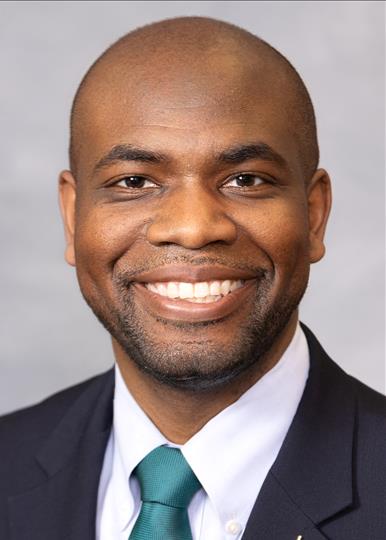
Rep. Allen Buansi
Sponsored bills
Maddy summaryHB 467 reenacts North Carolina's low-income housing tax credit program, allowing developers to claim tax credits for constructing or rehabilitating affordable housing. It specifies credit percentages (30%, 20%, or 10%) based on the income level of households (50% or less of area median income for 30% credit, 40% for 10% in high-income areas) and the location's income designation (low, moderate, or high-income county/city). Developers can receive credits either as a direct tax refund or a loan from the Housing Finance Agency, with affordability requirements applying for the full credit compliance period. This directly affects developers building qualifying low-income housing projects across North Carolina.
Maddy summaryHB 474, titled "Right to Use Contraception," declares that North Carolina recognizes the right to use contraception to prevent pregnancy as a fundamental liberty. It directly affects all residents who use contraception by stating the state has "no legitimate governmental interest in limiting the freedom to use contraception." The bill amends state law to add a new Article 44, explicitly prohibiting state restrictions on contraceptive access for pregnancy prevention. This is a declarative policy change, not a funding or program measure, and would become effective upon enactment.
Maddy summaryHB 473 protects patients' and healthcare providers' rights to access and provide assisted reproductive technology (ART), including in vitro fertilization (IVF), by prohibiting state interference. It defines ART broadly and explicitly states that fertilized eggs or embryos outside the uterus are not considered "human beings" under North Carolina law. The bill also appropriates $500,000 annually (starting July 2025) from the state General Fund to increase Medicaid maternal support services (the Baby Love Program), matching $913,000 in federal funds for the 2025-2027 biennium. This legislation directly affects patients seeking ART, healthcare providers offering these services, and Medicaid beneficiaries receiving maternal support.
Maddy summaryHB 430 would raise North Carolina's legal sales age for all tobacco and nicotine products (including e-cigarettes and vaping devices) to 21. It requires retailers to obtain a tobacco sales permit and verify customers' ages using acceptable ID. The bill directly affects tobacco retailers (who must get permits) and youth under 21 (who would be barred from purchasing these products). Key provisions include defining "vapor products" and establishing penalties for violations, such as fines up to $1,000 for repeat offenses.
Maddy summaryHB 456, the "No Surprises for Ambulance Services Act," prevents unexpected high costs for ambulance services by requiring health insurance companies to cover both emergency and non-emergency ground ambulance transport without surprise bills. Specifically, it caps out-of-network cost-sharing (like copays or deductibles) for ambulance services at 110% of what would apply for in-network providers, ensuring patients aren’t charged more for using an ambulance outside their insurance network. This directly affects insured individuals who use ambulance services, especially in emergencies or when they cannot choose a network provider. The law also mandates insurers to clearly disclose coverage details for emergency services, including cost-sharing and how to access care.
Maddy summaryHB 460, the Medical Equipment Right to Repair Act, requires medical device manufacturers to provide hospitals, clinics, and independent repair shops with necessary support documents, tools, and parts to maintain and repair medical imaging (like MRI and X-ray machines) and radiation therapy equipment. The law mandates that manufacturers make these resources available at no cost (except for printing/shipping fees), automatically notify owners of updates, and offer the same training to independent repairers as they provide to their own authorized service teams. It prohibits manufacturers from restricting access to security systems or using agreements to avoid these requirements, while protecting trade secrets and limiting liability for repair-related damage. The bill takes effect July 1, 2025, applying to equipment in use after that date.
Maddy summaryHB 37 standardizes monthly pension benefits for North Carolina firefighters and rescue squad workers under the state pension fund. It sets a uniform $175 monthly pension for members with 20+ years of service who reach age 55, replaces the previous $180 amount, and maintains $175 for disability benefits and line-of-duty death benefits. The bill also allows members affected by city annexations or department closures to continue contributing $15 monthly until they reach 20 years of service for pension eligibility. These changes apply to current and future members of the pension fund who meet the service requirements. The bill does not alter contribution rates or eligibility for most members but adjusts benefit amounts and extends certain provisions.
Maddy summaryHB 35 designates November of each year as Military Appreciation Month in North Carolina. The bill creates a symbolic recognition within state law, honoring military service members and veterans during this month. It does not establish new programs, funding, or requirements - it simply formally names November for this purpose. The bill affects the state government's official calendar and public recognition efforts, with no direct impact on individuals or organizations.
Maddy summaryHB 416 appropriates $30,000 from the state General Fund for the 2025-2026 fiscal year to provide a directed grant to the Boys & Girls Clubs of Durham and Orange Counties. The funds will support a six-part youth development program focusing on teen recruitment, emotional safety, leadership, trauma-informed practices, cultural inclusion, and college/career readiness for area youth. This bill directly affects the Boys & Girls Clubs in those counties and the young people they serve, becoming effective July 1, 2025.