

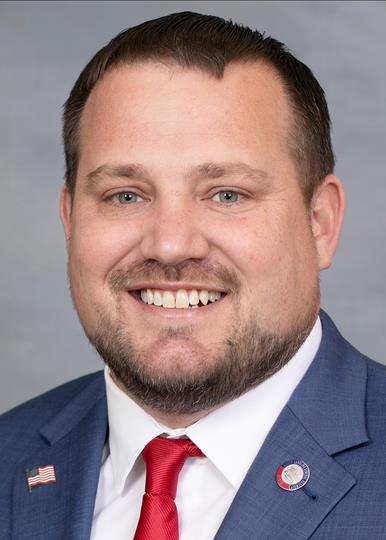
Photo of Ben Moss
R North Carolina House · District 52 On the 2026 ballot

Rep. Ben Moss

Compare
Total votes
542
all sessions
Attendance
81%
102 missed
Lower than 78% of chamber peers
With party
99%
of cast votes
Higher than 86% of chamber peers
Bipartisan score
0%
crosses aisle rarely
Lower than 89% of chamber peers
Sponsored
465
bills & resolutions
Higher than 75% of chamber peers
Committees
8
assignments
465 bills and resolutions

Sponsored bills

Total
465
Primary
40
Co-sponsor
425
This page
465
matching current filters
Co-sponsor HB 1074
In committee · North Carolina House · Co-sponsor
Prescription Drug Expenses Tax Deduction.

Maddy summaryThis North Carolina bill allows taxpayers to deduct up to $5,000 of unreimbursed costs for prescribed medications and pharmacy fees from their state income tax. The deduction applies to expenses not covered by tax-advantaged accounts like Flexible Spending or Health Savings Accounts and prevents double-dipping if a federal deduction is already claimed for the same year. Effective for tax years starting on or after January 1, 2026, the measure directly affects individuals paying out-of-pocket for prescription drugs who itemize their state taxes.

In committee May 12, 2026 1 co-sponsor
Co-sponsor HB 1090
In committee · North Carolina House · Co-sponsor
Revitalizing, Uplifting Regions and Access Local (RURAL) Care Act.

Maddy summaryThis bill creates a new Rural Healthcare Infrastructure Fund in North Carolina to help build, repair, and modernize healthcare facilities in rural areas. The fund will provide money through grants and low-interest loans to support construction and renovation projects, while also replacing an older stabilization program. A state council must first develop and get approval for a detailed plan outlining how the fund will be managed and who can apply before any money is awarded. The bill also updates the duties of the state health council and requires annual reports on how the fund is being used.

In committee May 12, 2026 1 co-sponsor
Co-sponsor HB 433
Signed into law · North Carolina House · Co-sponsor
State Fiscal Recovery Fund/NC Pandemic Recovery Office Revisions.

Maddy summaryHouse Bill 433 allows licensed registered nurses (RNs) to serve as school nurses in North Carolina public schools. The bill prohibits the State Board of Education from requiring a four-year degree for school nurse employment. It specifies that RNs with at least two years of experience in a hospital or health clinic can work as school nurses without needing additional certifications or licenses. These qualified registered nurses will be paid under the certified school nurse pay scale.

Signed into law May 12, 2026 1 co-sponsor
Primary HB 1192
died · North Carolina House · Lead sponsor
Energy and Housing Affordability Act.

Maddy summaryHB 1192, known as the Energy and Housing Affordability Act, modifies how electric utilities in North Carolina handle changes in fuel costs and establishes rules for on-site power generation by large customers. The bill requires utilities to provide detailed data on fuel usage and emissions treatment to the Public Service Commission, which will then use a new sharing mechanism to adjust customer rates. Under this mechanism, if fuel costs rise or fall from a baseline, customers and utility shareholders will split the financial impact, with customers covering eighty percent and shareholders absorbing the remaining twenty percent of any variance. Additionally, the act appropriates funds to support a workforce housing loan program aimed at improving housing affordability.

died May 7, 2026 0 co-sponsors
Co-sponsor HB 1191
In committee · North Carolina House · Co-sponsor
Fostering Care in NC Act 2026.

Maddy summaryHB 1191, titled the Fostering Care in NC Act 2026, introduces several changes to how North Carolina handles cases involving juveniles and child welfare. The bill increases privacy protections by sealing court records in abuse and neglect cases and clarifying who can access them. It also updates procedures for expunging names from the responsible individuals list and requires courts to schedule permanency planning hearings within 30 days. Additionally, the act mandates that siblings be placed together whenever possible and ensures counties communicate before transferring cases to improve coordination on care and financial support.

In committee May 5, 2026 1 co-sponsor
Co-sponsor HB 1185
In committee · North Carolina House · Co-sponsor
Mandate Mowing in May for Major Events.

Maddy summaryThis bill allows the North Carolina Department of Transportation to mow highway rights-of-way in May for major sporting events, overriding the usual prohibition on mowing during that month. It applies specifically to events expected to have at least 5,000 attendees and requires local governments to submit a request at least 30 days in advance. Under the new rules, the state would mow the area within a five-mile radius of the event between two and seven days before it takes place, with $10,000 appropriated to cover these costs.

In committee May 5, 2026 1 co-sponsor
Co-sponsor HB 1186
In committee · North Carolina House · Co-sponsor
Equipping Law Enforcement for Better Drug Detection.

Maddy summaryHB 1186 directs the North Carolina Collaboratory to create a pilot program that provides participating law enforcement agencies with new, more accurate drug-detecting technology to replace traditional color-based field tests. The bill requires these new devices to be portable, avoid relying on visual color changes for identification, and generate digital records for auditing and tracking emerging substances. Additionally, the program must conduct a comprehensive study to measure the technology's impact on case outcomes, officer safety, and the accuracy of drug testing across different communities.

In committee May 5, 2026 1 co-sponsor
Co-sponsor HB 1095
In committee · North Carolina House · Co-sponsor
Tier System Reevaluation.

Maddy summaryThis bill directs North Carolina state agencies to stop using the current development tier system for various programs by July 1, 2028, and instead create their own specific criteria based on objective data. It applies to multiple departments, including those responsible for agriculture, transportation, health, and education, which must report their proposed replacement plans to relevant oversight committees by February 1, 2027. The legislation provides $1.1 million in funding to assist agencies in developing these new standards and includes a temporary clause preventing the downgrading of certain economic areas for the next three years. Ultimately, the bill aims to replace the existing tier designations with tailored measures that better align program goals with measurable outcomes.

In committee Apr 30, 2026 1 co-sponsor
Primary HB 1108
In committee · North Carolina House · Lead sponsor
Constitutional Amendment/Permitless Carry.

Maddy summaryThis bill proposes a constitutional amendment in North Carolina to allow law-abiding citizens to carry firearms openly or concealed without needing a permit. The change would apply to any U.S. citizen who has not been convicted of a violent crime or drug offense and has not been declared mentally incompetent, unless they are on property that is legally posted against carrying weapons. While the amendment removes the requirement for a permit, it states that a permit system will still be maintained to help with reciprocity with other states and to facilitate purchasing weapons. The bill does not take effect immediately but must be approved by voters in a referendum scheduled for the November 3, 2026, general election.

In committee Apr 30, 2026 0 co-sponsors
Co-sponsor HB 1081
In committee · North Carolina House · Co-sponsor
Veterans/Hyperbaric Oxygen Therapy/Funds.

Maddy summaryThis bill establishes a program to provide free hyperbaric oxygen therapy to North Carolina veterans diagnosed with traumatic brain injury or posttraumatic stress disorder. The legislation appropriates $3 million from the state General Fund to a nonprofit organization to deliver approximately 15,000 treatments to an estimated 350 eligible veterans over the 2026-2027 fiscal year. The program includes structured clinical care and requires the provider to submit a detailed report on outcomes and fund usage by June 2027.

In committee Apr 30, 2026 1 co-sponsor
Showing 21 to 30 of 465 bills
Previous 1 2 3 4 47 Next