

Maddy summaryHB 120 appropriates $1,040,514 annually for fiscal years 2025-2026 and 2026-2027 to expand North Carolina's Project C.A.R.E. program. The bill directly funds support services for family caregivers of individuals living with Alzheimer's disease or related dementias. It provides recurring state funding to the Division of Aging and Adult Services to enhance existing caregiver assistance programs. The legislation becomes effective July 1, 2025, without altering eligibility or service requirements.
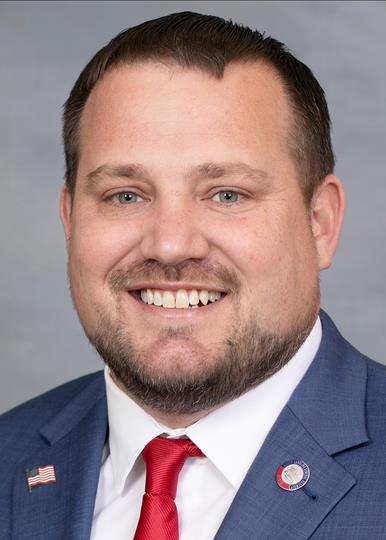
Rep. Ben Moss
Sponsored bills
Maddy summaryHB 177 requires North Carolina's State Human Resources Commission (SHRC) to review job requirements across state agencies and identify positions where a four-year college degree is unnecessary. The bill directs the SHRC to replace degree requirements with alternative qualifications like military service, apprenticeships, or trade school training where appropriate, and to remove unnecessary degree language from job postings. This policy change directly affects state job applicants who may qualify through non-degree pathways. The SHRC must report annually starting October 2025 on progress toward reducing these barriers.
Maddy summaryHB 154 requires NCInnovation, a state entity, to return all state funds and assets it acquired using state money to the North Carolina State Controller. The State Controller must then transfer these funds into the General Fund, where they remain unappropriated until the General Assembly votes to use them for specific purposes. This bill dissolves the financial relationship between the state and NCInnovation by repealing related statutes, effective 60 days after enactment. It directly affects NCInnovation’s financial obligations and the state’s treasury, with no new spending authorized by the transfer.
Maddy summaryHB 145 appropriates $50 million in one-time state funds to the University of North Carolina at Chapel Hill (UNC-CH) for the development of a diabetes research institute. This bill directly affects UNC-CH as the recipient of the funds and will support diabetes research activities at the university. The funds are designated for the 2025-2026 fiscal year and become effective July 1, 2025. The legislation is a straightforward funding allocation with no policy changes beyond the specified financial commitment.
Maddy summaryHB 72 prohibits North Carolina's Attorney General from participating in any court case (as a party, amicus, or otherwise) that argues a presidential executive order should be invalidated. The law directly affects the Attorney General's office, restricting their ability to challenge federal executive actions in state or federal courts. Key provisions state the Attorney General cannot advance arguments leading to the invalidation of any presidential executive order, applying to all pending or future litigation. This is a procedural limitation on state legal actions, not a change to federal executive power. The bill becomes effective upon enactment for cases filed after that date.
Maddy summaryThis bill proposes repealing a literacy test requirement from the North Carolina Constitution, which would affect all voters by removing a historical barrier to voting. The amendment must be approved by voters in the November 2026 election, with the ballot explicitly stating: "Constitutional amendment to remove the literacy test requirement... The federal Voting Rights Act of 1965 prohibits implementation of this requirement." If approved, the change takes effect upon certification by the State Board of Elections. The bill does not alter current voting procedures, as the literacy test has been prohibited by federal law since 1965.
Maddy summaryHB 99 exempts certified reflexologists from oversight by North Carolina's Board of Massage and Bodywork Therapy. It directly affects nationally certified reflexologists (holding current ARCB certification) and their supervised students, who must obtain certification within 12 months. The bill adds a specific exemption to state licensing law, allowing these practitioners to perform reflexology - a manual technique using pressure on feet/hands - to stimulate neural pathways - without state board regulation. The law takes effect October 1, 2025.
Maddy summaryHB 89, the "University Vaccination Freedom Act," repeals North Carolina's requirement for college and university students to provide vaccination records. It removes the mandate for students to submit immunization certificates to institutions, effective for the 2026-2027 academic year. The bill retains existing religious exemption provisions (G.S. 130A-157), allowing students to opt out by submitting a written statement of religious beliefs. This change directly affects all students attending public or private colleges and universities in North Carolina.
Maddy summaryHB 75, the Pharmaceutical Full Disclosure Act, requires prescription drug manufacturers to clearly disclose specific information in advertisements targeting North Carolina consumers. It mandates that ads include the FDA approval date for the drug's use, the date the drug first became available to U.S. consumers, and detailed clinical trial data for required side effects (such as trial length, participant numbers, and side effect frequency). The law applies to all advertisements via TV, internet, print, or radio in North Carolina published on or after October 1, 2025, directly affecting drug manufacturers and their marketing materials. This policy change aims to provide clearer, evidence-based information about prescription drugs in promotional content.
Maddy summaryHB 90 provides a 3% cost-of-living adjustment (COLA) to retirement allowances for retirees in North Carolina's Teachers', State Employees', Judicial, Legislative, and Local Governmental Retirement Systems. The increase applies to retirees who retired on or before specific dates (ranging from July 1, 2024, to January 1, 2025), with those who retired later receiving a proportional increase based on months served during 2024-2025. The bill appropriates $250 million from the General Fund to fund this adjustment, effective July 1, 2025. It directly affects current retirees in these five systems by increasing their monthly payments.