

Maddy summaryHB 505, "Kayla's Act: Protecting Domestic Violence Victims," allows domestic violence victim witnesses in North Carolina criminal cases to testify remotely (via video or similar technology) instead of in person during trials. This directly affects victims, prosecutors, defense attorneys, and courts in domestic violence cases involving crimes like assault or stalking under Chapter 14 of state law. The bill requires prosecutors to notify defendants 15 business days in advance of remote testimony, with defendants having 5 days to object in writing; if no objection is filed, remote testimony is permitted. If a defendant objects, a judge may still allow remote testimony only if the victim would suffer serious emotional distress from testifying in the defendant's presence or if their ability to communicate with the court would be impaired, with strict court oversight to ensure fair cross-examination.
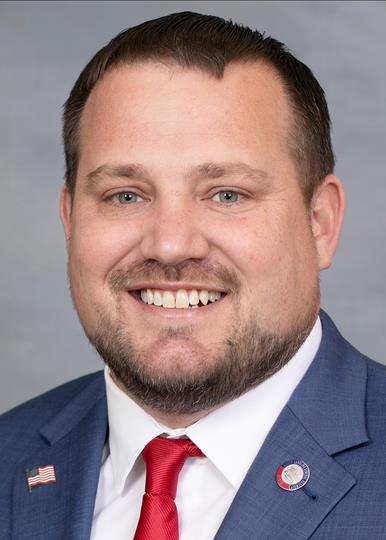
Rep. Ben Moss
Sponsored bills
Maddy summaryHB 513 appropriates $1 million annually from the General Fund to fund North Carolina's Long-Term Care Ombudsman Program through fiscal years 2025-2027. It allocates $855,000 yearly to create nine new full-time Regional Ombudsman positions in areas most needing support, as determined by the State Ombudsman, to help meet national staffing standards. The remaining funds cover operational costs like equipment, supplies, and transportation for existing program staff. This directly benefits long-term care residents by expanding access to ombudsman services that address facility concerns and advocate for their rights.
Maddy summaryHB 511 establishes new salary levels for full-time magistrates in North Carolina, directly affecting these court officers who handle minor cases like traffic violations and small claims. The bill appropriates $11.5 million annually from the General Fund for 2025-2027 to fund these increases, with specific salary steps outlined in the law. Magistrates will receive raises every two years for the first three experience levels and every four years for higher levels, starting at $47,228 for new hires and reaching $90,498 for the highest step. The changes take effect July 1, 2025, and apply to magistrates working at least 40 hours weekly.
Maddy summaryHB 498 creates a retirement credit for North Carolina teachers who served in the military. It allows veterans to count up to four years of active duty service toward their state retirement system, provided they weren’t dishonorably discharged, served before becoming a teacher, and meet licensure requirements. The bill modifies the retirement system to include this credit, requiring employers to pay a lump sum covering the retirement system’s increased liability for the credited service. This directly affects military veterans transitioning to teaching careers in North Carolina, making their prior service count toward retirement benefits.
Maddy summaryHB 486 appropriates $1 million from North Carolina's General Fund to Blue Star Families, Inc., a nonprofit organization, for specific military family support programs. The funds will directly support military spouses through career development (via a Fayetteville chapter), strengthen military families, and provide caregiver services for veterans and military personnel. The allocation is structured as $400,000 for career programs, $300,000 for family strengthening, and $300,000 for caregiver services, all for the 2025-2026 fiscal year. The bill becomes effective July 1, 2025, and focuses solely on funding existing nonprofit services without altering laws or creating new requirements.
Maddy summaryHB 484 authorizes North Carolina's African American Heritage Commission to study creating monuments and markers honoring the state's civil rights history, including sites related to the Student Nonviolent Coordinating Committee, sit-ins, and desegregation efforts. The bill directly affects the Commission, which must hold public hearings and report findings by May 2026, and North Carolinians by commemorating local contributions to the civil rights movement. Key provisions include appropriating $500,000 for the Commission to place markers along the state's Civil Rights Trail and conducting feasibility studies on permanent monuments. The bill becomes effective July 1, 2025, with funding allocated for the 2025-2026 fiscal year.
Maddy summaryHB 470, "The Second Amendment Protection Act," prohibits North Carolina state officials and employees from enforcing federal firearms laws within the state. It specifically bans state law enforcement, government employees, and political subdivisions from assisting in the enforcement of any federal rules, regulations, or statutes related to firearms, accessories, or ammunition. The bill states that such federal laws exceed constitutional authority under the Tenth Amendment and that North Carolina retains full power to regulate firearms under its own laws. It does not change North Carolina's existing firearm regulations but blocks state resources from being used to implement federal gun control measures. The act applies directly to all state and local government employees who might otherwise assist in federal gun law enforcement.
Maddy summaryThis North Carolina bill creates a process for the state legislature to review federal laws, rules, or executive orders for constitutionality. If deemed unconstitutional, state agencies, local governments, and organizations receiving state funds must halt implementation of those federal rules in nine specific areas, including public health emergencies, natural resource regulation, agriculture, land/water management, education, and gun rights. The bill directs the Attorney General to conduct reviews and allows the legislature to pursue legal challenges if needed. It does not change federal law but prohibits state compliance with certain federal rules determined unconstitutional by North Carolina.
Maddy summaryHB 47, the Disaster Recovery Act of 2025 - Part I, allocates $524 million from the Helene Fund to support recovery efforts in North Carolina counties impacted by Hurricane Helene. The bill directs funds to specific programs including home reconstruction ($120 million), agricultural crop loss assistance ($200 million), road and bridge repairs ($100 million), small business infrastructure grants ($55 million), debris removal ($20 million), fire department equipment ($10 million), and tourism promotion ($4 million). These resources directly assist residents, farmers, local governments, and businesses in designated hurricane-affected counties by addressing immediate rebuilding needs and supporting economic recovery. The bill requires programs to align with federal disaster recovery guidelines to maximize potential federal reimbursement, with reporting requirements for certain initiatives.
Maddy summaryHB 184 allows small North Carolina sawmills (those milling under 1 million board feet annually) to sell ungraded lumber directly to homeowners for residential construction. The bill amends building codes to permit this ungraded "dimension lumber" in one- and two-family homes and certain small structures, provided mills meet specific requirements. These include operators holding state-approved lumber grading training certifications, marking lumber with detailed specifications (species, mill ID, PS20 compliance), and providing purchaser certificates. Code officials must review construction for safety compliance (excluding grade-stamp requirements) and are protected from liability for structural issues related to ungraded lumber use. The law aims to support local sawmills while maintaining safety standards through defined labeling, training, and oversight.