

Maddy summaryThis bill revives and expands a program that allows eligible retired educators to return to work in high-need schools. It defines "high-need retired teachers" as beneficiaries of the Teachers' and State Employees' Retirement System who meet specific retirement and service criteria, and are reemployed by local boards of education. A key provision ensures that earnings from this reemployment do not count against post-retirement earnings limits, allowing these teachers to receive both their full retirement allowance and a salary. The Department of Public Instruction is tasked with certifying these teachers, and local boards must report their employment status to the Retirement System.
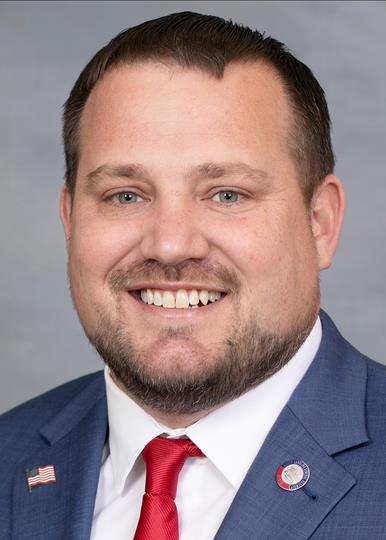
Rep. Ben Moss
Sponsored bills
Maddy summaryHB 246, also known as "Liam's Law," increases penalties for specific driving offenses. The bill elevates reckless driving that causes serious bodily injury to a Class I felony. For street racing, it establishes new felony classifications for causing serious injury (Class F felony) or death (Class B2 felony), and mandates longer driver's license revocations, including permanent revocation for fatalities. Additionally, the bill increases the penalty for hit-and-run offenses that result in death to a Class D felony. These provisions directly affect drivers involved in such incidents.
Maddy summaryHB 218 requires the North Carolina Division of Motor Vehicles (DMV) to include a request for emergency contact information on applications for drivers' licenses, learners' permits, and identification cards. This applies to both new applications and renewal applications. Providing this emergency contact information will be optional for the applicant. The act is set to become effective on October 1, 2026.
Maddy summaryHB 113 creates a joint legislative committee to study potential changes to North Carolina's Medicaid program if federal funding decreases. The 12-member committee (six senators appointed by the Senate President Pro Tempore, six representatives appointed by the House Speaker) will examine cost-saving options like reducing optional services, adjusting provider payments, or improving managed care efficiency. It must submit a final report with recommendations to the General Assembly by April 30, 2026, but the bill itself does not make any direct policy changes to Medicaid. This is a procedural measure establishing a study body, not a policy enactment.
Maddy summaryHB 899 repeals laws that made North Carolina's Office of State Fire Marshal an independent agency and transfers its oversight to the Commissioner of the Department of Insurance. The bill ensures current employees, fire department identification numbers, and existing rules will continue under the Commissioner's authority until amended by the Commissioner or changed by the General Assembly. These changes take effect on October 1, 2025.
Maddy summaryHB 965 proposes adding a constitutional amendment to guarantee all North Carolinians the right to clean water, clean air, and a preserved environment, including protection of natural resources like air, water, wildlife, and soils. If approved by voters in the 2026 general election, it would automatically become part of the state constitution, requiring the state to act as a trustee of natural resources for present and future generations. The amendment would not change current environmental laws but would establish a new constitutional standard that future legislation must align with. This bill must still pass through the legislature and gain voter approval to take effect.
Maddy summaryHB 964 allows individuals with a valid concealed handgun permit (or those exempt from needing one) to carry concealed non-handgun weapons like bowie knives, stun guns, or other deadly weapons described in existing law. It directly affects permit holders by expanding their permitted concealed carry to include specific weapons beyond handguns, provided they are not in locations where concealed handgun carry is prohibited. The bill amends North Carolina law to clarify that permit holders may carry these weapons concealed when permitted to carry handguns, without requiring additional permits. The law takes effect December 1, 2025, applying only to offenses committed after that date.
Maddy summaryHB 397 allows schools in North Carolina to use epinephrine nasal spray as an emergency treatment option alongside traditional auto-injectors for students experiencing anaphylaxis. The bill amends school health policies to include nasal spray devices in the definition of "epinephrine auto-injector delivery systems," requiring all schools to maintain at least two emergency epinephrine supplies (now including nasal spray) in secure but accessible locations. Schools must train staff to recognize anaphylaxis symptoms, store devices properly, and follow emergency action plans developed with school nurses. This applies to public schools, charter schools, and regional schools starting in the 2025-2026 school year. The policy directly affects school staff, students with severe allergies, and school health protocols.
Maddy summaryHB 53 would increase property damage thresholds for classifying at-fault car accidents under North Carolina's Safe Driver Incentive Plan. It raises the "major" accident threshold from $3,850 to $5,975, the "intermediate" range from $2,300-$3,850 to $3,570-$5,975, and sets a new "minor" threshold at $3,570 or less. This change would reduce surcharges for drivers involved in property damage accidents below these higher thresholds. The bill would take effect October 1, 2025, if passed.
Maddy summaryHB 266 designates June 12th of each year as Women Veterans Day in North Carolina. The bill directly affects North Carolinians by establishing an annual state observance to recognize women veterans' service. It adds this date to North Carolina's official calendar through a simple statutory change in Chapter 103 of the General Statutes, requiring no new funding or administrative implementation. The bill creates a ceremonial recognition without altering existing veteran benefits or programs.