

Maddy summaryHB 636 establishes new procedures for public school units to select and review library media and materials, affecting students, parents, and school personnel. The bill requires schools to adopt policies that ensure materials are age-appropriate and do not contain content defined as "harmful to minors," which includes depictions of sexual activity or pervasively vulgar content. It mandates a review process involving a community library advisory committee, public posting of recommended materials, and a mechanism for public objections. Additionally, the bill requires the creation of a public database for rejected materials and allows parents, guardians, students, or residents to pursue private legal action against schools violating these provisions. Principals are also required to review all media available at school book fairs for compliance.
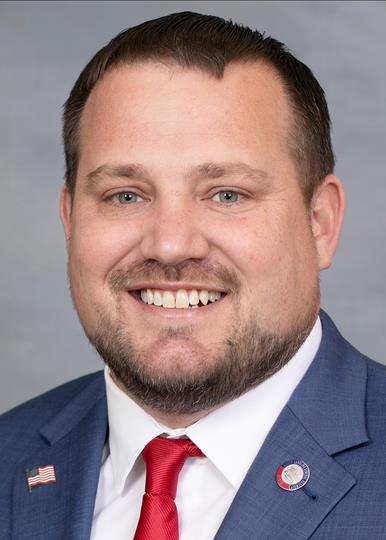
Rep. Ben Moss
Sponsored bills
Maddy summaryHouse Bill 610 directs the Department of Public Instruction to conduct a study on the feasibility of requiring each local school district to maintain at least one school operating on a year-round calendar for grades kindergarten through 12. The study will examine administrative and operational costs, transportation challenges, and potential barriers to establishing these schools. It will also assess anticipated student enrollment if year-round options were more accessible. The Department can work with a third-party for this research and must report its findings and any recommendations to the Joint Legislative Education Oversight Committee by January 15, 2027.
Maddy summaryThis bill designates "The Andy Griffith Show" as the official television show of the State of North Carolina. This symbolic act recognizes the cultural impact of the show and its connection to the state.
Maddy summaryHB 734, titled "Modernize Debt Settlement Prohibition," aims to prohibit debt settlement and debt adjusting services in North Carolina. The bill reclassifies these activities as unfair trade practices and clarifies their definitions. It makes engaging in debt adjusting or debt settlement a Class 2 misdemeanor and expands civil remedies for debtors. The bill grants superior courts the authority to enjoin such practices and assess civil penalties. However, it exempts certain individuals and transactions, such as a creditor acting without cost to the debtor or an attorney acting within an attorney-client relationship.
Maddy summaryHouse Bill 650, titled "No Interchange Fees on Sales Tax or Tips," prohibits payment card networks, issuer banks, and acquirer banks from charging interchange fees on the sales tax or gratuity portions of electronic payment transactions. This directly affects merchants by reducing the processing fees they pay on these specific amounts. Merchants must provide the tax or gratuity data during the transaction authorization or settlement process, or submit documentation later to receive a credit for any fees charged. The bill also includes measures to prevent entities from adjusting other fees to circumvent this prohibition. Violations can result in injunctive relief, civil penalties, and refunds to affected merchants.
Maddy summaryHB 634 updates North Carolina laws to enhance parity in health insurance coverage for mental health and addiction recovery. It requires all health benefit plans to provide benefits for mental health conditions that are no less favorable than those for physical illnesses, including applying the same financial limits. A key provision mandates that medical necessity determinations for substance use disorders must rely solely on the most recent American Society of Addiction Medicine criteria. The bill also requires the State Health Plan for Teachers and State Employees to comply with these new utilization review standards and updates terminology from "chemical dependency" to "substance use disorder" in relevant statutes.
Maddy summaryHB 69, the Military and Veterans Educational Promise Act, provides two key benefits for military-affiliated individuals and veterans at North Carolina's University of North Carolina (UNC) schools. First, it requires UNC institutions to allow eligible military members (including reservists) and their spouses to defer admission for up to five years (for active duty) or two years (for reserve service) upon enrollment notice. Second, it establishes in-state tuition rates for honorably discharged veterans who served at least 90 days in the military, graduated from a North Carolina high school after 2004, had a North Carolina duty station, or received a Purple Heart. The bill applies to all UNC institutions beginning in the 2025-2026 academic year.
Maddy summaryHB 211, "The Kelsey Smith Act," authorizes wireless telecommunications carriers to provide a device's location information to law enforcement under specific emergency circumstances. This includes situations where a 911 call was made or there is reasonable suspicion of an emergency involving risk of death or serious physical harm. Wireless carriers are required to submit their emergency contact information to the State Bureau of Investigation, which will maintain a database for public safety answering points. The bill protects carriers from legal action if they provide this information in good faith.
Maddy summaryHouse Bill 272, known as "The Sergeant Mickey Hutchens Act," allows certain law enforcement, probation/parole, and correctional officers in North Carolina to purchase additional retirement service credit. Officers who hold an advanced law enforcement or corrections certificate and have at least five years of membership service can buy up to four years of creditable service. This purchase applies to members of the Teachers' and State Employees' Retirement System or the Local Governmental Employees' Retirement System. To do so, they must pay a lump sum covering the full cost of the increased retirement system liability and an administrative fee, with the option for their employer to contribute to this cost.
Maddy summaryHB 632 revises North Carolina's hazing laws, repealing the existing statute and creating a new one with an expanded definition of hazing. It establishes criminal offenses for individuals who participate in hazing against minors or students, and for local, national, and postsecondary educational institutions whose leadership or employees knowingly fail to intervene or actively participate. The bill also introduces penalties for individuals who fail to seek medical assistance for an injured minor or student during hazing. Penalties for violations range from misdemeanors to felonies, including potential fines for both individuals and organizations.