

Maddy summaryHB 111 grants Chatham County Schools flexibility to set an earlier school start date (as early as August 19) and adjust assessment timing. It allows the district to open before the standard August 26 date if they demonstrate "good cause" (eight or more emergency closures in four of the last ten years due to weather or other emergencies). The bill also permits administering annual assessments earlier if the fall semester ends before December 31. These changes apply only to Chatham County Schools beginning in the 2025-2026 school year. The bill modifies existing education statutes to create this specific exception for the county.
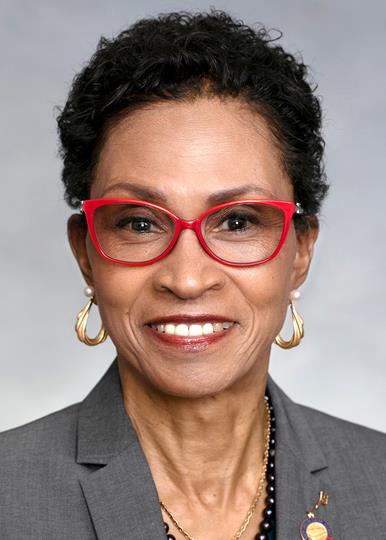
Rep. Renée Price
Sponsored bills
Maddy summaryHB 51 grants Caswell County Schools, Chapel Hill-Carrboro City Schools, and Orange County Schools flexibility to set their own school calendars, including aligning with local community college schedules. It modifies state requirements that typically mandate school openings no earlier than August 26 and closings no later than June 11, allowing these districts to adjust dates based on community college calendars. The bill also permits these schools to administer student assessments earlier in the semester if their fall semester ends before December 31, rather than waiting for the usual final instructional days. This policy change applies only to the specified districts starting in the 2025-2026 school year.
Maddy summaryHB 33 allows Yadkin County Schools and Davie County Schools to align their academic calendars with Surry County Community College or Davidson-Davie Community College. This bill amends state law to explicitly permit these two school districts to match community college schedules, overriding standard state-mandated opening (no earlier than August 26) and closing (no later than June 11) dates. The change applies only to these specific school systems and takes effect for the 2025-2026 school year. The bill does not alter general calendar requirements for other North Carolina school districts.
Maddy summaryHB 166 creates a legal process for courts to issue Extreme Risk Protection Orders (ERPOs) that temporarily restrict a person's access to firearms when they pose a danger of harming themselves or others. The bill allows family members, law enforcement, or healthcare providers to petition a court for an ERPO, requiring the court to order the seizure of firearms if the respondent fails to surrender them. It specifically defines "firearm" and outlines procedures for filing petitions, service, and court hearings, with no court costs for petitioners. The law aims to prevent gun-related harm through court-supervised temporary firearm removal, while including safeguards like mandatory mental health evaluations and annual reporting requirements.
Maddy summaryHB 70 allows Hertford County Schools to align their academic calendar with Roanoke-Chowan Community College’s schedule, removing standard state-mandated opening and closing date requirements for this district. The bill amends state law to permit local school boards to match community college calendars for operational coordination, specifically for Hertford County Schools beginning in the 2025-2026 school year. This change directly affects only Hertford County Schools and does not apply to other school districts or alter general calendar rules statewide. The provision is limited to administrative flexibility and does not change instructional day requirements.
Maddy summaryHB 31 would amend North Carolina's State Human Resources Act to make every statewide general election day a paid holiday for state employees. This change would add election days to the current list of paid holidays (which includes Martin Luther King Jr.'s Birthday and Veterans Day), while maintaining the limit of 13 paid holidays per year. The bill directly affects state workers, ensuring they receive paid time off on election days without reducing the total number of paid holidays. It does not change election dates or voting procedures, only the employment benefits for state employees on those days. The legislation is currently pending in committee review.
Maddy summaryHB 131 reinstates a 35% tax credit for businesses and homeowners who install solar energy systems in North Carolina. Businesses can claim the credit over five years (with a $2.5 million maximum per installation), while homeowners receive capped credits based on system type (e.g., $1,400 for water heating, $3,500 for space heating). The credit applies to equipment placed in service in the state and expires for new installations after 2017, though projects meeting 2015 construction milestones qualify for extension. This bill renews a previously expired tax incentive program for solar energy adoption.
Maddy summaryHB 129, the "Judge Joe John Nonpartisan Judicial Elections Act," reestablishes nonpartisan elections for all North Carolina judicial offices, including Supreme Court justices, Court of Appeals judges, and superior and district court judges. The bill requires candidates to run without party labels, with primaries held only when more than two candidates file for an office, and winners elected based on highest vote totals (using a random draw only in tie situations). It also restores public financing for judicial campaigns, aiming to reduce partisan influence in judicial races. This bill directly affects judicial candidates, voters, and the election process for all statewide and local judicial positions in North Carolina.
Maddy summaryHB 128 appropriates $2 million annually for fiscal years 2025-2026 and 2026-2027 to create a statewide prostate cancer screening program administered by North Carolina's Department of Health and Human Services. The program provides free or low-cost screenings and follow-up care to uninsured or underinsured men aged 50-70 (40-70 with family history of prostate cancer) who meet income requirements (below 250% of federal poverty level). Eligibility requires no Medicare Part B or Medicaid coverage and specific age/family history criteria as defined in the bill. The program begins July 1, 2025.
Maddy summaryHB 115 exempts properly licensed child care facilities from property tax if they are used exclusively for child care. It applies to facilities operating under North Carolina's child care licensing rules (Chapter 110) and excludes both the building and necessary adjacent land from taxation. Partial exemptions are allowed if only part of a facility serves child care, but facilities on probation or with suspended licenses lose the exemption. The tax exemption takes effect for property taxes due on or after July 1, 2026.