

Maddy summaryHB 345 recognizes legal rights for the Dan and Haw River ecosystems in North Carolina, granting them the right to exist, flourish, and maintain natural functions like clean water and biodiversity. It directly affects these specific river watersheds - including all species, tributaries, and dependent ecosystems - and requires state environmental agencies (DEQ, DNR, Wildlife Commission) to protect these rights. The bill establishes that the rivers possess inherent rights to natural water flow, restoration, and freedom from pollution, shifting legal focus from merely regulating human activity to upholding the rivers' ecological health as a legal priority.
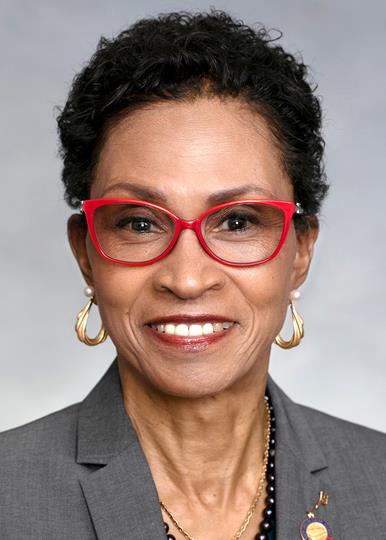
Rep. Renée Price
Sponsored bills
Maddy summaryHB 353, the Fair Minimum Wage Act, raises North Carolina's state minimum wage in staged increases, starting at $10 per hour on January 1, 2026, and reaching $18 per hour by January 1, 2030. After 2030, the wage will automatically adjust annually based on inflation using the Consumer Price Index. The bill directly affects hourly workers and employers across North Carolina, requiring higher pay for all covered employees. It also adds provisions allowing workers to recover unpaid wages plus interest, attorney fees, and court costs if employers fail to pay correctly.
Maddy summaryHB 339, the Economic Security Act, raises North Carolina's minimum wage to $22 per hour effective January 2026, with annual inflation adjustments based on the Consumer Price Index. It mandates equal pay for equal work, requires paid sick leave and family medical leave for all employees, and strengthens workplace safety protections. The bill also restores inflation-adjusted unemployment benefits, ends wage theft, removes criminal history questions from job applications ("banning the box"), and expands tax credits for childcare and low-income workers. Additionally, it creates a presumption that essential workers infected with COVID-19 contracted it on the job and appropriates funds for cost-of-living adjustments for public retirees.
Maddy summaryHB 350 requires North Carolina firearm owners to report lost or stolen firearms to local law enforcement or the State Bureau of Investigation within 24 hours of discovery. Owners must provide specific details like the firearm’s make, model, serial number, and circumstances of the loss or theft. Law enforcement must then enter key details into the National Crime Information Center database. Violations are punishable as a Class 3 misdemeanor for a first offense, escalating to a Class I felony for repeat violations. The law takes effect December 1, 2025.
Maddy summaryHB 322 modifies North Carolina's public records law to require the General Assembly to follow the same record retention and disposal rules as other state agencies. It mandates that legislative records must be preserved for at least 10 years after a legislator leaves office (or until they have no further official use, whichever is longer) and requires the Legislative Services Officer to work with the Department of Natural and Cultural Resources to create an inventory of these records. The bill repeals previous exemptions that allowed the General Assembly to unilaterally control its own records and ensures these records are subject to public access standards. This directly affects North Carolina legislators, their offices, and the Department of Natural and Cultural Resources, which will oversee record preservation and public access.
Maddy summaryHB 316 reenacts North Carolina's Child Tax Credit to help families cover child care costs, with reimbursement percentages based on income and child age (e.g., 7-13% for dependents aged 6-12). It allocates $200 million annually to expand the NC Pre-K program, adding 32,000 slots for 4-year-olds, and $35 million to increase subsidized child care funding. The bill also requires public schools to provide free lunches at no cost to students through state funding tied to school nutrition evaluations. Additionally, it mandates a report on creating a high school child care apprenticeship program. The bill directly affects families with children, public schools, and child care providers across North Carolina.
Maddy summaryHB 326 requires North Carolina's Department of Public Instruction (DPI) to study ways to increase teacher planning time or reduce workloads that cut into it. The DPI must report to lawmakers by February 15, 2026, with specific recommendations, cost estimates, and other relevant findings. The bill allocates $5,000 in one-time funding for the study, which can include partnering with outside experts. This is a procedural study bill with no immediate policy changes; it aims to inform future decisions about teacher workloads in public schools.
Maddy summaryHB 303, titled "Make Corporations Pay What They Owe," would repeal a planned phaseout of North Carolina's corporate income tax. Specifically, it reverses Section 42.2 of S.L. 2021-180, which had scheduled a gradual reduction in the corporate tax rate. This bill directly affects corporations subject to North Carolina's corporate income tax by preventing the tax rate from decreasing as previously scheduled. The legislation is procedural in nature, focusing on reversing a specific tax policy change rather than creating new tax rates or mechanisms.
Maddy summaryHB 299 increases the property tax exemption for disabled veterans in North Carolina from $45,000 to $54,000 of a home's appraised value. It directly affects qualifying disabled veterans who own and occupy their primary residence, allowing them to exclude a larger portion of their home's value from property taxes. The bill amends Section 105-277.1C of state law to reflect this higher exclusion limit, while maintaining that recipients cannot claim other property tax relief. This change takes effect for property taxes due on or after July 1, 2025.
Maddy summaryHB 280 allocates $30,000 in one-time state funds to support the North Carolina Senior Tar Heel Legislature, a program for older residents to engage with state policy. The funding, from the General Fund for the 2025-2026 fiscal year, covers operational costs for this existing program established under state law. It directly affects the Senior Tar Heel Legislature by providing financial resources for its activities. The bill becomes effective July 1, 2025, and does not create new policy but enables the program's continued operation.