

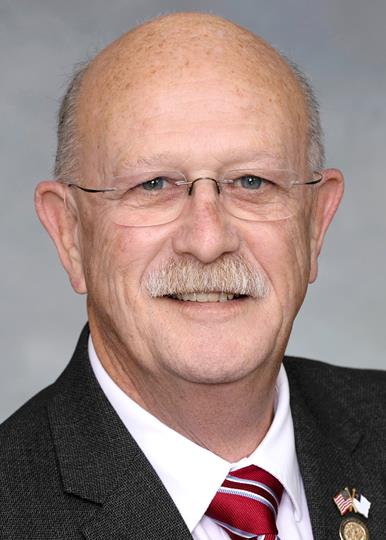
Photo of Bill Ward
R North Carolina House · District 5 On the 2026 ballot

Rep. Bill Ward

Compare
Total votes
1,282
all sessions
Attendance
100%
of floor votes
Higher than 89% of chamber peers
With party
99%
of cast votes
Higher than 86% of chamber peers
Bipartisan score
1%
crosses aisle rarely
Lower than 88% of chamber peers
Sponsored
854
bills & resolutions
Higher than 95% of chamber peers
Committees
8
assignments
854 bills and resolutions

Sponsored bills

Total
854
Primary
31
Co-sponsor
823
This page
854
matching current filters
Co-sponsor HB 103
died · North Carolina House · Co-sponsor
NC American Indian Hunting/Fishing Rights.

Maddy summaryHB 103 exempts members of North Carolina-recognized tribes from needing hunting, trapping, or fishing licenses when hunting or fishing on tribal land (requiring ID verification) or off tribal land (requiring ID plus compliance with reporting, hunter education, and federal stamp rules). It directly affects tribal members recognized under Chapter 71A of North Carolina law, both on tribal property and in state waters/lands outside tribal areas. The bill amends licensing rules to remove fee requirements while maintaining other regulatory obligations like wildlife reporting and federal stamp purchases. It becomes effective October 1, 2025.

died Mar 4, 2025 1 co-sponsor
Co-sponsor HB 239
In committee · North Carolina House · Co-sponsor
Change to Exceptional Children Funding Formula.

Maddy summaryHB 239 modifies North Carolina's funding formula for children with disabilities in public schools. It changes how funds are allocated to local school districts by capping per-child funding at 13% of a district's total enrollment plus students using state scholarship programs. The bill requires the State Education Assistance Authority to provide annual scholarship data by March 15 to help calculate district funding. It also appropriates $25 million in recurring funds for the 2025-2026 fiscal year to support this revised funding structure, effective July 1, 2025.

In committee Mar 3, 2025 1 co-sponsor
Co-sponsor HB 44
Passed · North Carolina House · Co-sponsor
General Statutes Commission Electronic Signatures.

Maddy summaryHB 44 clarifies when business contracts in North Carolina can include enforceable provisions for recovering attorneys' fees. It requires these provisions to be signed by hand or with specific electronic signatures (like typing or touchscreen signatures) to be valid, while explicitly excluding consumer contracts, employment agreements, and government contracts. The bill also updates notary application rules to allow electronic submission of signatures while maintaining handwritten requirements for initial applications. It does not change existing rules for consumer contracts, debt instruments, or insurance policies. The law affects businesses drafting contracts and courts enforcing attorneys' fees clauses.

Passed Feb 27, 2025 1 co-sponsor
Co-sponsor HB 48
Passed · North Carolina House · Co-sponsor
Increase Unemployment Insurance Maximum Benefit/2025 Unemployment Insurance Tax Credit.

Maddy summaryHB 48 raises North Carolina's maximum weekly unemployment benefit from $350 to $400 for claimants filing on or after March 2, 2025, directly affecting unemployed workers. It also creates a 2025 tax credit for employers, allowing them to offset unemployment insurance taxes paid on 2024 fourth-quarter wages against their 2025 tax liability. The credit applies only to contributions remitted by January 31, 2025, and must be claimed via a specific report. The bill ratifies a governor's temporary disaster-related unemployment expansion but focuses on permanent changes to benefit levels and employer tax treatment.

Passed Feb 27, 2025 1 co-sponsor
Co-sponsor HB 230
In committee · North Carolina House · Co-sponsor
Create Crime for Habitual Domestic Violence.

Maddy summaryHB 230 creates a new felony offense for individuals who commit a domestic violence misdemeanor (under G.S. 14-32.5) and have two or more prior domestic violence convictions within the past 15 years. The first conviction under this law is a Class H felony, with penalties increasing for subsequent offenses (up to Class C felony). The bill also expands police authority to make warrantless arrests for domestic violence misdemeanors when officers have probable cause to believe the crime occurred. This directly affects repeat domestic violence offenders in North Carolina, with the law taking effect December 1, 2025.

In committee Feb 27, 2025 1 co-sponsor
Co-sponsor HB 229
In committee · North Carolina House · Co-sponsor
Medicaid Rates/Ambulatory Surgical Centers.

Maddy summaryHB 229 adjusts North Carolina's Medicaid reimbursement rates for ambulatory surgical centers (ASCs), requiring payments to be at least 95% of the current Medicare Ambulatory Surgical Centers fee schedule. This change directly affects ASCs by increasing their Medicaid payments, with the state appropriating $10.476 million annually from the General Fund to cover the cost and match $19.135 million in federal funds each year for the 2025-2027 fiscal biennium. The bill mandates these rate adjustments to take effect on July 1, 2025, ensuring ASCs receive consistent reimbursement aligned with Medicare rates. The legislation focuses solely on establishing the new payment structure and funding mechanism, without altering eligibility or services.

In committee Feb 27, 2025 1 co-sponsor
Co-sponsor HB 234
In committee · North Carolina House · Co-sponsor
Little Federal Model NC Edition.

Maddy summaryThis bill proposes constitutional amendments to require each North Carolina senator to represent two counties (instead of one) and to fix the state at exactly 100 counties. It also updates rules for incorporating new cities or towns, preventing new municipalities within specific distances of existing cities based on their population size (e.g., within 1 mile of a city with 5,000+ residents). The changes would require voter approval in the November 2026 election. If approved, the new rules would take effect after certification by the State Board of Elections.

In committee Feb 27, 2025 1 co-sponsor
Co-sponsor HJR 157
Signed into law · North Carolina House · Co-sponsor
State of the State Invitation.

Maddy summaryHJR 157 is a procedural resolution inviting Governor Josh Stein to address a joint session of the North Carolina General Assembly on March 12, 2025. It directs a committee of five House members and five Senate members to extend the invitation and specifies that the governor's cabinet, Council of State members, and state judges may attend. This resolution does not create new policy or affect any laws; it solely schedules a ceremonial address. The invitation is effective upon ratification, as noted in the resolution's text.

Signed into law Feb 27, 2025 1 co-sponsor
Co-sponsor HB 130
In committee · North Carolina House · Co-sponsor
Agriculture Crops Disaster Relief.

Maddy summaryHB 130 establishes a $475 million program to provide financial assistance to North Carolina farmers who suffered crop losses from natural disasters in 2024. It directly affects farmers in counties designated by the USDA as disaster areas, requiring verified losses of eligible agricultural commodities (like crops, livestock, or specialty plants) planted but not harvested by January 1, 2024. The program uses county and state yield/price averages to calculate payments, mandates submission of USDA Form 578 or equivalent documentation within 30 days, and allocates funds from state reserves (Stabilization, IT, and Economic Development) to cover verified losses. Farmers must provide documentation for verification, and the Department of Agriculture may audit claims to ensure proper use of funds, with refunds required for inaccurate information.

In committee Feb 26, 2025 1 co-sponsor
Co-sponsor HB 197
In committee · North Carolina House · Co-sponsor
Local Communicable Disease Programs/Funds.

Maddy summaryHB 197 appropriates $25 million annually for the 2025-2026 and 2026-2027 fiscal years to North Carolina's local health departments (LHDs) for communicable disease programs. The funding aims to address a 70% staff shortage in LHDs by enabling them to retain existing staff, hire additional public health professionals (including nurses), and expand essential services. Funds are allocated with half distributed equally among LHDs based on the number of counties served, and half distributed based on the percentage of state population each LHD serves. The bill becomes effective July 1, 2025, to support North Carolina's response to diseases like avian flu and mpox.

In committee Feb 26, 2025 1 co-sponsor
Showing 391 to 400 of 854 bills
Previous 1 … 39 40 41 … 86 Next