

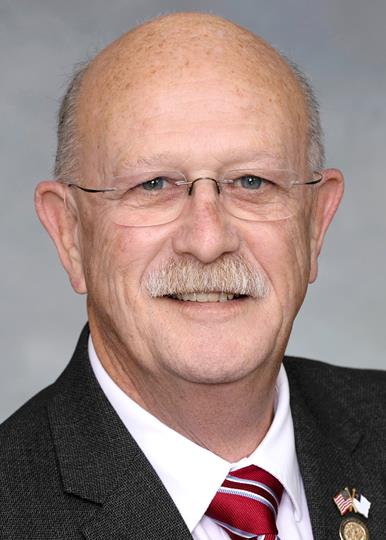
Photo of Bill Ward
R North Carolina House · District 5 On the 2026 ballot

Rep. Bill Ward

Compare
Total votes
1,281
all sessions
Attendance
100%
of floor votes
Higher than 90% of chamber peers
With party
99%
of cast votes
Higher than 87% of chamber peers
Bipartisan score
1%
crosses aisle rarely
Lower than 89% of chamber peers
Sponsored
854
bills & resolutions
Higher than 96% of chamber peers
Committees
8
assignments
854 bills and resolutions

Sponsored bills

Total
854
Primary
31
Co-sponsor
823
This page
854
matching current filters
Co-sponsor HB 600
died · North Carolina House · Co-sponsor
Recognition of the Tuscarora.

Maddy summaryHB 600 officially recognizes the Tuscarora Indians of Kahtenuaka Territories as a tribe under North Carolina law, effective July 1, 2025. The bill designates them as eligible for federal programs and services available to Native American tribes, based on historical treaties and their continuous presence in the state. It requires two Tuscarora representatives to serve on the State Commission of Indian Affairs and one to serve on the American Indian Heritage Commission. This recognition grants the tribe formal standing and representation in state-level tribal affairs.

died Jul 1, 2026 1 co-sponsor
Co-sponsor HB 1213
In committee · North Carolina House · Co-sponsor
Protect Taxpayers and Local Governments.

Maddy summaryHB 1213 removes tax exemptions for data centers in North Carolina, meaning these facilities will no longer be exempt from state sales and use taxes. The bill directly affects data center operators and the businesses that purchase equipment for them, requiring them to pay applicable taxes on new purchases starting July 1, 2026. By repealing specific sections of state tax law, the legislation ensures that data centers contribute to state revenue in the same way other commercial entities do.

In committee Jun 30, 2026 1 co-sponsor
Co-sponsor HB 198
Failed · North Carolina House · Co-sponsor
ABC Omnibus of 2026.

Maddy summaryHB 198 requires alcohol law enforcement officers to notify the permit holder (not just the employee) within five business days when a violation occurs on a licensed establishment's premises. This applies to both citations issued to employees and reports from other law enforcement agencies about violations of alcohol or related laws. The notice must be sent via email or certified mail and must identify the specific violation and the involved employee. The bill directly affects bars, restaurants, and other businesses holding alcohol permits in North Carolina by mandating clearer, faster communication about violations. It does not change enforcement powers but standardizes how permit holders receive violation notices.

Failed Jun 30, 2026 1 co-sponsor
Co-sponsor HB 34
Passed · North Carolina House · Co-sponsor
Strengthen Medicaid Provider Controls.

Maddy summaryHB 34 creates a new criminal offense for stealing or misusing someone else's mail, directly affecting individuals who unlawfully take, control, or transfer mail intended for others. The bill defines "mail" broadly to include letters, packages, or valuable items sent to another person and prohibits two specific actions: stealing mail to deprive the owner, or transferring mail to benefit someone not entitled to it. Punishments range from a Class A1 misdemeanor for first-time, low-value thefts (under $200) to a Class D felony for repeat offenses or high-value thefts (over $2,000). This law, effective December 1, 2025, applies to offenses committed after that date.

Passed Jun 25, 2026 1 co-sponsor
Co-sponsor HB 1035
Signed into law · North Carolina House · Co-sponsor
Various Local Election Changes III.

Maddy summaryThis bill changes how elections are held in the town of Pink Hill, North Carolina, by requiring them to occur in even-numbered years instead of odd-numbered years. It also restores in-person voting for the mayor and board of commissioners, ending the use of mail-in ballots for these specific local races. To manage the transition, the law extends the current terms of some officials whose elections would have been held in 2027 and 2029, ensuring that regular elections resume in 2028 with a staggered schedule. These changes apply to all municipal elections in Pink Hill starting from the date the bill becomes law.

Signed into law Jun 24, 2026 1 co-sponsor
Co-sponsor HB 301
Failed · North Carolina House · Co-sponsor
Social Media and Artificial Intelligence (AI) Safety.

Maddy summaryHB 301, titled "Social Media Protections for Minors Under 16," aims to regulate social media platforms for minors in North Carolina. The bill prohibits social media platforms from allowing children under 14 years of age to create accounts and requires them to terminate existing accounts for this age group, deleting their personal data. For minors aged 14 or 15, platforms must obtain parental or guardian consent before they can create or maintain an account. The North Carolina Department of Justice is responsible for enforcing these provisions, which allows for civil penalties and damages for violations, including potential lawsuits by affected minors.

Failed Jun 24, 2026 1 co-sponsor
Co-sponsor HB 936
Failed · North Carolina House · Co-sponsor
Robocall Solicitation Modifications.

Maddy summaryHB 936 modifies North Carolina's laws governing telephone solicitations to specifically address robocalls and spam text messages. The bill defines "robocall" to include artificial or prerecorded voice messages, ringless voicemails, and scam texts, and applies new restrictions to "robocallers." It prohibits robocalls before 8:00 A.M. or after 9:00 P.M., forbids intimidating language, and prevents misleading caller identification. Additionally, it clarifies the requirements for "prior express written consent" needed for solicitors to contact individuals on the "Do Not Call" Registry, stipulating conditions for this consent.

Failed Jun 24, 2026 1 co-sponsor
Co-sponsor HB 171
Vetoed · North Carolina House · Co-sponsor
Equality in State Agencies/Prohibition on Diversity, Equity, and Inclusion (DEI).

Maddy summaryHB 171 prohibits North Carolina state agencies from implementing diversity, equity, and inclusion (DEI) programs, including in hiring, employment practices, or training. It defines DEI broadly as any initiative influencing hiring or benefits based on protected characteristics (like race or gender) beyond merit-based processes. The bill mandates state auditor compliance audits, imposes civil penalties up to $5,000 per violation, and allows employees to file lawsuits after submitting a grievance to their agency. It explicitly excludes compliance with existing anti-discrimination laws (such as Title IX and the ADA) and protects First Amendment rights.

Vetoed Jun 24, 2026 1 co-sponsor
Co-sponsor HB 258
Signed into law · North Carolina House · Co-sponsor
Worker Safety Act of 2026.

Maddy summaryHB 258, the Utility Worker Protection Act, increases penalties for assaulting utility and communications workers by designating such assaults as Class A1 misdemeanors - the highest misdemeanor level - when the worker is visibly identifiable (e.g., wearing company-logoed uniforms) and performing duties. It directly affects workers providing electricity, gas, telecommunications, or internet services, including those employed by public, private, or cooperative entities. The bill adds specific language to North Carolina’s assault statute, requiring prosecutors to apply this enhanced penalty for assaults meeting these criteria, without needing other legal provisions. The law takes effect December 1, 2025, applying to offenses committed on or after that date.

Signed into law Jun 22, 2026 1 co-sponsor
Co-sponsor HB 536
Signed into law · North Carolina House · Co-sponsor
Physical Therapy Practice Act Modifications.

Maddy summaryHB 536 modifies North Carolina's Physical Therapy Practice Act by establishing a new Board of Examiners to regulate the profession. The Board will consist of eight members (including a medical doctor, four physical therapists, two physical therapist assistants, and a public member) appointed to oversee licensing, discipline, and continuing education requirements for physical therapists and assistants. The bill clarifies that physical therapy practice excludes surgery, chiropractic, or medical diagnosis, and specifies that the Board may investigate complaints confidentially while making disciplinary decisions public. This legislation directly affects licensed physical therapists, physical therapist assistants, and the public by setting standards for practice, licensure, and professional conduct in North Carolina.

Signed into law Jun 22, 2026 1 co-sponsor
Showing 21 to 30 of 854 bills
Previous 1 … 2 3 4 … 86 Next