

Maddy summaryHB 350 requires North Carolina firearm owners to report lost or stolen firearms to local law enforcement or the State Bureau of Investigation within 24 hours of discovery. Owners must provide specific details like the firearm’s make, model, serial number, and circumstances of the loss or theft. Law enforcement must then enter key details into the National Crime Information Center database. Violations are punishable as a Class 3 misdemeanor for a first offense, escalating to a Class I felony for repeat violations. The law takes effect December 1, 2025.
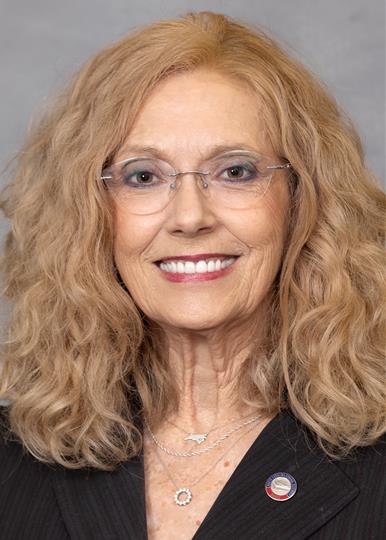
Rep. Cynthia Ball
Sponsored bills
Maddy summaryHB 340 requires North Carolina's State Board of Education to develop or purchase a screening assessment to identify academically or intellectually gifted students in all sixth-grade classrooms across public middle schools. The bill directly affects all sixth graders in North Carolina public middle schools by mandating universal screening for gifted identification. Key provisions include appropriating $7 million in recurring state funds for the 2025-2026 fiscal year to cover assessment costs and requiring the screening to be administered to every sixth grader. The law becomes effective July 1, 2025, with the Department of Public Instruction responsible for implementing the screening process.
Maddy summaryHB 344, the Litter Reduction Act of 2025, requires a deposit on most beverage containers (like soda, water, and alcohol in glass, plastic, or metal) sold in North Carolina, with refunds available at certified redemption centers. It directly affects beverage distributors, retailers (excluding small businesses selling under 250,000 containers yearly), and consumers who purchase these products. The bill establishes a system where consumers pay a deposit at purchase and can return empty containers to redemption centers for a refund, aiming to reduce roadside litter from beverage containers. Key provisions include defining "beverage container," requiring redemption centers to accept containers, and setting recycling standards to avoid downcycling or waste-to-energy processing.
Maddy summaryHB 343 appropriates $380,000 for 2025-26 and $397,000 for 2026-27 to create four full-time ombudsman positions within North Carolina’s Long-Term Care Ombudsman Program. This directly affects residents of nursing homes, adult care homes, and family care homes by enhancing advocacy for their rights and care quality. The bill’s key provision funds staff to move the state’s program toward national standards for resolving facility issues without formal complaints. It becomes effective July 1, 2025, with no advocacy language - only a concrete funding mechanism for expanded protections.
Maddy summaryHB 322 modifies North Carolina's public records law to require the General Assembly to follow the same record retention and disposal rules as other state agencies. It mandates that legislative records must be preserved for at least 10 years after a legislator leaves office (or until they have no further official use, whichever is longer) and requires the Legislative Services Officer to work with the Department of Natural and Cultural Resources to create an inventory of these records. The bill repeals previous exemptions that allowed the General Assembly to unilaterally control its own records and ensures these records are subject to public access standards. This directly affects North Carolina legislators, their offices, and the Department of Natural and Cultural Resources, which will oversee record preservation and public access.
Maddy summaryHB 325 establishes a two-year pilot program (2025-2026 and 2026-2027) to fund public school field trips to North Carolina's Legislative Building. It provides up to $2,000 per school for transportation costs (bus rental, fuel, driver pay) to participating schools, prioritizing those in counties designated as "Tier 1" under state law. The program is funded with $1.5 million annually from the General Fund, requiring schools to submit budget applications by October 1 and reporting usage to the legislature by February 15 each year. The bill directly affects public school units statewide, with priority given to schools in designated underserved counties.
Maddy summaryHB 316 reenacts North Carolina's Child Tax Credit to help families cover child care costs, with reimbursement percentages based on income and child age (e.g., 7-13% for dependents aged 6-12). It allocates $200 million annually to expand the NC Pre-K program, adding 32,000 slots for 4-year-olds, and $35 million to increase subsidized child care funding. The bill also requires public schools to provide free lunches at no cost to students through state funding tied to school nutrition evaluations. Additionally, it mandates a report on creating a high school child care apprenticeship program. The bill directly affects families with children, public schools, and child care providers across North Carolina.
Maddy summaryHB 326 requires North Carolina's Department of Public Instruction (DPI) to study ways to increase teacher planning time or reduce workloads that cut into it. The DPI must report to lawmakers by February 15, 2026, with specific recommendations, cost estimates, and other relevant findings. The bill allocates $5,000 in one-time funding for the study, which can include partnering with outside experts. This is a procedural study bill with no immediate policy changes; it aims to inform future decisions about teacher workloads in public schools.
Maddy summaryHB 303, titled "Make Corporations Pay What They Owe," would repeal a planned phaseout of North Carolina's corporate income tax. Specifically, it reverses Section 42.2 of S.L. 2021-180, which had scheduled a gradual reduction in the corporate tax rate. This bill directly affects corporations subject to North Carolina's corporate income tax by preventing the tax rate from decreasing as previously scheduled. The legislation is procedural in nature, focusing on reversing a specific tax policy change rather than creating new tax rates or mechanisms.
Maddy summaryHB 289 adds one new seat to North Carolina's Criminal Justice Education and Training Standards Commission, specifically allowing the North Carolina Police Benevolent Association (PBA) to select a full-time sworn law enforcement officer to serve on the Commission. This amendment increases the Commission's membership from 35 to 36 members by adding the PBA representative to the existing list of appointed positions. The initial appointee selected by the PBA would serve a three-year term beginning July 1, 2025, with subsequent appointees serving three-year terms as determined by the PBA. The bill does not change training standards or requirements, only the composition of the Commission that oversees them.