

Maddy summaryHB 423, the "Skip the Stuff Act," requires restaurants and third-party food delivery platforms in North Carolina to stop automatically providing single-use foodware (like utensils, napkins, and condiment packets) with orders. Instead, customers must actively request these items for take-out, delivery, or dine-in service. The bill exempts delivery-specific safety items (e.g., cup lids) and allows refillable condiment dispensers. It directly affects food establishments and delivery platforms, aiming to reduce unnecessary waste and costs associated with disposable food service items.
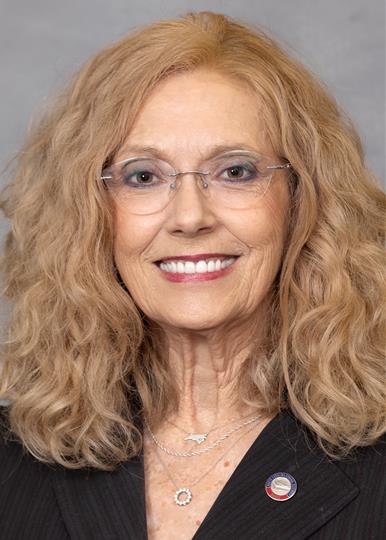
Rep. Cynthia Ball
Sponsored bills
Maddy summaryHB 438 requires North Carolina employers to provide employees working six-hour shifts or longer with at least one 20-minute paid rest break, scheduled near the middle of the workday. The bill directly affects workers in North Carolina covered by the Wage and Hour Act, mandating employers offer this break (though employees may decline it). Employers who fail to comply face civil penalties of up to $100 for a first violation and $500 for subsequent violations, with penalties adjusted for business size and violation severity. The law takes effect upon enactment and applies to all employment in North Carolina on or after that date.
Maddy summaryHB 425 raises North Carolina's legal sales age for all tobacco products, including vaping devices and e-liquids, from 18 to 21. It directly affects retailers (who must obtain a tobacco sales permit) and youth (who are prohibited from purchasing these products). The bill requires retailers to verify purchasers' ages using accepted ID and mandates inspections of retail locations to enforce compliance, with penalties including fines up to $1,000 for violations.
Maddy summaryHB 35 designates November of each year as Military Appreciation Month in North Carolina. The bill creates a symbolic recognition within state law, honoring military service members and veterans during this month. It does not establish new programs, funding, or requirements - it simply formally names November for this purpose. The bill affects the state government's official calendar and public recognition efforts, with no direct impact on individuals or organizations.
Maddy summaryHB 418 mandates that all North Carolina public schools provide required arts education for K-5 students beginning in the 2026-2027 school year. It requires at least one 30-minute session per week in music, dance, or theatre arts (taught by a licensed instructor) and one session per week in visual arts (also taught by a licensed instructor), with classes kept at appropriate sizes. The bill directly affects every K-5 public school student and their educators across North Carolina, ensuring consistent arts instruction aligned with state curriculum standards. It does not alter funding or create new programs but sets specific instructional requirements for elementary schools.
Maddy summaryHB 416 appropriates $30,000 from the state General Fund for the 2025-2026 fiscal year to provide a directed grant to the Boys & Girls Clubs of Durham and Orange Counties. The funds will support a six-part youth development program focusing on teen recruitment, emotional safety, leadership, trauma-informed practices, cultural inclusion, and college/career readiness for area youth. This bill directly affects the Boys & Girls Clubs in those counties and the young people they serve, becoming effective July 1, 2025.
Maddy summaryHB 410 directs the North Carolina Institute of Medicine to study the legalization of medical aid in dying (MAID) in North Carolina. The study will examine processes, safeguards, and impacts in states where MAID is legal, including applicant qualifications, family effects, medication options, and healthcare system impacts. The Institute must hold a public hearing and submit findings by April 2027 to state health committees. The bill appropriates $150,000 for this study but does not legalize MAID or change current law. It aims to inform future policy decisions about adding MAID as an end-of-life option for terminally ill, mentally competent adults.
Maddy summaryHB 420 allocates $4.3 million annually to fund teacher recruitment programs like "Grow-Your-Own" and "2+2" pathways in high-need schools, targeting efforts to recruit and prepare new educators. It requires the State Board of Education to develop a teacher licensure and compensation reform plan by March 2026, including pathways for new teachers and retention strategies. The bill also funds a study to expand educator preparation programs to graduate 5,000 in-state teachers annually, with a focus on increasing diversity among educators. These provisions directly affect public schools, teacher preparation programs, and prospective teachers through new funding streams and policy requirements.
Maddy summaryHB 391 appropriates $2.178 million for the 2025-2026 fiscal year and $4.542 million for 2026-2027 to hire 50 additional Adult Protective Services (APS) workers statewide. The funds, distributed based on need factors like case volume and senior population, directly support county social services departments overwhelmed by rising elder abuse reports. Counties must use the funds solely for APS worker salaries and benefits, not to replace existing funding. This addresses a critical staffing gap identified by counties, where federal funds are depleted early and reports of elder abuse have increased significantly.
Maddy summaryHB 396 establishes a Nursing Fellows Program at Winston-Salem State University (WSSU) to provide forgivable loans to nursing students. The program targets WSSU students pursuing Bachelor of Science in Nursing or Master of Science in Nursing Education degrees who commit to working as nurses or nursing instructors in North Carolina after graduation. Eligible students receive up to $5,000 per semester (or $2,500 per summer) to cover tuition, fees, and books, with loans forgiven upon meeting service requirements. Funds are managed through a dedicated Trust Fund, with specific allocations for administrative costs, mentoring, and program activities. This directly affects WSSU nursing students planning to work in North Carolina healthcare settings.