

Maddy summaryHB 731 appropriates $150,000 in one-time state funds for the Pauli Murray Center for History and Social Justice in Durham. The bill directs this grant specifically to develop the "Pauli Murray Center Green," which will improve physical access to the center and install drainage systems to manage stormwater. This funding, effective July 1, 2025, supports the center's infrastructure without altering broader policies or affecting residents or businesses directly.
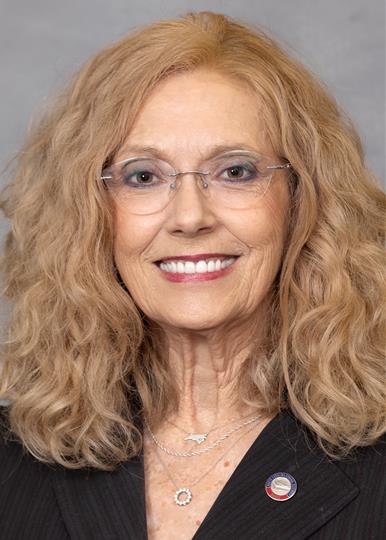
Rep. Cynthia Ball
Sponsored bills
Maddy summaryHB 688 creates a dedicated annual appropriation of $100,000 from the state General Fund to the Parks and Recreation Trust Fund specifically for inclusive playground projects. It directly affects local governments, public schools, and public authorities (as defined in state law) seeking to build or adapt playgrounds to meet the needs of people with disabilities. The bill provides grants of up to $5,000 per project, requiring recipients to match each $5 in state funds with $1 in local funds. This funding operates separately from other Trust Fund allocations, ensuring dedicated resources for accessibility improvements without reducing existing funding for state parks or coastal access. The bill becomes effective July 1, 2025.
Maddy summaryHB 713 mandates that all North Carolina public schools provide free breakfast and lunch to every student, eliminating meal fees for all. This affects every student enrolled in public schools, including those in charter schools and regional school units, starting with the 2025-2026 school year. The bill appropriates $144 million from the state General Fund to cover costs, with funds allocated based on school size, student eligibility for free/reduced meals, and nutritional quality standards. Schools must comply with federal nutrition guidelines while using state funds to supplement, not replace, existing meal program funding.
Maddy summaryHB 725, the "MOMnibus 3.0," establishes a state grant program to address preventable maternal health disparities affecting Black birthing people in North Carolina. The bill directs the Department of Health and Human Services to award competitive grants ($10,000-$50,000 per recipient) to community-based organizations focused on improving maternal health outcomes for Black women. Key provisions require grantees to address social barriers (like housing, transportation, and nutrition), provide culturally respectful care training for health workers, and offer services including mental health support, doula care, and evidence-based education. The program specifically prioritizes Black-led organizations serving communities with high maternal health disparities, aiming to reduce preventable deaths and complications through targeted community support.
Maddy summaryHB 732 requires permits and a 72-hour waiting period for purchasing assault weapons or long guns, prohibits sales to those under 21 for semi-automatic firearms, and bans bump stocks, ghost guns, and certain high-capacity magazines. It mandates safe firearm storage, repeals "stand your ground" laws, and requires firearm liability insurance for owners. The bill also prohibits leaving firearms unattended in vehicles, mandates reporting lost/stolen guns, and directs the state pension fund to divest from gun manufacturers. These provisions directly affect all firearm purchasers and owners in North Carolina.
Maddy summaryHB 715 appropriates $13.3 million annually from the General Fund to expand access to North Carolina's Prekindergarten (NC Pre-K) program for eligible children. The funding, allocated to the state's child development agency, will create additional program slots for children seeking enrollment starting July 1, 2025. This bill directly affects low-income 4-year-olds who qualify for the NC Pre-K program by increasing available spots through dedicated state funding. The legislation focuses solely on providing financial resources for program expansion, with no changes to eligibility criteria or program structure.
Maddy summaryHB 668 establishes a program to expand free tax preparation assistance in North Carolina through two key components. It allocates $1.38 million (including $790,000 nonrecurring and $610,000 recurring annually) to fund community colleges to create tax preparation courses and paid work-study opportunities for students, enabling them to become IRS-certified VITA (Volunteer Income Tax Assistance) preparers. Additionally, it appropriates $840,000 to the United Way of North Carolina to increase VITA locations, hire staff, provide multilingual resources, and offer financial education. The bill directly helps low-income North Carolinians (earning under $67,000 annually, with disabilities, or limited English proficiency) who qualify for the federal Earned Income Tax Credit but often miss claiming it, by expanding access to free tax filing services starting July 1, 2025.
Maddy summaryHB 691, the "Voter Protection and Reliance Act," ensures voters' ballots are counted based on election-day rules by prohibiting the exclusion of valid ballots cast under procedures in place on election day. It requires courts and election officials to apply election rules as they existed on election day, not later changes, and mandates that technical registration errors (like incomplete forms) cannot invalidate a ballot if the voter relied on the process. The bill also creates expedited court procedures for election challenges filed within 90 days before an election or after an election concludes, directing such cases to Wake County Superior Court for faster resolution. This directly affects voters, election officials, and courts by prioritizing ballot integrity based on election-day procedures over post-election interpretations.
Maddy summaryHB 685, the Rural NC Reinvestment Act, allocates $605 million in nonrecurring state funds for rural North Carolina communities during the 2025-2026 fiscal year. It provides grants for water/sewer infrastructure ($200M), law enforcement/fire equipment ($10M), economic development land ($20M), rural school construction ($200M), broadband expansion ($50M), early childhood education ($100M), and physician placement ($5M). Local governments, schools, emergency services, and healthcare providers in rural areas directly receive these funds, with allocations prioritized based on need, efficiency, and community impact. The bill becomes effective July 1, 2025, focusing on tangible infrastructure and service improvements without creating new regulations.
Maddy summaryHB 692 requires all North Carolina public schools to install at least two automatic external defibrillators (AEDs) per school building - one in a state-identified location and one in athletic facilities - and provide annual training for school staff in AED use and CPR. The bill directly affects public school personnel, students, and school districts by mandating specific installation, maintenance, and training protocols through new rules from the State Board of Education. Key provisions include requiring schools to coordinate with emergency medical systems, maintain AEDs properly, and develop policies aligned with state guidelines. The law takes effect for the 2025-2026 school year, using existing school funding for implementation.