

Maddy summaryThis bill allocates $196,760 from the state's General Fund to North Carolina State University to launch a pilot pickleball program in eastern Wake, Halifax, and Lenoir Counties. The initiative aims to boost physical activity, foster social connections, and improve mental well-being in communities that currently lack safe recreational spaces. Funds will support a structured program that includes community input, marketing efforts, three months of weekly instruction, and an evaluation of health outcomes. Additionally, the project will create a toolkit to help similar programs be implemented across the state. The program is scheduled to begin on July 1, 2026.
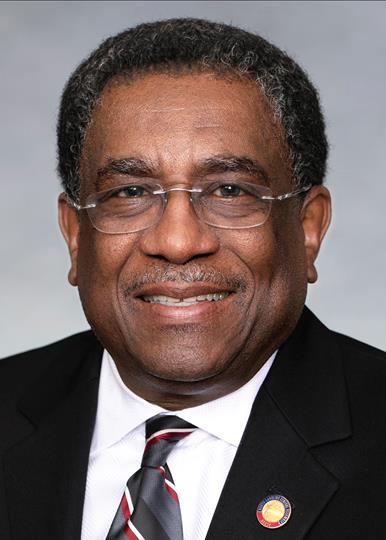
Rep. Garland Pierce
Sponsored bills
Maddy summaryThis bill creates a matching savings program and a tax deduction to encourage parents to save for their children's education in North Carolina. Under the new Parental Savings Trust Fund matching program, eligible parents with household incomes at or below 250% of the federal poverty guidelines can receive a $100 match for every $50 they contribute to an account for a student aged 14 or younger, with a maximum annual match of $500 and a lifetime limit of $1,500 per student. The state will fund this matching program with $180,000 in recurring money starting in the 2026-2027 fiscal year. Additionally, the bill allows taxpayers to deduct up to $2,000 from their state income taxes for contributions to these education savings accounts, with a $4,000 limit for married couples filing jointly. These provisions are designed to help low-to-moderate-income families build education funds while providing an immediate tax benefit for their contributions.
Maddy summaryHB 118 modifies North Carolina's property tax exemption for disabled veterans, replacing a flat $45,000 exclusion with a percentage-based system tied to the veteran's VA disability rating. It directly affects veterans with a 50% or higher service-connected disability rating (or surviving spouses under specific conditions), allowing them to exclude a portion of their home's appraised value from property taxes - equal to their disability percentage. For example, a veteran with a 70% disability rating would exclude 70% of their home's value from taxes. The bill takes effect for taxes due in 2025 and prohibits combining this relief with other property tax exemptions.
Maddy summaryThe bill title "Defund Planned Parenthood and Cost Transparency" does not match the actual content of HB 192, which is focused on education funding. This bill raises teacher salaries for the 2025-2026 school year using a new salary schedule (e.g., $5,000 for 0 years experience, $6,823 for 25+ years) and reinstates education-based supplements for advanced degrees ($126-$253 monthly). It appropriates $1.597 billion for salary increases and $8 million for supplements, while directing the North Carolina Collaboratory to study a student-based funding system by February 2026. The bill directly affects public school teachers, instructional support staff, and school psychologists. The title appears to be incorrect based on the provided bill text.
Maddy summaryHB 907 creates a new Disaster Readiness and Response Fund within the Office of the State Treasurer in North Carolina. This fund is designed to be separate from the state's General Fund and other existing reserves, providing a dedicated financial resource for disaster-related activities. The bill does not specify how the money will be used or who will administer it, leaving those details for future legislation. It applies to the state government and establishes a new financial mechanism for potential future disaster preparedness and response efforts.
Maddy summaryHB 576 makes technical revisions to North Carolina's laws governing the Department of Health and Human Services (DHHS). It designates DHHS as the agency managing school nurse funds, requiring school nurses to focus solely on health services (like health education and emergency response) rather than instructional duties. The bill extends until June 2028 the temporary use of the federal health insurance marketplace for determining Medicaid eligibility, and clarifies that Medicaid coverage for people released from prison continues for up to 12 months post-release. It also updates Medicaid provider screening rules to align with federal standards, particularly for Indian Health Program providers.
Maddy summaryHB 590 establishes licensing requirements for medical imaging and radiation therapy professionals in North Carolina, directly affecting radiographers, radiation therapists, sonographers, and others performing these procedures. The bill creates a new "Medical Imaging and Radiation Therapy Board of Examiners" to set education standards, administer licensing exams, and ensure practitioners are "educationally prepared and clinically competent." It requires all non-licensed practitioners (e.g., radiographers, radiation therapists) to hold a state license before performing procedures involving ionizing radiation or medical imaging, with limited exemptions for licensed physicians. The law aims to protect patients by mandating standardized training and oversight for these technical roles.
Maddy summaryHB 612, the "Fostering Care in NC Act," updates North Carolina's laws governing child abuse, neglect, and dependency cases. It expands the definition of "abused juveniles" to include specific offenses like sexual crimes, human trafficking, and certain violent acts, affecting how cases are classified. The bill requires county social services directors to use either a family-centered assessment or a formal investigation when reviewing reports, and to collect military affiliation details of the juvenile's caregiver. It also clarifies that court jurisdiction over juveniles continues until age 18, emancipation, or death. These changes standardize responses to child welfare reports and improve information gathering for safety decisions.
Maddy summaryHB 373 allows University of North Carolina (UNC) institutions to offer tuition discounts to two specific groups: military students receiving federal or North Carolina National Guard tuition assistance, and students enrolled in employer-sponsored financial support programs approved by UNC. The discount covers the difference between the military/employer funding and full tuition, without creating new free tuition programs. UNC must report annually to the legislature on the number of students receiving these discounts and their financial impact on institutions. The policy takes effect for the 2025-2026 academic year.
Maddy summaryHB 79, "North Carolina Work and Save," creates a voluntary retirement savings program for North Carolina workers without access to employer-sponsored plans. It allows covered employers (small businesses not already offering tax-qualified retirement plans) to set up payroll deduction IRAs (traditional or Roth) for employees, enabling automatic retirement savings. The program is administered by a 12-member Board under the Department of Commerce, with funds held in a trust managed by private entities. It directly affects approximately 1.7 million North Carolina workers in small businesses, focusing on moderate- and lower-income households to improve retirement security. Participation is voluntary for both employers and employees, with no state funding required for employer participation.