

Maddy summaryHB 418 mandates that all North Carolina public schools provide required arts education for K-5 students beginning in the 2026-2027 school year. It requires at least one 30-minute session per week in music, dance, or theatre arts (taught by a licensed instructor) and one session per week in visual arts (also taught by a licensed instructor), with classes kept at appropriate sizes. The bill directly affects every K-5 public school student and their educators across North Carolina, ensuring consistent arts instruction aligned with state curriculum standards. It does not alter funding or create new programs but sets specific instructional requirements for elementary schools.
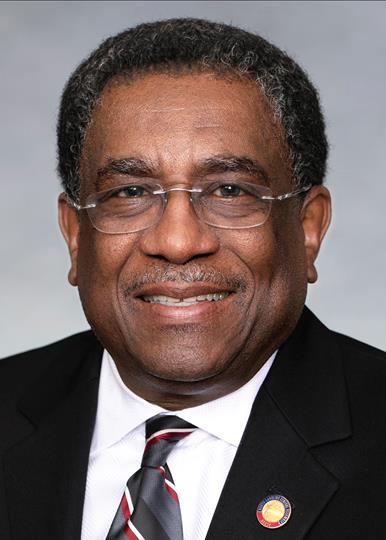
Rep. Garland Pierce
Sponsored bills
Maddy summaryHB 417 appropriates $50,000 from the state General Fund to Hoke County for park upgrades at Rockfish Park in Raeford, North Carolina. The funds are designated for nonrecurring improvements to the park and become available on July 1, 2025. This bill directly affects Hoke County residents who use Rockfish Park by providing state funding for facility upgrades. It does not create new laws or regulations but allocates specific funding for a local park project.
Maddy summaryHB 410 directs the North Carolina Institute of Medicine to study the legalization of medical aid in dying (MAID) in North Carolina. The study will examine processes, safeguards, and impacts in states where MAID is legal, including applicant qualifications, family effects, medication options, and healthcare system impacts. The Institute must hold a public hearing and submit findings by April 2027 to state health committees. The bill appropriates $150,000 for this study but does not legalize MAID or change current law. It aims to inform future policy decisions about adding MAID as an end-of-life option for terminally ill, mentally competent adults.
Maddy summaryHB 422, the "Beyond The Choice Act," eliminates a 12-month residency wait period for eligible veterans and their dependents at North Carolina public colleges and universities. It allows veterans who served 90+ days of active duty, their dependents, or other individuals covered under federal law (38 U.S.C. § 3679) to pay in-state tuition rates immediately upon admission, without needing to establish residency first. This change applies to all qualifying students enrolling in the 2025-2026 academic year and beyond. The bill directly benefits veterans and their families by reducing financial barriers to higher education in North Carolina.
Maddy summaryHB 420 allocates $4.3 million annually to fund teacher recruitment programs like "Grow-Your-Own" and "2+2" pathways in high-need schools, targeting efforts to recruit and prepare new educators. It requires the State Board of Education to develop a teacher licensure and compensation reform plan by March 2026, including pathways for new teachers and retention strategies. The bill also funds a study to expand educator preparation programs to graduate 5,000 in-state teachers annually, with a focus on increasing diversity among educators. These provisions directly affect public schools, teacher preparation programs, and prospective teachers through new funding streams and policy requirements.
Maddy summaryHB 182 creates two key policy changes: First, it allows judges to issue lifetime no-contact orders against defendants convicted of certain violent offenses (including sex offenses requiring registration), requiring a show-cause hearing to determine if the victim fears future contact. Second, it clarifies that caregivers of children under 16 who commit or allow sexual acts with the child face Class D felony charges, specifically expanding penalties for permitting such abuse. The law directly affects victims of violent crimes (through the no-contact protections) and caregivers of children under 16 (through updated felony charges for sexual abuse). These provisions apply to offenses committed on or after December 1, 2025.
Maddy summaryHB 375 bans the use of deceptive AI-generated videos or audio (deepfakes) in political campaigns within 90 days of an election, unless they include clear disclosures. It requires creators to audibly state "Contains content generated by AI" at the start/end of audio content (and every 2 minutes if longer) and display visible disclosures throughout visual content. The bill directly affects political campaigns and sponsors creating synthetic media during election periods, aiming to prevent voter deception. It also prohibits fabricated intimate images of minors and defines terms like "digital impersonation" to clarify prohibited content. The law focuses on election integrity, not general social media use.
Maddy summaryHB 137, the "Gabe Torres Act," expands death benefits under North Carolina's Public Safety Employees' Death Benefits Act to include public safety workers (like police, fire, and emergency personnel) who are killed while traveling to or from work. The bill amends the law to define "official duties" to explicitly cover commuting between home and work, as well as travel for training or responding to emergencies. It also appropriates $300,000 in recurring funds for these expanded benefits, effective July 1, 2025. This change directly affects eligible families of covered public safety employees who die during work-related travel, ensuring they qualify for death benefits previously limited to on-duty incidents.
Maddy summaryHB 276 expands the definition of "killed in the line of duty" for firefighters to include deaths caused by specific cancers that previously qualified them for benefits under North Carolina's Firefighters' Cancer Insurance Program. The bill adds seven specific cancers (like mesothelioma and testicular cancer) to the list and includes any cancer diagnosis that already provided benefits under the existing program. It also formally links the Firefighters' Health Benefits Pilot Program to the Cancer Insurance Program, ensuring consistent coverage, and appropriates $2 million annually for related death benefits starting July 1, 2025. This change directly affects firefighters diagnosed with covered cancers and their families, who will now qualify for death benefits under the Public Safety Employees' Death Benefits Act.
Maddy summaryHB 52, the "Protect Those Who Serve and Protect Act of 2025," increases penalties for assaults against public safety personnel and their animals. It creates a new Class I felony offense for throwing, spraying, or projecting substances (like water) at public safety officers or law enforcement/search and rescue animals while they are on duty or due to their role. The bill also prohibits intentionally pointing laser devices at these protected individuals or animals during duty. These changes update existing assault laws to explicitly cover a wider range of emergency workers (including firefighters, medical staff, National Guard members, and school employees) and add specific protections for animals used in public safety.