

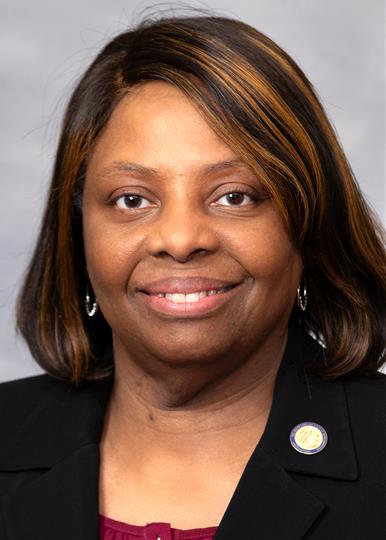
Photo of Frances Jackson
D North Carolina House · District 45 On the 2026 ballot

Rep. Frances Jackson

Compare
Total votes
1,281
all sessions
Attendance
100%
4 missed
Higher than 81% of chamber peers
With party
95%
of cast votes
Near the chamber average
Bipartisan score
3%
crosses aisle rarely
Near the chamber average
Sponsored
818
bills & resolutions
Higher than 97% of chamber peers
Committees
8
assignments
818 bills and resolutions

Sponsored bills

Total
818
Primary
24
Co-sponsor
794
This page
818
matching current filters
Co-sponsor HB 75
Passed · North Carolina House · Co-sponsor
Physician Assistants Team-Based Practice.

Maddy summaryThis amendment to House Bill 75 makes the entire bill contingent on the passage of a separate Senate Bill 3 in the 2023 Regular Session. It does not establish new rules for physician assistants or change their practice standards directly. Instead, it functions as a procedural condition, ensuring that the proposed team-based practice changes only take effect if the related Senate legislation is also approved. If Senate Bill 3 fails to become law, this amendment renders the current House Bill void and inactive.

Passed Jun 28, 2024 1 co-sponsor
Co-sponsor HB 317
Passed · North Carolina House · Co-sponsor
Adjustments to the 2023 Appropriations Act.

Maddy summaryThis bill officially renames the 2023 budget law to the "Current Operations Appropriations Act of 2024" and updates funding levels for the state's education system. It directly affects various institutions, including public universities, community colleges, and the University of North Carolina system, by specifying the exact amounts of state money they will receive for the 2024-2025 fiscal year. The legislation details how much money each entity gets after accounting for their own income, ensuring the state allocates its resources according to the approved budget plan.

Passed Jun 25, 2024 1 co-sponsor
Co-sponsor HB 207
Passed · North Carolina House · Co-sponsor
Discipline Changes.

Maddy summaryThis amendment to House Bill 207 requires school principals or their designated representatives to accept detailed eyewitness accounts of incidents that could lead to student suspensions. The bill mandates that these accounts be submitted by the end of the school day following the incident, though they can still be accepted after that deadline. Eyewitness testimony can be provided in writing or orally, with the requirement that any oral statements be transcribed into writing by the school official. This change directly affects school administrators and students by formalizing the process for collecting immediate witness statements during disciplinary investigations.

Passed Jun 24, 2024 1 co-sponsor
Co-sponsor HB 97
Passed · North Carolina House · Co-sponsor
Various Education Changes.

Maddy summaryThis bill reorganizes the North Carolina community college statutes to clarify the system's purpose and designates the Community Colleges System Office as the lead agency for workforce and adult education. It introduces several specific changes, including a ban on using secondary school accreditation status to determine community college admissions and requiring the state board to competitively bid for a learning management system. The legislation also expands a career and college readiness program, allows Fayetteville Technical Community College to partner with private entities for facility construction, and adjusts requirements for AI school safety and special needs pilot programs. Additionally, the bill increases the classroom hour requirement for individuals seeking a massage therapy license.

Passed Jun 19, 2024 1 co-sponsor
Co-sponsor HB 287
Passed · North Carolina House · Co-sponsor
Health Care Omnibus.

Maddy summaryThis bill, titled the Health Care Omnibus, introduces several changes to North Carolina's healthcare regulations. It requires doctors and pharmacists to inform patients receiving opioid prescriptions about the risks of overdose, prevention methods, and the availability of reversal drugs. Additionally, the legislation clarifies that Medicaid benefits will continue for a limited time after individuals are released from prison or other incarceration facilities. The bill also expands access to mental health services by allowing reciprocal licensing for marriage and family therapists, reducing regulatory hurdles for master's level psychologists, and encouraging the use of tribal health facilities.

Passed Jun 19, 2024 1 co-sponsor
Co-sponsor HB 903
Passed · North Carolina House · Co-sponsor
Add Tianeptine to Controlled Substance List.

Maddy summaryThis bill adds the drug tianeptine to North Carolina's list of Schedule II controlled substances, meaning it will be regulated similarly to other opioids. By making this change, the law aims to increase oversight of the drug, which is already associated with potential for abuse and severe dependence. The new rules will apply to anyone who commits offenses involving tianeptine on or after September 1, 2024.

Passed Jun 13, 2024 1 co-sponsor
Co-sponsor HB 1056
Passed · North Carolina House · Co-sponsor
Physician Assistants Licensure Interstate Compact.

Maddy summaryThis bill establishes a Physician Assistant Licensure Compact in North Carolina to make it easier for licensed PAs to practice across different states. Under the new rules, a PA holding a valid license in one participating state can obtain a temporary privilege to work in another participating state without applying for a full new license. The system requires PAs to follow the laws of the state where the patient is located and allows state boards to discipline practitioners who move between states. Additionally, the compact includes specific provisions to help active-duty military personnel and their spouses obtain practice privileges quickly when relocating.

Passed Jun 12, 2024 1 co-sponsor
Co-sponsor HB 1042
Passed · North Carolina House · Co-sponsor
Vet Care for Retired Law Enforcement Dogs.

Maddy summaryHB 1042 establishes a reimbursement program in North Carolina to help cover veterinary expenses for retired law enforcement and correctional dogs. To qualify, the dogs must have served in official capacities such as detection, apprehension, or search and rescue and hold certification from a national organization. Owners can apply for up to $1,500 annually for essential care like check-ups, vaccinations, emergency surgeries, and euthanasia, but not for elective procedures. The Department of Public Safety will manage a dedicated fund, initially seeded with $300,000, to process these claims and maintain records. The law applies to dogs retiring on or after July 1, 2024, and allows owners to participate voluntarily without affecting any other existing benefits.

Passed Jun 12, 2024 1 co-sponsor
Co-sponsor HB 1044
In committee · North Carolina House · Co-sponsor
County Tier Designation Study Bill.

Maddy summaryThis bill directs the North Carolina Policy Collaboratory to conduct a study on how proposed changes to the county tier designation system would affect the state's 100 counties. The study will examine potential adjustments to the criteria for ranking counties, the method used to assign tiers, and the timeline for these rankings. It will also assess how these changes impact state programs, business operations, and the accuracy of identifying distressed areas using current data. Funded with $100,000, the Collaboratory must submit a preliminary report by December 31, 2024, and a final report by December 1, 2025, to legislative oversight committees.

In committee Jun 11, 2024 1 co-sponsor
Co-sponsor HB 864
In committee · North Carolina House · Co-sponsor
Per- and Polyfluoroalkyl Substances Pollution and Polluter Liability.

Maddy summaryThis North Carolina bill establishes a legal mechanism to hold manufacturers of per- and polyfluoroalkyl substances (PFAS) financially responsible for cleaning up contaminated drinking water. It defines "responsible parties" as companies that produce PFAS chemicals and orders them to pay for the actual costs public water systems incur to remove or fix contamination that exceeds safety limits. If a manufacturer refuses to pay, the state can take legal action in court to enforce the order, and the bill allows water systems to lower future customer rates if they recover these costs. The legislation also creates a special fund with initial funding to support implementation and requires the state to report annually on how these funds and enforcement orders are used.

In committee Jun 11, 2024 1 co-sponsor
Showing 441 to 450 of 818 bills
Previous 1 … 44 45 46 … 82 Next