

Maddy summaryHB 191 grants Durham County and Person County Schools flexibility in setting their 2025-2026 school calendar start date, allowing them to open as early as August 19 (instead of the usual August 26) if they have documented emergency closures (8+ days per year for 4 of the last 10 years). It also permits these districts to administer standardized assessments earlier if their fall semester ends before December 31. The bill modifies existing state requirements for school opening/closing dates and assessment timing specifically for these two counties. The changes apply only to the 2025-2026 school year and require documented emergency closure history to qualify for the earlier start date.
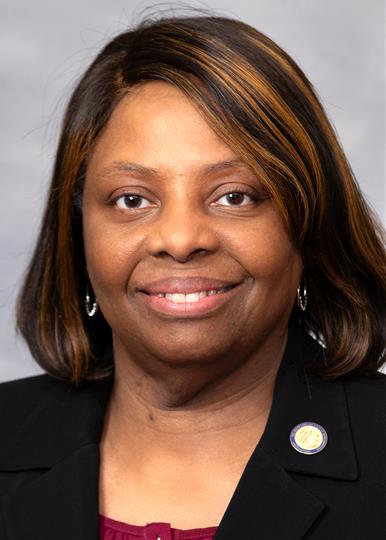
Rep. Frances Jackson
Sponsored bills
Maddy summaryHB 196 appropriates $1.5 million from the General Fund to the North Carolina Museum of Life and Science, Inc., for a new biotechnology exhibit and laboratory. The funds will showcase North Carolina's biotech achievements and promote STEM career interest, directly benefiting the museum and students in the state. The bill creates a specific funding mechanism for this educational project, effective July 1, 2025. As a funding allocation, it does not alter laws or regulations.
Maddy summaryHB 120 appropriates $1,040,514 annually for fiscal years 2025-2026 and 2026-2027 to expand North Carolina's Project C.A.R.E. program. The bill directly funds support services for family caregivers of individuals living with Alzheimer's disease or related dementias. It provides recurring state funding to the Division of Aging and Adult Services to enhance existing caregiver assistance programs. The legislation becomes effective July 1, 2025, without altering eligibility or service requirements.
Maddy summaryHB 177 requires North Carolina's State Human Resources Commission (SHRC) to review job requirements across state agencies and identify positions where a four-year college degree is unnecessary. The bill directs the SHRC to replace degree requirements with alternative qualifications like military service, apprenticeships, or trade school training where appropriate, and to remove unnecessary degree language from job postings. This policy change directly affects state job applicants who may qualify through non-degree pathways. The SHRC must report annually starting October 2025 on progress toward reducing these barriers.
Maddy summaryHB 179 would allow North Carolina taxpayers to deduct labor union membership dues from their state income tax starting in 2026. The bill creates a new tax deduction for dues, fees, assessments, or other payments required to maintain membership in a labor organization, as defined by state law. This applies specifically to individuals who pay such costs as a condition of union participation. The policy change takes effect for tax years beginning January 1, 2026.
Maddy summaryHB 181 reinstates North Carolina's Earned Income Tax Credit (EITC) for working families with children, providing a state tax credit equal to 5% of the federal EITC amount. The credit is refundable, meaning eligible families receive cash payments even if they owe no state tax, directly benefiting low-to-moderate income households struggling with housing, childcare, and basic living costs. It applies to taxable years beginning January 1, 2025, and aligns with federal EITC eligibility criteria. The bill reenacts the credit after its prior expiration, creating a concrete policy change to supplement family income.
Maddy summaryHB 119 allows Pitt County schools to open as early as August 10 (instead of the standard August 26) for the 2025-2026 school year, provided they meet "good cause" requirements. "Good cause" means the county experienced eight weather-related or emergency school closures over four of the last ten years. The bill applies exclusively to Pitt County schools and does not change closing dates or instructional day requirements. It modifies existing state law to provide targeted calendar flexibility for this specific district.
Maddy summaryHB 111 grants Chatham County Schools flexibility to set an earlier school start date (as early as August 19) and adjust assessment timing. It allows the district to open before the standard August 26 date if they demonstrate "good cause" (eight or more emergency closures in four of the last ten years due to weather or other emergencies). The bill also permits administering annual assessments earlier if the fall semester ends before December 31. These changes apply only to Chatham County Schools beginning in the 2025-2026 school year. The bill modifies existing education statutes to create this specific exception for the county.
Maddy summaryHB 51 grants Caswell County Schools, Chapel Hill-Carrboro City Schools, and Orange County Schools flexibility to set their own school calendars, including aligning with local community college schedules. It modifies state requirements that typically mandate school openings no earlier than August 26 and closings no later than June 11, allowing these districts to adjust dates based on community college calendars. The bill also permits these schools to administer student assessments earlier in the semester if their fall semester ends before December 31, rather than waiting for the usual final instructional days. This policy change applies only to the specified districts starting in the 2025-2026 school year.
Maddy summaryHB 33 allows Yadkin County Schools and Davie County Schools to align their academic calendars with Surry County Community College or Davidson-Davie Community College. This bill amends state law to explicitly permit these two school districts to match community college schedules, overriding standard state-mandated opening (no earlier than August 26) and closing (no later than June 11) dates. The change applies only to these specific school systems and takes effect for the 2025-2026 school year. The bill does not alter general calendar requirements for other North Carolina school districts.