

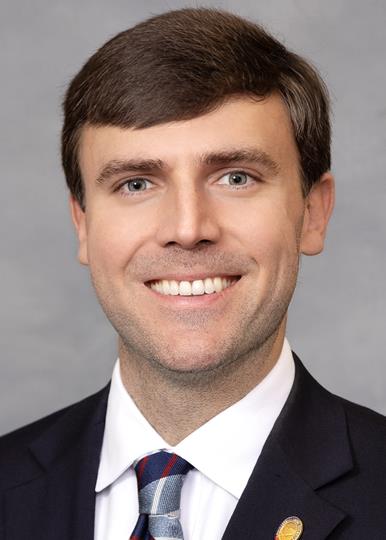
Photo of Charles Smith
D North Carolina House · District 44 On the 2026 ballot

Rep. Charles Smith

Compare
Total votes
481
all sessions
Attendance
96%
21 missed
Near the chamber average
With party
91%
of cast votes
Lower than 88% of chamber peers
Bipartisan score
5%
crosses aisle rarely
Higher than 85% of chamber peers
Sponsored
202
bills & resolutions
Near the chamber average
Committees
10
assignments
202 bills and resolutions

Sponsored bills

Total
202
Primary
26
Co-sponsor
176
This page
202
matching current filters
Co-sponsor HB 1056
In committee · North Carolina House · Co-sponsor
Relieving Housing Bottlenecks.

Maddy summaryHB 1056 aims to increase housing supply in North Carolina by allowing residential construction in commercial zones and banning minimum parking requirements for new developments. The bill also creates a state program to reimburse local governments for costs associated with speeding up housing permit reviews and provides additional funding to the state housing finance agency. These measures are designed to reduce regulatory barriers that currently limit the number of homes being built and help address rising housing costs.

In committee Apr 28, 2026 1 co-sponsor
Co-sponsor HB 1045
In committee · North Carolina House · Co-sponsor
Fair Wages in Health Care Act/Funds.

Maddy summaryHB 1045, known as the Fair Wages in Health Care Act, establishes minimum hourly wages for five specific direct care occupations in North Carolina: home care aides, direct support professionals, certified nursing assistants, psychiatric aides, and licensed practical nurses. The bill sets wage floors ranging from $18 to $24 per hour depending on the role, with protections against employers using different job titles to avoid paying the required rates. To help healthcare providers meet these new costs, the Department of Health and Human Services must adjust reimbursement rates for publicly funded programs and update contracts with managed care organizations. The law takes effect on October 1, 2027, and applies to all employers in the state, regardless of whether they are public or private entities.

In committee Apr 28, 2026 1 co-sponsor
Co-sponsor HB 1059
In committee · North Carolina House · Co-sponsor
Fair Minimum Wage Act.

Maddy summaryHB 1059 establishes a new state minimum wage of $15.00 per hour in North Carolina, which will automatically increase each year based on inflation starting in 2027. The bill creates the North Carolina Wage Board to review wage competitiveness and allows local governments to set their own higher minimum wages if they choose. It also introduces a short-time compensation program to help businesses manage layoffs during economic downturns and sets a lower minimum wage of $11.00 for small businesses with annual revenue under $400,000. Additionally, the legislation maintains existing provisions for subminimum wages for students, individuals with disabilities, and seasonal food service workers while clarifying rules around tip credits and pooling.

In committee Apr 28, 2026 1 co-sponsor
Co-sponsor HB 1057
In committee · North Carolina House · Co-sponsor
Affordable Food Act.

Maddy summaryHB 1057, known as the Affordable Food Act, aims to improve food security in North Carolina by expanding access to nutritious food and supporting local agriculture. The bill authorizes the state to request a federal waiver to create a program that matches SNAP benefits for purchases of fruits, vegetables, and other healthy foods at retailers and farmers markets. It also allocates state funding to administer these incentive programs and covers potential administrative losses due to recent federal changes to SNAP. Additionally, the legislation seeks to protect agricultural land from development and prohibits dynamic pricing in grocery stores to stabilize food costs.

In committee Apr 28, 2026 1 co-sponsor
Co-sponsor HB 1044
In committee · North Carolina House · Co-sponsor
Justice in Mental Health Act.

Maddy summaryThis bill aims to improve the connection between the court system and mental health services in North Carolina to reduce unnecessary jail time. It directs state agencies to create training for judges and staff on spotting mental health risks and to build a framework for sending court-involved individuals to treatment instead of detention. The legislation also updates legal standards for determining when someone is a danger to others and provides funding to support these new programs and data-sharing systems.

In committee Apr 27, 2026 1 co-sponsor
Co-sponsor HB 1020
In committee · North Carolina House · Co-sponsor
Personal Education Student Account Class Aides and Children of Wartime Veterans Funds.

Maddy summaryThis bill allows parents of students in private schools to use their education savings accounts to pay for one-on-one classroom aides, provided the aide is not a family member or school employee. It also updates the rules for these accounts by clarifying which specific services and expenses are eligible for funding and which are not. The legislation further allocates state funds to increase scholarship amounts for children of wartime veterans and to create new scholarships for them starting in the 2026-2027 school year. These changes apply to the North Carolina Personal Education Student Account program and the Children of Wartime Veterans Scholarship Program.

In committee Apr 22, 2026 1 co-sponsor
Co-sponsor HB 434
Failed · North Carolina House · Co-sponsor
Lower Healthcare Costs.

Maddy summaryHB 434, titled "Lower Healthcare Costs," is a procedural bill focused on updating definitions related to health insurance utilization review in North Carolina. It rewrites statutory definitions (e.g., "medical necessity," "clinical peer," "closely related service") within existing insurance regulations but does not introduce new cost-saving mechanisms or policy changes. The bill directly affects insurers, healthcare providers, and covered individuals by standardizing terminology used in prior authorization processes. As a definition-only update, it has no concrete policy impact on healthcare costs or patient access, and the title does not align with its actual scope.

Failed Apr 6, 2026 1 co-sponsor
Co-sponsor HB 118
In committee · North Carolina House · Co-sponsor
Disabled Veterans Tax Relief Bill.

Maddy summaryHB 118 modifies North Carolina's property tax exemption for disabled veterans, replacing a flat $45,000 exclusion with a percentage-based system tied to the veteran's VA disability rating. It directly affects veterans with a 50% or higher service-connected disability rating (or surviving spouses under specific conditions), allowing them to exclude a portion of their home's appraised value from property taxes - equal to their disability percentage. For example, a veteran with a 70% disability rating would exclude 70% of their home's value from taxes. The bill takes effect for taxes due in 2025 and prohibits combining this relief with other property tax exemptions.

In committee Sep 23, 2025 1 co-sponsor
Co-sponsor HB 192
Passed · North Carolina House · Co-sponsor
Defund Planned Parenthood and Cost Transparency.

Maddy summaryThe bill title "Defund Planned Parenthood and Cost Transparency" does not match the actual content of HB 192, which is focused on education funding. This bill raises teacher salaries for the 2025-2026 school year using a new salary schedule (e.g., $5,000 for 0 years experience, $6,823 for 25+ years) and reinstates education-based supplements for advanced degrees ($126-$253 monthly). It appropriates $1.597 billion for salary increases and $8 million for supplements, while directing the North Carolina Collaboratory to study a student-based funding system by February 2026. The bill directly affects public school teachers, instructional support staff, and school psychologists. The title appears to be incorrect based on the provided bill text.

Passed Sep 22, 2025 1 co-sponsor
Co-sponsor HB 546
Signed into law · North Carolina House · Co-sponsor
Medicaid Modernization.

Maddy summaryHB 546 modernizes North Carolina's Medicaid program by requiring the state to develop team-based care coordination for individuals with alcohol and opioid use disorders, including screening, medication, and recovery support. The bill also allows telehealth-only providers to enroll in Medicaid without needing a physical office in the state and mandates a statewide specialty plan for children in foster care or receiving adoption assistance, to be implemented by December 2025. These changes directly affect Medicaid beneficiaries with substance use disorders, telehealth providers, and eligible children and families. The Department of Health and Human Services must report on the implementation of the substance use care and telehealth provisions by October 1, 2025.

Signed into law Jul 7, 2025 1 co-sponsor
Showing 21 to 30 of 202 bills
Previous 1 2 3 4 21 Next