

Maddy summaryHB 854 removes the current exemption for educational interpreters and transliterators from state licensure requirements. This means individuals who provide accessible communication services to students in pre-kindergarten through 12th grade and higher education will now be required to obtain a license. The bill also allows continuing education hours earned for license renewal to count towards their existing job-related training requirements. These changes are set to become effective on October 1, 2026.
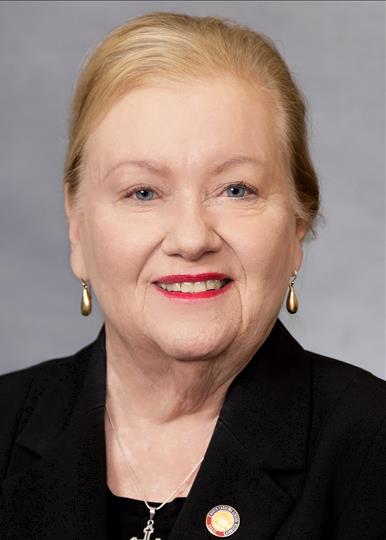
Rep. Diane Wheatley
Sponsored bills
Maddy summaryHouse Bill 214, known as the "Faithful Article V Commissioner Act," creates rules for North Carolina's participation in a convention for proposing amendments to the U.S. Constitution. It outlines how commissioners and alternates are to be selected by the General Assembly, their qualifications, and their ethical obligations. The bill strictly defines the scope of authority for these commissioners, limiting them to the specific issues outlined in their commission and the convention's call. Commissioners must take an oath to abide by these limits, and exceeding their defined authority is deemed a Class I felony.
Maddy summaryThis bill designates May 17th of each year as "Lafayette Day" in the State of North Carolina. It amends the General Statutes to officially recognize this day in honor of Marquis de Lafayette's contributions to American independence and his visit to North Carolina.
Maddy summaryHB 572 authorizes the Department of Military and Veterans Affairs to establish a statewide pilot program providing Electroencephalogram combined Transcranial Magnetic Stimulation (eTMS) treatment. This program is for veterans, first responders, and their immediate family members experiencing conditions such as substance use disorders, mental illness, sleep disorders, traumatic brain injuries, and PTSD. The Department will select a provider to create a network for in-person and off-site care, aiming for statewide access. Participants in the program will also receive neurophysiological monitoring, counseling, wellness programming, and access to a peer-to-peer support network. The selected provider must collect and report treatment outcomes and expenditures to the Department and legislative committees by September 15, 2026.
Maddy summaryHB 567, titled "Ensure Access to Biomarker Testing," mandates that North Carolina health benefit plans provide coverage for biomarker testing for the diagnosis, treatment, and monitoring of various diseases or conditions. This coverage is required when the testing is supported by medical and scientific evidence, such as FDA approval or nationally recognized clinical guidelines. The bill also prohibits insurers from denying coverage, raising premiums, or charging higher rates based on an individual's biomarker information. Additionally, it establishes a 24-hour timeline for insurers to complete utilization reviews for urgent healthcare services, aiming to improve access to diagnostic testing and care for North Carolinians.
Maddy summaryHB 547, titled the "Children's Services Protection Act," limits the liability of nongovernmental organizations and independent contractors working with the Department of Health and Human Services and its affiliated agencies. For nongovernmental organizations, the bill specifies they are liable for their own negligence but not for harm caused by the public agency. For independent contractors providing health, human, and welfare services, their liability is capped at the same monetary limits as the public agency, and the State will indemnify them for damages exceeding those limits. This act clarifies legal responsibilities for entities contracting with public agencies to deliver these services.
Maddy summaryHouse Bill 741 authorizes the North Carolina Division of Motor Vehicles to issue "Military Veteran" special registration plates with a personalized background. The bill modifies the plate's design to specify that the name and insignia of the veteran's branch of service will appear on the left side. This change directly affects U.S. Military Veterans in North Carolina who are eligible for this special license plate. These personalized veteran plates will also be exempt from minimum application requirements typically needed for other special plates.
Maddy summaryHB 24, titled "Restore Down-Zoning Authority," aims to reinstate the power of local governments to initiate "down-zoning." This means local governments would regain the ability to change zoning classifications for properties to allow for less intensive development or use. The bill achieves this by repealing Section 3K.1 of S.L. 2024-57, which had previously restricted this authority. If enacted, it would apply retroactively to December 11, 2024, ensuring that any local ordinances impacted by the repealed section are restored to their status prior to that date.
Maddy summaryHouse Bill 146 amends North Carolina's driver's license renewal process. It allows active duty members of the U.S. Armed Forces, or reserve components serving on active duty and stationed outside North Carolina, to renew their driver's licenses remotely multiple times in a row. Currently, a remote renewal requires the previous renewal to have been done in person, but this bill removes that restriction for eligible military personnel. This change aims to make it easier for these individuals to maintain their licenses while serving away from the state. The act becomes effective October 1, 2025, applying to licenses renewed on or after that date.
Maddy summaryHouse Bill 38, known as the Second Amendment Financial Privacy Act, prohibits payment card networks from using a specific "firearms code" to identify or track purchases made at firearms merchants in North Carolina. It also forbids these networks from knowingly maintaining records of individuals in the state who own firearms. The bill aims to prevent the separate tracking of lawful firearm and ammunition purchases and protect the financial privacy of individuals exercising their right to bear arms. Payment card networks are also prohibited from discriminating against firearms merchants based on code assignment. Violations can lead to civil penalties assessed by the Attorney General or civil lawsuits from affected merchants or individuals.