

Maddy summaryHB 341 increases property tax relief for disabled veterans in North Carolina by expanding the homestead exclusion on their primary residence. The bill sets exclusion amounts based on disability rating: $100,000 for 70%+ disability, $75,000 for 50-69%, $50,000 for 30-49%, and $25,000 for 10-29%. Surviving spouses qualify for the greater of the veteran’s exclusion amount or $45,000, provided the veteran’s death resulted from a service-connected condition. This policy directly affects qualifying disabled veterans and their surviving spouses who own and occupy their primary residence, effective for taxes due in 2025.
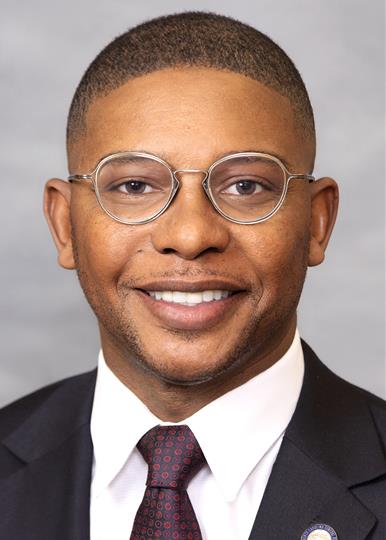
Rep. Mike Colvin
Sponsored bills
Maddy summaryHB 325 establishes a two-year pilot program (2025-2026 and 2026-2027) to fund public school field trips to North Carolina's Legislative Building. It provides up to $2,000 per school for transportation costs (bus rental, fuel, driver pay) to participating schools, prioritizing those in counties designated as "Tier 1" under state law. The program is funded with $1.5 million annually from the General Fund, requiring schools to submit budget applications by October 1 and reporting usage to the legislature by February 15 each year. The bill directly affects public school units statewide, with priority given to schools in designated underserved counties.
Maddy summaryHB 316 reenacts North Carolina's Child Tax Credit to help families cover child care costs, with reimbursement percentages based on income and child age (e.g., 7-13% for dependents aged 6-12). It allocates $200 million annually to expand the NC Pre-K program, adding 32,000 slots for 4-year-olds, and $35 million to increase subsidized child care funding. The bill also requires public schools to provide free lunches at no cost to students through state funding tied to school nutrition evaluations. Additionally, it mandates a report on creating a high school child care apprenticeship program. The bill directly affects families with children, public schools, and child care providers across North Carolina.
Maddy summaryHB 314 creates a faster legal process for property owners (or their authorized representatives) to remove people occupying their residential property without legal right, excluding tenants who have overstayed their lease. To use this process, the owner must file a sworn affidavit with the clerk of court (paying a $25 fee) proving the occupant entered unlawfully after the owner acquired the property, was told to leave, paid no rent, and isn’t a tenant. Law enforcement must remove the occupant within 24 hours of receiving the affidavit, with the owner able to change locks afterward. The bill specifically excludes occupants with valid leases or rental agreements and requires proof that no other legal agreement or payment exists.
Maddy summaryHB 299 increases the property tax exemption for disabled veterans in North Carolina from $45,000 to $54,000 of a home's appraised value. It directly affects qualifying disabled veterans who own and occupy their primary residence, allowing them to exclude a larger portion of their home's value from property taxes. The bill amends Section 105-277.1C of state law to reflect this higher exclusion limit, while maintaining that recipients cannot claim other property tax relief. This change takes effect for property taxes due on or after July 1, 2025.
Maddy summaryHB 280 allocates $30,000 in one-time state funds to support the North Carolina Senior Tar Heel Legislature, a program for older residents to engage with state policy. The funding, from the General Fund for the 2025-2026 fiscal year, covers operational costs for this existing program established under state law. It directly affects the Senior Tar Heel Legislature by providing financial resources for its activities. The bill becomes effective July 1, 2025, and does not create new policy but enables the program's continued operation.
Maddy summaryHB 269, the "Workforce Freedom and Protection Act," bans non-compete agreements for most North Carolina workers earning under $75,000 annually, prohibiting employers from restricting job mobility after termination or requiring such agreements as a condition of employment. It also directs the Legislative Research Commission to study occupational licensing requirements in key industries like construction, cosmetology, and healthcare to identify unnecessary barriers that may raise costs for consumers or limit job access. The study will evaluate licensing rules based on public safety justification, economic impact, and comparison to national standards, with recommendations for potential reforms. The bill does not immediately change existing licensing but sets a process for reviewing requirements that may disproportionately affect low- and moderate-income workers. The non-compete ban takes effect July 1, 2025.
Maddy summaryHB 29 would allow tribal enrollment cards issued by State or federally recognized North Carolina tribes to be used as valid ID for purchasing alcohol and tobacco. It amends existing state laws to explicitly include these cards alongside driver's licenses, passports, and military IDs when verifying a customer's age at point-of-sale. Businesses selling alcohol or tobacco would be permitted to accept tribal cards as proof of age under the same rules as other official identification. The policy change would take effect on December 1, 2025, if the bill is enacted.
Maddy summaryHB 262 designates a specific overpass on Interstate 74 crossing South Main Street in Laurinburg, Scotland County, as the "Chief Robert Lee Malloy Overpass." The bill requires the North Carolina Department of Transportation to formally name the structure in honor of Chief Malloy, a local law enforcement officer. This is a ceremonial naming resolution with no policy changes or financial impact, directly affecting the public infrastructure location. The bill is procedural and non-substantive, focusing solely on commemoration.
Maddy summaryHB 260 allows the City of Raeford to redirect $3 million in existing sewer infrastructure funds to extend sewer lines to the Cameron Heights community or other water/wastewater projects. It amends a previous law (S.L. 2023-134) to expand the eligible uses of these allocated funds. The bill directly affects Raeford’s infrastructure planning and the Cameron Heights neighborhood by providing flexibility for sewer system improvements. This is a concrete policy change that modifies how specific state funds may be spent, without creating new funding.