

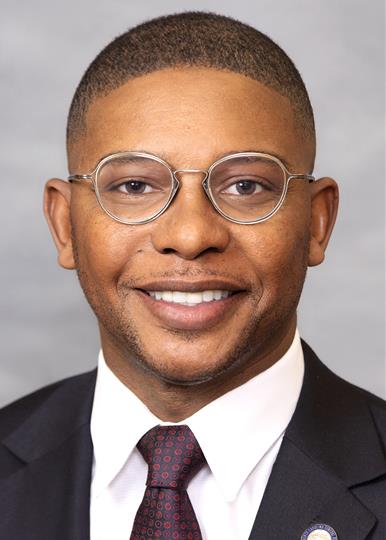
Photo of Mike Colvin
D North Carolina House · District 42 On the 2026 ballot

Rep. Mike Colvin

Compare
Total votes
481
all sessions
Attendance
100%
of floor votes
Higher than 91% of chamber peers
With party
95%
of cast votes
Near the chamber average
Bipartisan score
3%
crosses aisle rarely
Near the chamber average
Sponsored
251
bills & resolutions
Higher than 80% of chamber peers
Committees
3
assignments
251 bills and resolutions

Sponsored bills

Total
251
Primary
7
Co-sponsor
244
This page
251
matching current filters
Co-sponsor HB 1193
In committee · North Carolina House · Co-sponsor
Rep. Mike Clampitt Bone Marrow Donation Act.

Maddy summaryHB 1193, known as the Mike Clampitt Bone Marrow Donation Act, designates November as Marrow Donation Awareness Month in North Carolina. The bill requires the Department of Health and Human Services and the Department of Motor Vehicles to promote bone marrow donation by posting public service announcements online and displaying them at driver license offices. Additionally, the legislation appropriates $100,000 to fund a state-wide public awareness campaign for this initiative, with the law taking effect on July 1, 2026.

In committee May 12, 2026 1 co-sponsor
Co-sponsor HB 1166
In committee · North Carolina House · Co-sponsor
Reorganize and Fund Rare Disease Advisory Council.

Maddy summaryHB 1166 reorganizes the North Carolina Advisory Council on Rare Diseases by moving it from the University of North Carolina at Chapel Hill to the Department of Health and Human Services. The bill establishes a 19-member council with diverse representation, including physicians, researchers, patients, caregivers, and industry representatives, who will advise state officials on research, diagnosis, treatment, and education for rare diseases. It also provides funding for the council's operating expenses and sets rules for membership terms, meetings, and the selection of a chair.

In committee May 12, 2026 1 co-sponsor
Co-sponsor HB 1086
In committee · North Carolina House · Co-sponsor
Child Care Initiative Funds/Reform/Study.

Maddy summaryThis bill creates a pilot program to train new individuals with no prior experience as lead teachers in North Carolina's licensed child care centers. Funded by state money and requiring a local match, the program offers free, intensive training courses through community colleges in selected counties, with graduates receiving a state credential and potential stipends for completing the course and working for a year. The initiative aims to expand the child care workforce by establishing academies across the state, starting in Johnston and Wayne counties, and includes requirements for local partnerships to select additional sites. Additionally, the bill directs the North Carolina Partnership for Children to study the feasibility of liability insurance for providers and update bidding rules for child care grants.

In committee May 12, 2026 1 co-sponsor
Co-sponsor HB 433
Signed into law · North Carolina House · Co-sponsor
State Fiscal Recovery Fund/NC Pandemic Recovery Office Revisions.

Maddy summaryHouse Bill 433 allows licensed registered nurses (RNs) to serve as school nurses in North Carolina public schools. The bill prohibits the State Board of Education from requiring a four-year degree for school nurse employment. It specifies that RNs with at least two years of experience in a hospital or health clinic can work as school nurses without needing additional certifications or licenses. These qualified registered nurses will be paid under the certified school nurse pay scale.

Signed into law May 12, 2026 1 co-sponsor
Co-sponsor HB 1191
In committee · North Carolina House · Co-sponsor
Fostering Care in NC Act 2026.

Maddy summaryHB 1191, titled the Fostering Care in NC Act 2026, introduces several changes to how North Carolina handles cases involving juveniles and child welfare. The bill increases privacy protections by sealing court records in abuse and neglect cases and clarifying who can access them. It also updates procedures for expunging names from the responsible individuals list and requires courts to schedule permanency planning hearings within 30 days. Additionally, the act mandates that siblings be placed together whenever possible and ensures counties communicate before transferring cases to improve coordination on care and financial support.

In committee May 5, 2026 1 co-sponsor
Co-sponsor HB 1186
In committee · North Carolina House · Co-sponsor
Equipping Law Enforcement for Better Drug Detection.

Maddy summaryHB 1186 directs the North Carolina Collaboratory to create a pilot program that provides participating law enforcement agencies with new, more accurate drug-detecting technology to replace traditional color-based field tests. The bill requires these new devices to be portable, avoid relying on visual color changes for identification, and generate digital records for auditing and tracking emerging substances. Additionally, the program must conduct a comprehensive study to measure the technology's impact on case outcomes, officer safety, and the accuracy of drug testing across different communities.

In committee May 5, 2026 1 co-sponsor
Co-sponsor HB 1172
In committee · North Carolina House · Co-sponsor
The Ciji Graham Act.

Maddy summaryHB 1172, known as the Ciji Graham Act, establishes a High-Risk Pregnancy Care Navigation Program in North Carolina to assist patients with high-risk pregnancies by providing licensed nurse consultants who help coordinate care and address access barriers. The bill also creates a statewide pregnancy consultation hotline for healthcare providers and community organizations to offer real-time clinical guidance and referrals, alongside a centralized digital hub containing clinical guidelines and provider directories. Funded through the state's General Fund starting in the 2026-2027 fiscal year, these measures aim to improve maternal health outcomes and reduce disparities by ensuring timely access to specialized care and resources.

In committee May 4, 2026 1 co-sponsor
Co-sponsor HB 1161
In committee · North Carolina House · Co-sponsor
Omnibus Artificial Intelligence Protections.

Maddy summaryHB 1161 establishes state protections for artificial intelligence across elections, education, employment, courts, and insurance. In elections, the bill bans the use of AI-generated images, videos, voices, or text in political advertisements and imposes severe penalties, including donation freezes, for violations. For schools, it empowers local districts to restrict student access to AI tools and allows for disciplinary action, while also mandating new middle school courses on critical thinking and technology awareness. The legislation appropriates funds to help implement these measures and applies to political ads immediately and to school policies starting in the 2026-2027 academic year.

In committee May 4, 2026 1 co-sponsor
Co-sponsor HB 1142
In committee · North Carolina House · Co-sponsor
Expand Quantum Computing Education.

Maddy summaryThis North Carolina bill aims to increase access to quantum computing education by funding STEM programs in public schools, particularly those near military bases. It allocates $2.6 million to hire specialized teachers and create hands-on learning opportunities for students, while also establishing a $200,000 grant program for universities to partner with high schools on research projects. Additionally, the legislation creates an income tax credit for businesses that participate in these educational initiatives, though the specific details of the tax credit are not fully shown in the provided text.

In committee May 4, 2026 1 co-sponsor
Co-sponsor HB 1179
In committee · North Carolina House · Co-sponsor
Senior Property Tax Relief Modernization Act.

Maddy summaryHB 1179 modifies North Carolina's property tax relief programs to help seniors and disabled homeowners by allowing them to combine two existing benefits and removing a strict income cutoff that previously denied aid to those just above the limit. The bill introduces a gradual phaseout for the elderly homestead exclusion, reducing benefits by 3.33% for every 1% of income earned above 55% of the state median, while also permitting eligible owners to stack this relief with the circuit breaker program. Additionally, the legislation clarifies rules for seniors living in shared or inherited properties to ensure they can receive full relief if no other non-spouse owner resides there. To offset the increased costs for local governments, the bill requires the state to reimburse counties for revenue losses and provides funding to support more frequent property tax reappraisals.

In committee May 4, 2026 1 co-sponsor
Showing 11 to 20 of 251 bills