

Maddy summaryHB 1059 establishes a new state minimum wage of $15.00 per hour in North Carolina, which will automatically increase each year based on inflation starting in 2027. The bill creates the North Carolina Wage Board to review wage competitiveness and allows local governments to set their own higher minimum wages if they choose. It also introduces a short-time compensation program to help businesses manage layoffs during economic downturns and sets a lower minimum wage of $11.00 for small businesses with annual revenue under $400,000. Additionally, the legislation maintains existing provisions for subminimum wages for students, individuals with disabilities, and seasonal food service workers while clarifying rules around tip credits and pooling.
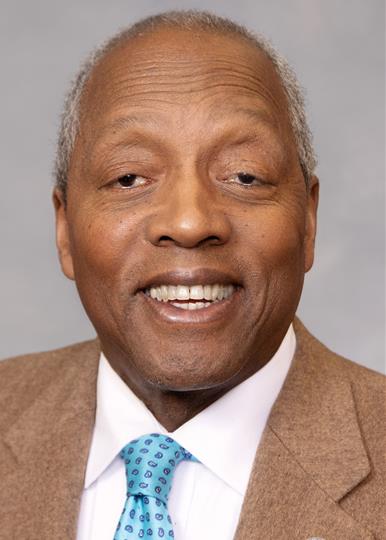
Rep. Abe Jones
Sponsored bills
Maddy summaryThis bill establishes new salary schedules for public school teachers and principals in North Carolina effective for the 2026-2027 fiscal year. It sets specific monthly pay rates for teachers based on years of experience and adds bonuses for those with advanced certifications or degrees, while also adjusting compensation for school support staff like nurses and counselors. Principals will receive annual salaries determined by their school's student enrollment and performance growth scores over the previous three years. Additionally, the legislation enhances sick leave benefits for state employees and provides a cost-of-living adjustment for certain retirees.
Maddy summaryHB 1017 aims to improve teacher quality and availability in North Carolina by creating new roles, funding recruitment programs, and launching studies to address workforce challenges. The bill directs the state to develop a comprehensive plan for reforming teacher licensing and compensation to attract more educators, while also studying how to better prepare and graduate 5,000 in-state teachers annually. Significant funding is allocated to support existing and new teacher recruitment initiatives, such as "Grow-Your-Own" programs and the Teaching Fellows loan program, specifically targeting high-need schools and subjects like special education and STEM. Additionally, the legislation mandates a study to coordinate recruitment efforts between universities and local school districts to ensure a more efficient statewide system.
Maddy summaryHB 79, "North Carolina Work and Save," creates a voluntary retirement savings program for North Carolina workers without access to employer-sponsored plans. It allows covered employers (small businesses not already offering tax-qualified retirement plans) to set up payroll deduction IRAs (traditional or Roth) for employees, enabling automatic retirement savings. The program is administered by a 12-member Board under the Department of Commerce, with funds held in a trust managed by private entities. It directly affects approximately 1.7 million North Carolina workers in small businesses, focusing on moderate- and lower-income households to improve retirement security. Participation is voluntary for both employers and employees, with no state funding required for employer participation.
Maddy summaryThis bill designates "The Andy Griffith Show" as the official television show of the State of North Carolina. This symbolic act recognizes the cultural impact of the show and its connection to the state.
Maddy summaryHB 699 would have prohibited North Carolina sheriffs from firing deputy sheriffs or other employees in their office for failing to make campaign contributions to the sheriff or the sheriff's campaign committee. This directly affects sheriff's office employees who could previously face employment consequences based on political donations. The bill's key provision would have made it illegal for sheriffs to use campaign contributions as a factor in hiring, firing, or disciplinary decisions. It represents a policy change to prevent coercion of employees through campaign donation requirements.
Maddy summaryHB 932 establishes a permanent 10% base salary increase for teachers and first responders in North Carolina, effective July 1, 2025. The bill appropriates $700 million annually for first responders (including law enforcement, firefighters, EMTs, dispatchers, and certain nurses) and $900 million annually for teachers (classroom staff, principals, and instructional support) from the General Fund. Funds must be used solely for the pay increase, added to base salary, and included in future salary calculations - no administrative costs are permitted. Employing authorities and school entities must certify costs and verify implementation by deadlines, with unspent funds reverting to the General Fund annually.
Maddy summaryHB 930 creates two separate $1,500 one-time bonus programs for eligible public employees in North Carolina: first responders (including police, firefighters, emergency medical staff, dispatchers, and public hospital nurses) and teachers (classroom staff, principals, and support personnel). The bill allocates $130 million annually for first responders and $165 million for teachers from the General Fund during the 2025-2027 fiscal biennium, with funds distributed to local governments and school districts by November 1 each year. To qualify, recipients must be employed on October 1 of the fiscal year, and bonuses must be paid by December 31 (prorated for part-time workers). Funds cannot cover administrative costs, must be paid in addition to base salary, and will revert to the General Fund if unspent by year-end. The program takes effect July 1, 2025.
Maddy summaryHB 335 expands eligibility for emergency judges in North Carolina by allowing retired judges who previously served in both Superior Court and District Court to qualify for emergency judge roles on either court. Currently, retired judges could only serve as emergency judges on the specific court they retired from, but this bill removes that restriction for judges with dual court experience. The change directly affects retired judges who held positions in both court systems before retiring, making them eligible to be assigned to emergency duties in either court. This adjustment streamlines the pool of available judges for temporary court needs without altering compensation or other existing rules.
Maddy summaryHB 807 raises teacher salaries for the 2025-2026 school year with new pay scales based on experience and adds supplements for certified teachers, school nurses, counselors, and specialists. It allocates $89.4 million annually and $109.2 million as a one-time fund to provide weighted, per-child funding for children with disabilities based on the cost of services provided. The bill also mandates free breakfast and lunch for all public school students, funded through state appropriations tied to school food authority evaluations, and includes funding for a one-to-one device refresh in public schools.