

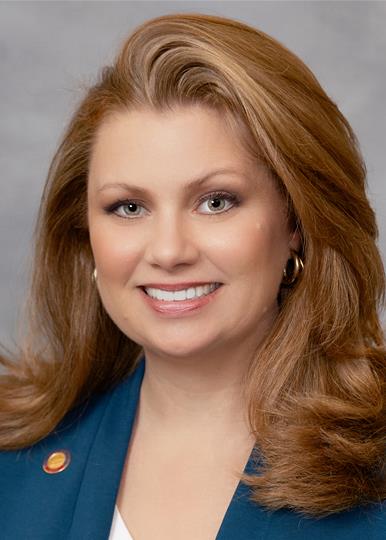
Photo of Erin Paré
R North Carolina House · District 37 On the 2026 ballot

Rep. Erin Paré

Compare
Total votes
1,795
all sessions
Attendance
99%
20 missed
Near the chamber average
With party
99%
of cast votes
Higher than 87% of chamber peers
Bipartisan score
1%
crosses aisle rarely
Lower than 89% of chamber peers
Sponsored
174
bills & resolutions
Near the chamber average
Committees
13
assignments
174 bills and resolutions

Sponsored bills

Total
174
Primary
71
Co-sponsor
103
This page
174
matching current filters
Co-sponsor HB 1074
Signed into law · North Carolina House · Co-sponsor
Constitutional Amendment/Citizens-Only Voting.

Maddy summaryThis bill proposes a constitutional amendment to North Carolina that would restrict voting rights exclusively to United States citizens who are at least 18 years old. The legislation does not change current law immediately but instead sets up a statewide vote on November 5, 2024, where voters will decide whether to adopt this new rule. If approved by the majority of voters, the amendment will permanently update the state constitution to remove the ability of non-citizens to vote in any election. If voters reject the measure, the existing voting qualifications will remain unchanged.

Signed into law Jun 28, 2024 1 co-sponsor
Co-sponsor HB 909
Signed into law · North Carolina House · Co-sponsor
Various Local Provisions I.

Maddy summaryThis bill makes several local changes in North Carolina, including removing specific land parcels from the Town of Fuquay-Varina and adding a new street area to the City of High Point. It also updates the Wake County Bureau of Identification by establishing a new director role and clarifying that the agency can be renamed while maintaining its core duties like fingerprinting and forensic services. Additionally, the law adjusts how alcohol profits are split between Cabarrus County and the City of Concord and gives the City of High Point more flexibility to sell property with attached restrictions. These measures directly affect local government boundaries, law enforcement administration, and municipal revenue distribution.

Signed into law Jun 28, 2024 1 co-sponsor
Co-sponsor HB 984
Passed · North Carolina House · Co-sponsor
Removal of Squatters from Private Property.

Maddy summaryHB 984 creates a new legal process in North Carolina that allows property owners to request law enforcement agencies to quickly remove people who are occupying their private residential homes without permission. To use this process, an owner must file a sworn complaint stating that the occupants are not tenants, have no legal right to the property, and have been told to leave, while also confirming there is no ongoing lawsuit between the parties. If a police department or sheriff's office verifies the complaint, they are required to remove the unauthorized individuals within 48 hours and may arrest them for trespassing or other offenses. The bill also establishes that property owners must pay for police time if they request officers to stay on site to help change locks or secure the property, and it provides a way for removed individuals to sue for damages if the removal was done incorrectly.

Passed Jun 27, 2024 1 co-sponsor
Co-sponsor HB 426
Failed · North Carolina House · Co-sponsor
Various Environmental Amendments.

Maddy summaryThis bill designates Jockey's Ridge in Nags Head as a unique coastal geological area of environmental concern. It establishes specific rules for development within the site, requiring permits for sand removal projects that exceed ten cubic yards per year. Any sand removed under these permits must be returned to designated areas within the Jockey's Ridge State Park. Additionally, the legislation prohibits development activities that would significantly block the natural movement of sand, with limited exceptions for essential infrastructure and maintenance.

Failed Jun 27, 2024 1 co-sponsor
Co-sponsor HB 5
Passed · North Carolina House · Co-sponsor
Fuquay-Varina/Clemmons Deannexations.

Maddy summaryThis bill removes specific parcels of land from the official boundaries of the Town of Fuquay-Varina and the Village of Clemmons in North Carolina. It lists nine property addresses for Fuquay-Varina and three for Clemmons by their unique identification numbers, effectively reclassifying them as unincorporated areas. The law ensures that any unpaid taxes or special assessments from before the change remain collectible from the original towns, while also stating that these properties will no longer be subject to municipal taxes starting July 1, 2023.

Passed Jun 20, 2024 1 co-sponsor
Primary HB 903
Passed · North Carolina House · Lead sponsor
Add Tianeptine to Controlled Substance List.

Maddy summaryThis bill adds the drug tianeptine to North Carolina's list of Schedule II controlled substances, meaning it will be regulated similarly to other opioids. By making this change, the law aims to increase oversight of the drug, which is already associated with potential for abuse and severe dependence. The new rules will apply to anyone who commits offenses involving tianeptine on or after September 1, 2024.

Passed Jun 13, 2024 0 co-sponsors
Co-sponsor HB 966
In committee · North Carolina House · Co-sponsor
Expedited Removal of Unauthorized Persons.

Maddy summaryThis bill creates a new legal process allowing property owners to request the immediate removal of unauthorized individuals from residential homes by contacting their local sheriff. To use this process, the owner must file a sworn complaint stating that the person is not a tenant or resident, has been asked to leave, and that no valid lease exists, after which the sheriff must act within 24 hours. The legislation also increases penalties for willful damage to residential property and prohibits fraudulent rental advertisements while requiring all leases to be in writing. Property owners who incorrectly use this removal process could face civil lawsuits, including triple damages based on the rent and legal fees.

In committee Jun 12, 2024 1 co-sponsor
Primary HB 1056
Passed · North Carolina House · Lead sponsor
Physician Assistants Licensure Interstate Compact.

Maddy summaryThis bill establishes a Physician Assistant Licensure Compact in North Carolina to make it easier for licensed PAs to practice across different states. Under the new rules, a PA holding a valid license in one participating state can obtain a temporary privilege to work in another participating state without applying for a full new license. The system requires PAs to follow the laws of the state where the patient is located and allows state boards to discipline practitioners who move between states. Additionally, the compact includes specific provisions to help active-duty military personnel and their spouses obtain practice privileges quickly when relocating.

Passed Jun 12, 2024 0 co-sponsors
Co-sponsor HB 1029
In committee · North Carolina House · Co-sponsor
Right To Try Individualized Treatments.

Maddy summaryHB 1029 allows patients with life-threatening or severely debilitating illnesses to access custom-made investigational drugs, biological products, or devices that are tailored to their specific genetic profiles. To qualify, a patient must consult with a treating physician, confirm that standard FDA-approved treatments are unlikely to help, and provide written informed consent acknowledging the risks and potential costs. The bill permits manufacturers to offer these treatments for free or at the patient's expense while explicitly stating that health insurance plans are not required to cover these costs. Additionally, the legislation protects doctors from disciplinary action for recommending such treatments and ensures that a patient's heirs are not held financially responsible for any outstanding debts related to the therapy if the patient passes away.

In committee Jun 11, 2024 1 co-sponsor
Co-sponsor HB 1044
In committee · North Carolina House · Co-sponsor
County Tier Designation Study Bill.

Maddy summaryThis bill directs the North Carolina Policy Collaboratory to conduct a study on how proposed changes to the county tier designation system would affect the state's 100 counties. The study will examine potential adjustments to the criteria for ranking counties, the method used to assign tiers, and the timeline for these rankings. It will also assess how these changes impact state programs, business operations, and the accuracy of identifying distressed areas using current data. Funded with $100,000, the Collaboratory must submit a preliminary report by December 31, 2024, and a final report by December 1, 2025, to legislative oversight committees.

In committee Jun 11, 2024 1 co-sponsor
Showing 71 to 80 of 174 bills
Previous 1 … 7 8 9 … 18 Next