

Maddy summaryHB 912, known as the Hometown Opportunities for Mentoring Educators (H.O.M.E.) Act, establishes a grant program to encourage teachers to work in the same local school administrative units where they were previously students. The program provides a $500 monthly salary supplement to "eligible teachers," defined as individuals who attended or graduated from a high school in a specific local unit and agree to teach there. The Department of Public Instruction will manage the program and disburse grants to local school units, which are also tasked with promoting the program to high school students. The bill appropriates $10 million annually to fund these teacher salary supplements.
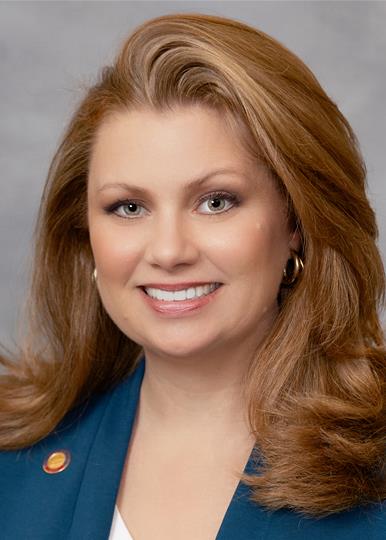
Rep. Erin Paré
Sponsored bills
Maddy summaryHB 877 establishes a pilot program to create affordable childcare facilities through public-private partnerships using state-owned property. It requires the Legislative Services Office to select a childcare operator by 2026 who must offer rates 25% below market (excluding land/building costs), pay staff 180% of federal minimum wage with health insurance, and reserve 80% of spots for state employees. The program leverages $5 million in state funds to cover facility upfitting and site costs, using state/university land leased at $500/month for 10+ years. This directly affects state employees seeking childcare and aims to lower costs for parents across all North Carolina counties through reduced capital expenses.
Maddy summaryHB 800 directs North Carolina's Department of Health and Human Services to study the effectiveness of state child care programs like NC Pre-K and Smart Start, including funding allocation and quality rating systems, with findings due by April 2026. It also allocates $10 million for a pilot program that automatically enrolls preschool-age children (8 weeks-5 years) of full-time licensed child care teachers in state subsidy programs, provided teachers commit to completing early childhood education coursework within 18 months. The pilot targets counties with the highest historical child care capacity loss, requires centers to accept standard subsidy rates without extra fees, and mandates quarterly participation reports starting in 2026. This directly affects licensed child care teachers and their preschool children, aiming to improve child care access and workforce retention.
Maddy summaryHB 814 (PIRE) promotes the use of advanced conductors (lower-resistance wires) and grid-enhancing technologies to improve electricity transmission efficiency and reliability. It directly affects public utilities, electric membership corporations, and municipal power agencies by waiving standard permitting requirements for specific upgrades that increase capacity, reduce congestion, or enhance grid resilience using these technologies. The bill requires applicants to detail the costs and benefits of such upgrades in their applications and mandates environmental reviews for new projects. This policy change streamlines infrastructure modernization without new construction, focusing on optimizing existing transmission systems.
Maddy summaryHB 794 mandates the North Carolina State Highway Patrol to study and develop recommendations on four specific areas: overall and regional staffing needs, and overall and rank-specific salary scales. The study requires the Patrol to assess staffing requirements based on state and regional needs, along with salary structures for all ranks. The Patrol must submit findings and recommendations to relevant legislative committees by March 1, 2026. This bill is procedural and does not enact new policies or funding; it solely requires a study to inform future legislative decisions.
Maddy summaryHB 15 clarifies that including property in a non-financially constrained comprehensive transportation plan does not require disclosure as a "material fact" in real estate transactions. It removes the obligation for sellers, agents, or buyers to disclose this detail when selling, leasing, or exchanging property, covering transactions listed under North Carolina law (G.S. 47E-1). The bill also prohibits knowingly making false statements about such property inclusions. It directly affects real estate transactions involving properties near planned transportation projects, changing disclosure requirements effective October 1, 2025.
Maddy summaryHB 189 clarifies the timing requirements for red light cameras in North Carolina, ensuring they only issue tickets after the red light has been displayed for a legally required period. The bill specifies that cameras cannot enforce violations for vehicles entering an intersection before the red clearance interval expires (the time after the light turns red before the camera can activate). It requires all traffic signals with cameras to follow engineering plans approved by a licensed professional engineer and comply with the standard Manual on Uniform Traffic Control Devices. This affects municipalities using red light cameras under state law, setting clear technical standards for when violations can be recorded.
Maddy summaryHB 672 creates a new "team-based practice" model for physician assistants (PAs) in North Carolina, allowing them to practice without direct physician oversight under specific conditions. To qualify, PAs must have over 4,000 hours of clinical experience (including 1,000+ hours in their specialty) and work in practices meeting defined criteria, such as physician ownership and collaborative care structures. The bill revises licensing rules to remove the requirement for PAs in these settings to provide a supervising physician’s contact information, while maintaining supervision requirements for perioperative services. This directly affects PAs seeking to work in team-based medical practices, including hospitals and clinics meeting the new standards.
Maddy summaryHB 611 requires North Carolina public schools to increase full-time assistant principal positions based on student enrollment, directly affecting all local school districts. It mandates funding to achieve specific student-to-assistant-principal ratios: 1:90 students in the 2025-2026 school year ($23.56 million) and 1:80 students starting in 2026-2027 ($57.57 million), with funds supplementing but not replacing existing budgets. The bill, effective July 2025, directs the Department of Public Instruction to allocate these funds through the school building administration allotment. This policy change aims to support school operations and develop future principals by expanding administrative staffing.
Maddy summaryHB 588 aims to improve the number and quality of school psychologists in North Carolina through multiple funding initiatives. It provides a $650 monthly salary boost and a 12% supplement for certified school psychologists (totaling $8.1 million), establishes a $5 million grant program to fund signing bonuses (up to $5,000) for recruiting new psychologists with a one-year commitment requirement, and creates a $5 million internship program offering stipends at starting salaries. Additionally, it allocates $5 million for a virtual training program at Appalachian State University and $1.6 million to expand school psychology programs at five UNC institutions to double graduate output. The bill also includes an interstate licensure compact to facilitate practice across state lines, with all programs requiring annual reporting to the legislature.