

Maddy summaryHB 837 is a study bill requiring North Carolina to examine alternative highway funding methods, primarily to address potential revenue gaps as electric/hybrid vehicle adoption grows. It directs the Legislative Services Officer and Transportation Oversight Committee to hire a consultant to study mileage-based fees (VMT) for electric/hybrid vehicles and a new "Access User Fee" for all non-diesel vehicles (replacing gas taxes). The study must be completed by May 2026, with findings reported to key legislative committees. This bill does not implement new fees but assesses options affecting all vehicle owners, particularly electric/hybrid drivers and non-diesel vehicle registrants. It allocates $125,000 from the Highway Fund for the study, effective July 1, 2025.
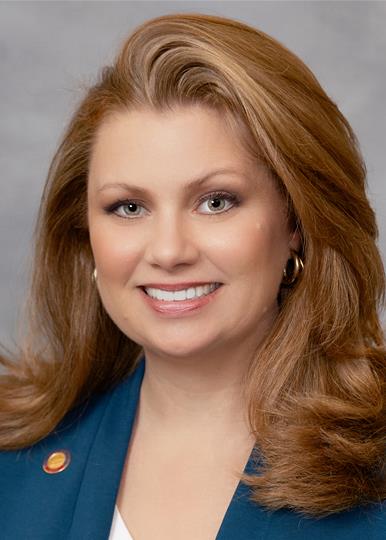
Rep. Erin Paré
Sponsored bills
Maddy summaryHB 412 aims to reform North Carolina's child care system by separating the quality rating system (QRIS) from state-subsidized child care program requirements, directly affecting licensed child care providers and families using subsidies. Key provisions require the state Division of Child Development to develop a plan by May 2026 to decouple QRIS from subsidy reimbursement rates, using a unified market rate study (not segmented by star ratings) to inform potential rate adjustments. The bill also updates facility regulations, allowing school buildings approved for school occupancy to meet child care licensing standards for after-school programs without separate outdoor play area requirements. These changes seek to increase child care supply and optimize state funding while maintaining federal compliance, though the current subsidy system remains in effect until legislative approval.
Maddy summaryThis bill establishes an Interstate Medical Licensure Compact in North Carolina, allowing physicians who meet specific qualifications to obtain medical licenses in multiple participating states through a streamlined process. The law creates an Interstate Commission to oversee the compact and sets clear standards for physician eligibility, including requirements for medical school graduation, passing licensing exams, specialty certification, and a clean disciplinary record. While the compact simplifies licensing for qualified doctors, it maintains that each state retains authority to regulate medical practice within its borders and can take disciplinary action against physicians licensed through the compact. The bill does not alter existing state medical practice laws but adds an additional pathway for physicians to practice across state lines.
Maddy summaryHB 173 freezes Wake County municipalities' ability to expand extraterritorial jurisdiction (ETJ) beyond their 2025 boundaries until 2028, directly affecting local governments in Wake County. It removes one specific property parcel (tax ID 966773980500000) from Asheville's city limits, effective June 2025, while preserving existing tax liens. The bill also revises rules for commercial development moratoria, requiring four hearings (two in-person in affected areas) and detailed justifications for any 60-day moratorium, which cannot be renewed. These changes apply to all North Carolina municipalities adopting commercial development moratoria after the bill's effective date.
Maddy summaryHB 309 creates a separate Transylvania Rural Development Authority with nine appointed members (residents of Transylvania County) to operate independently from the county government. It establishes governance rules, including member appointment terms, conflict-of-interest restrictions, and requirements for public meetings. The bill also updates the charter of the Town of Boiling Springs to revise its incorporation language. These changes apply only to Transylvania County and the Town of Boiling Springs, with no new funding or policy changes beyond structural reorganization.
Maddy summaryHB 352 exempts the towns of Holly Springs and Fuquay-Varina from North Carolina's standard competitive bidding rules for public infrastructure projects. To use this exemption, town councils must adopt a resolution approving each project, conduct annual audits of all such contracts, publicly disclose awarded contracts, and document their justification for bypassing bidding. The bill applies to contracts entered into on or before December 31, 2030. This change directly affects these two towns' procurement processes for infrastructure work like roads or utilities.
Maddy summaryHB 59 would increase the income eligibility limit for North Carolina's elderly or disabled property tax homestead exclusion from $25,000 to $48,000 for taxable years beginning July 1, 2026. This change would directly affect homeowners aged 65 or older, or those who are totally and permanently disabled, who meet other criteria (like being a North Carolina resident and owning their home as a permanent residence). The bill modifies the existing rule that currently limits eligibility to those with incomes under $25,000, raising the threshold to $48,000 while maintaining the exclusion amount as the greater of $25,000 or 50% of the home's appraised value. The change aims to expand access to this property tax relief for qualifying low-to-moderate income homeowners. (Note: The bill was withdrawn in June 2025 and has not become law.)
Maddy summaryHB 480 creates a new pathway for doctors, physician assistants, and anesthesiologist assistants to obtain North Carolina medical licenses by transferring licenses from other states ("licensure by endorsement"). To qualify, applicants must have held an active license in another U.S. jurisdiction for at least five years (with two years of practice post-residency for doctors), have a verified full-time job offer in North Carolina, maintain good standing with no recent disciplinary actions, and meet practice hour requirements. The bill increases application fees for endorsement (e.g., $825 for physicians vs. $400 for standard licensure) and requires additional documentation within 180 days to keep the license active. This directly affects out-of-state medical professionals seeking to practice in North Carolina without retaking exams.
Maddy summaryHB 14 allows North Carolina taxpayers who itemize deductions to claim a state income tax deduction for gambling losses, aligning with federal tax treatment. It directly affects individual taxpayers who itemize deductions on their North Carolina state tax returns and have wagering losses exceeding winnings. The bill amends state tax code to explicitly permit deducting gambling losses under Section 165(d) of the federal tax code, subject to federal rules. This change takes effect for taxable years beginning January 1, 2024. The bill does not alter federal tax rules or affect taxpayers using the standard deduction.
Maddy summaryHB 811 requires North Carolina property assessors to send written notices to property owners within 30 days of a property revaluation. These notices must include the current and prior appraised values, the percentage change, appeal instructions, and tax rates from the previous year. The bill also mandates that budget officers publish an estimate of the revenue-neutral tax rate on government websites by May 15 each year a revaluation occurs, updating it by July 15 after the budget is adopted. This transparency measure applies to all counties conducting revaluations effective on or after January 1, 2025, directly affecting property owners and local government budget processes.