

Maddy summaryHB 355 directs North Carolina's Legislative Research Commission (LRC) to study challenges facing rural fire departments, focusing on volunteer recruitment, funding, equipment needs, interdepartmental cooperation, firefighter well-being, and public education. The LRC must examine specific issues like financial incentives for volunteers, equitable resource distribution, mutual aid agreements, and community fire safety programs. It requires regional public hearings and a 90-day comment period before submitting interim and final reports to the 2025 and 2027 General Assemblies. This bill does not change current law but sets up a review process to inform future legislative action.
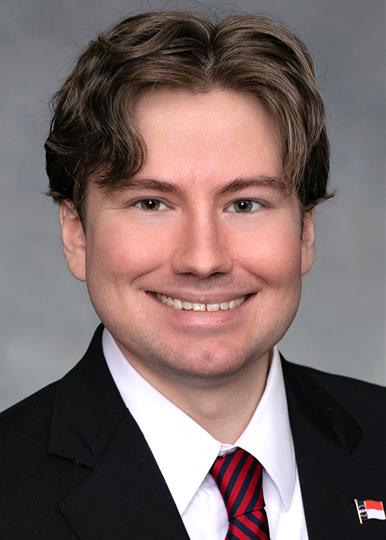
Rep. Tim Longest
Sponsored bills
Maddy summaryHB 710 establishes a three-year pilot program to fund mental health crisis units in North Carolina public schools. It allocates $2 million total (up to $250,000 annually per district) to select up to eight school districts starting in 2025-2026, prioritizing those with high student mental health needs or trauma history. Each participating district must staff units with at least a school nurse, social worker, and licensed counselor to provide crisis intervention during school hours and rotate across schools. The program requires annual reports on participating districts and student mental health impacts, ending June 30, 2028.
Maddy summaryHB 752 establishes two new funds to support transportation infrastructure: a $50 million Rail Fund for railroad upgrades, connections, and equipment, and an Airport Fund for airport capital improvements and flight incentives. The Rail Fund prioritizes projects that boost economic growth, with 60% of annual allocations reserved for matching federal grants and 30% for planning. The Airport Fund limits 80% of funds to capital projects (like runway upgrades), 17% to attract strategic flights, and up to 20% to safety improvements. Both funds require competitive allocation based on projected job creation and economic impact, with annual reports to lawmakers. This bill directly affects rail operators, airports, and industries relying on transportation networks across North Carolina.
Maddy summaryHB 630 restores a sales tax refund program for North Carolina's public school districts. It allows local school administrative units to receive annual refunds for sales tax paid on direct purchases of tangible property and services (like supplies or equipment), excluding items such as electricity, telecom, or food. The refund amount is capped at $13.3 million per year for all districts combined. The bill takes effect July 1, 2025, and adjusts state funding to reflect the restored refund program.
Maddy summaryHB 651 reduces parent cost-sharing for subsidized child care in North Carolina by lowering the copayment rate from 10% to 7% of gross family income. This change directly affects families enrolled in state-subsidized child care programs who pay a portion of their care costs. The bill appropriates $25 million annually from the General Fund for the 2025-2027 fiscal biennium to fund this reduction, effective July 1, 2025. It also specifies adjusted copayment rates for blended-rate and part-time care scenarios.
Maddy summaryHB 646 is a constitutional amendment that would permanently ban all slavery and involuntary servitude in North Carolina, removing the current exception allowing forced labor as punishment for crimes. If approved by voters in the November 2026 election, the amendment would change the state constitution to state that slavery and involuntary servitude are "forever prohibited" without any exceptions. This change would directly affect incarcerated individuals by ending the legal basis for requiring prison labor as punishment. The amendment requires voter approval through a statewide referendum before taking effect.
Maddy summaryHB 624 requires drug manufacturers to notify state agencies, insurers, and pharmacy benefit managers 60 days before raising prices on prescription drugs by 10% or more in a year. Manufacturers must disclose the justification for price hikes, previous marketing budgets, and historical pricing data within 30 days of notification. The bill also mandates rapid disclosure of pricing for new FDA-approved drugs and requires manufacturers to inform prescribers if a drug contains ingredients known to cause dependency. The state will create a public online portal for transparency, including annual reports on the most prescribed, costliest, and fastest-increasing drugs, but does not set price limits.
Maddy summaryHB 628 reenacts North Carolina's state-level child tax credit, which expired, to provide financial support to families with children. It directly affects low- and middle-income North Carolina residents who qualify under federal child tax credit rules, offering up to $250 per child annually based on household income. Key provisions include income-based credit amounts (e.g., $250 for married couples filing jointly with under $40,000 income) that phase out at higher earnings, and the credit is refundable - meaning families may receive cash payments even if they owe no state tax. The bill takes effect for 2025 tax years and mirrors the federal credit structure without creating new policy.
Maddy summaryHB 644 requires North Carolina's Department of Transportation to study traffic congestion near Fort Bragg, specifically between Vass Road and N.C. Highway 87, using $500,000 in highway funds for the 2025-2026 fiscal year. The study must identify economic benefits of reducing congestion and examine options like expanded rail routes and other surface transportation solutions. This bill directly affects the Fort Bragg military installation and surrounding communities by funding a traffic analysis, but does not implement any traffic solutions itself. It becomes effective July 1, 2025, after the study period.
Maddy summaryHB 626, the Housing Choice Act, allows North Carolina municipalities to adopt specific zoning changes to encourage more housing options and qualify for priority water infrastructure funding. Smaller cities (under 100,000 residents) can permit multifamily housing by right in residential zones, waive fees for affordable housing construction, and allow accessory dwelling units. Larger cities (100,000+ residents) must implement minimum density standards, eliminate parking requirements, and permit duplexes/triplexes in single-family zones. Both sizes must preserve existing affordable housing through incentives or funds and adopt zoning that aligns with state housing goals. The bill directly affects local governments seeking to streamline housing development while meeting criteria for state water infrastructure grants.