

Maddy summaryHB 788 ("Fix Our Democracy") proposes amending the North Carolina Constitution to establish a nonpartisan redistricting process for state legislative and U.S. House districts. It would require a constitutional amendment (voting required in 2026) to remove the General Assembly's role in drawing districts, mandating that districts be contiguous, avoid dividing counties where possible, and remain unchanged until the next census. The bill also includes related provisions like online voter registration, automatic registration, banning voter roll purging, and campaign finance transparency changes. This constitutional change would directly affect how electoral districts are created for state legislators and U.S. representatives in North Carolina.
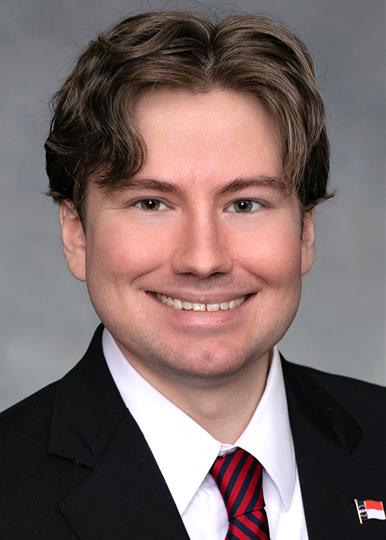
Rep. Tim Longest
Sponsored bills
Maddy summaryHB 798 appropriates $1.72 million annually from the General Fund to create a Cold Weather Shelters Grant Program, administered by the Department of Health and Human Services, Division of Aging. The program provides grants to municipalities and nonprofits to establish or expand temporary emergency shelters for people experiencing homelessness during severe weather events. Grants are limited to $215,000 per recipient annually, with selection considering poverty rates in the service area and existing funding availability. Recipients must report annually on shelter usage, funds spent, and the number of people served, starting in 2027.
Maddy summaryHB 786, the "Working Families Act," reduces child care costs for low-income families by lowering parent copayments from 10% to 7% of income (effective 2025), reinstates a refundable state child tax credit with income-based payments (effective 2025), and phases up North Carolina’s minimum wage to $15/hour by 2030 with annual inflation adjustments. It also increases income limits for property tax relief, creates a homebuyers’ assistance program for public servants (like firefighters and EMTs) as first-time buyers, and establishes a paid family leave insurance program funded through an employer grant program. The bill directly affects working families, hourly workers, public-sector employees, and households using subsidized child care or property tax relief. Key mechanisms include phased wage increases, income-tiered tax credits, and targeted housing support, all designed to reduce financial strain on low-to-moderate-income households.
Maddy summaryHB 774 ("School Breakfast for All") mandates that all North Carolina public schools (pre-K through 12) provide free breakfast to every student, eliminating costs for families. It establishes a Farm-to-Table Initiative requiring schools to partner with local farmers for fresh, locally sourced ingredients in breakfast meals. The bill allocates $39 million in recurring state funds for the 2025-2026 fiscal year to cover program costs, while requiring annual reports on participation rates, costs, and impacts on student health and academic performance. This directly affects all public school students, school districts, and North Carolina agricultural producers.
Maddy summaryHB 766 appropriates $1.87 million to fund expanded Teen Mental Health First Aid (tMHFA) training for North Carolina high school students in grades 9-12 (ages 14-18). The bill directly affects students by providing evidence-based training to help them recognize, understand, and respond to peers' mental health and substance use challenges. Key provisions include funding for the Department of Health and Human Services to scale up tMHFA programs statewide, building on a pilot that trained 1,519 teens and showed a 50% increase in teens' willingness to seek adult support. The training focuses on connecting peers to trusted adults during crises, addressing high rates of unmet mental health needs among teens (64% don’t seek help, per the bill’s rationale).
Maddy summaryHB 753 allows eligible North Carolina law enforcement officers aged 59.5 or older to continue receiving retirement benefits while remaining actively employed. Retired officers who separated from service for at least six months may return to duty and retain their retirement benefits. The bill requires employers to cover both employee and employer retirement contributions during this period and clarifies that beneficiaries remain eligible for death benefits under specific conditions. It directly affects current and retired state/local law enforcement officers meeting age and service criteria.
Maddy summaryHB 755 provides a sales tax exemption for qualifying North Carolina nonprofits, including hospitals, federally tax-exempt community organizations, volunteer fire departments, and university-affiliated groups. To qualify, nonprofits must obtain a state sales tax exemption number, with annual limits of $31.7 million for state tax and $13.3 million for local tax. The exemption covers most goods and services purchased for nonprofit activities but excludes electricity, telecommunications, alcohol, and certain other items. Real property contractors must provide documentation to retailers when buying materials for nonprofit projects to ensure proper tax treatment.
Maddy summaryThis is a House Resolution (HR 769), not a bill, urging Congress to support H.R. 4052, which would create a National Infrastructure Bank. The resolution cites North Carolina's infrastructure needs - like roads, bridges, water systems, and lead pipe replacement - and states the proposed bank would be funded through existing Treasury debt (without new taxes or spending). It calls for Congress to pass the bank legislation to finance infrastructure projects nationwide, including those in North Carolina. The resolution itself does not create the bank but advocates for its adoption.
Maddy summaryHB 687 clarifies North Carolina's public swimming pool regulations by exempting safety-certified floatation or sensory deprivation systems from standard pool requirements. Specifically, it excludes systems certified by the National Sanitation Foundation (NSF) to meet NSF Standard 50, directly affecting operators of such facilities (e.g., floatation tanks in wellness centers). The bill does not create new safety rules but explicitly states these certified systems are not subject to the state's public pool regulations. This change aligns with existing exemptions for therapeutic pools and private family pools under defined conditions. The exemption takes effect July 1, 2025.
Maddy summaryHB 688 creates a dedicated annual appropriation of $100,000 from the state General Fund to the Parks and Recreation Trust Fund specifically for inclusive playground projects. It directly affects local governments, public schools, and public authorities (as defined in state law) seeking to build or adapt playgrounds to meet the needs of people with disabilities. The bill provides grants of up to $5,000 per project, requiring recipients to match each $5 in state funds with $1 in local funds. This funding operates separately from other Trust Fund allocations, ensuring dedicated resources for accessibility improvements without reducing existing funding for state parks or coastal access. The bill becomes effective July 1, 2025.