

Maddy summaryHB 1197 updates the North Carolina Teaching Fellows Program by increasing forgivable loan amounts for future students and establishing stricter criteria for selecting partner teacher training institutions. Under the new rules, eligible students can receive up to $10,000 per academic year, while the program will only partner with schools that meet specific performance standards, such as high licensure pass rates and alignment with the Science of Reading. Additionally, the bill mandates a study by the Friday Institute to investigate why some participants choose to repay their loans in cash rather than fulfilling their service obligations. These changes are set to take effect for the 2026-2027 academic year, with previous program revisions applied retroactively to current participants.
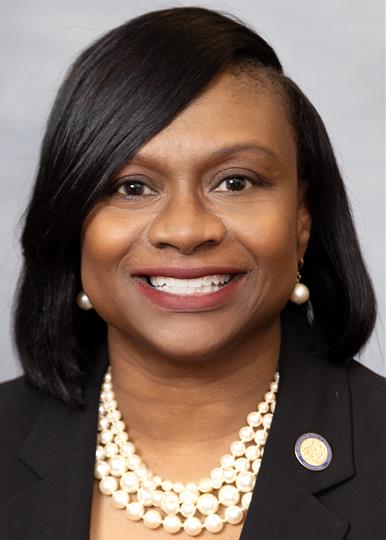
Rep. Monika Johnson-Hostler
Sponsored bills
Maddy summaryThis North Carolina bill requires training programs for sexual assault nurse examiners to submit annual reports to the state Board of Nursing regarding graduate employment details. It also mandates that active nursing licensees register with the Board to provide and update their training credentials and practice locations. The legislation creates a database for this information and allocates $50,000 to help the Board implement these reporting requirements. These changes take effect in 2026 and apply to active nurses and their training programs within the state.
Maddy summaryThis bill prevents homeowners' associations and unit owners' associations in North Carolina from restricting residents from installing, maintaining, or using solar panels, edible gardens, and certain accessory dwelling units. The law specifically prohibits these groups from enforcing rules against solar energy systems, gardens located within a property owner's boundaries, and secondary housing units that comply with building codes and zoning laws. Additionally, the legislation allocates $100,000 to the Department of Justice to educate the public about these new restrictions. The changes take effect immediately upon becoming law.
Maddy summaryHB 1172, known as the Ciji Graham Act, establishes a High-Risk Pregnancy Care Navigation Program in North Carolina to assist patients with high-risk pregnancies by providing licensed nurse consultants who help coordinate care and address access barriers. The bill also creates a statewide pregnancy consultation hotline for healthcare providers and community organizations to offer real-time clinical guidance and referrals, alongside a centralized digital hub containing clinical guidelines and provider directories. Funded through the state's General Fund starting in the 2026-2027 fiscal year, these measures aim to improve maternal health outcomes and reduce disparities by ensuring timely access to specialized care and resources.
Maddy summaryHB 1161 establishes state protections for artificial intelligence across elections, education, employment, courts, and insurance. In elections, the bill bans the use of AI-generated images, videos, voices, or text in political advertisements and imposes severe penalties, including donation freezes, for violations. For schools, it empowers local districts to restrict student access to AI tools and allows for disciplinary action, while also mandating new middle school courses on critical thinking and technology awareness. The legislation appropriates funds to help implement these measures and applies to political ads immediately and to school policies starting in the 2026-2027 academic year.
Maddy summaryHB 1179 modifies North Carolina's property tax relief programs to help seniors and disabled homeowners by allowing them to combine two existing benefits and removing a strict income cutoff that previously denied aid to those just above the limit. The bill introduces a gradual phaseout for the elderly homestead exclusion, reducing benefits by 3.33% for every 1% of income earned above 55% of the state median, while also permitting eligible owners to stack this relief with the circuit breaker program. Additionally, the legislation clarifies rules for seniors living in shared or inherited properties to ensure they can receive full relief if no other non-spouse owner resides there. To offset the increased costs for local governments, the bill requires the state to reimburse counties for revenue losses and provides funding to support more frequent property tax reappraisals.
Maddy summaryThis bill requires local public school districts and charter schools in North Carolina to allow students with disabilities who attend private schools to enroll part-time in public programs. It mandates that schools create written policies permitting these students to access specific courses, services, or specialized education while remaining enrolled in their nonpublic schools. Additionally, the legislation clarifies that part-time students will not count toward a charter school's official enrollment growth numbers and provides $10,000 in funding to help schools cover the administrative costs of implementing these changes.
Maddy summaryThis bill creates a new advisory council and grant program in North Carolina to support high-quality after-school activities for children and youth up to age 18. The legislation establishes a dedicated fund that will receive state appropriations, federal money, private donations, and any future legal settlements from social media companies, with the Department of Public Instruction managing the distribution of these funds. Eligible organizations, such as community groups and schools, can apply for grants to run structured programs that focus on positive youth development, provided they serve rural or underserved areas and meet specific quality standards. The program includes a two-year limit on individual grants, requires regular evaluation of participant outcomes, and allows for renewal based on performance, while ensuring that new funding supplements rather than replaces existing resources.
Maddy summaryThis bill establishes a Child Welfare Case Escalation Team to provide an extra layer of safety review for juveniles with complex histories of abuse or neglect. The team, composed of state and local representatives, will be activated when cases meet specific risk criteria, such as multiple prior reports, patterns of medical neglect, or a history involving child fatalities. Once triggered, the team will conduct a thorough assessment of the case, identify gaps in services, and collaborate with county social services to develop improved safety plans. This new mechanism aims to ensure consistent quality assurance and better protect vulnerable children by addressing chronic issues that may have been missed in previous interventions.
Maddy summaryThis bill directs North Carolina's Utilities Commission to adjust electricity rates to reflect fuel costs that utilities incurred after a previous rate-setting period ended. It requires the commission to include these recent fuel expenses in rate calculations, provided they were reasonable and prudently spent, while explicitly excluding costs from before that earlier period. The law also mandates that any difference between what utilities collected and what they actually spent on fuel be corrected over a 12-month period with interest applied. Additionally, the bill allocates $10,000 in state funds to the commission to support the administrative work needed to implement these changes, which will take effect on July 1, 2026.