

Maddy summaryHB 416 appropriates $30,000 from the state General Fund for the 2025-2026 fiscal year to provide a directed grant to the Boys & Girls Clubs of Durham and Orange Counties. The funds will support a six-part youth development program focusing on teen recruitment, emotional safety, leadership, trauma-informed practices, cultural inclusion, and college/career readiness for area youth. This bill directly affects the Boys & Girls Clubs in those counties and the young people they serve, becoming effective July 1, 2025.
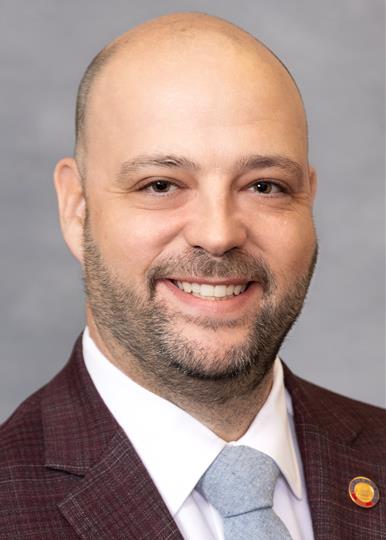
Rep. Bryan Cohn
Sponsored bills
Maddy summaryHB 422, the "Beyond The Choice Act," eliminates a 12-month residency wait period for eligible veterans and their dependents at North Carolina public colleges and universities. It allows veterans who served 90+ days of active duty, their dependents, or other individuals covered under federal law (38 U.S.C. § 3679) to pay in-state tuition rates immediately upon admission, without needing to establish residency first. This change applies to all qualifying students enrolling in the 2025-2026 academic year and beyond. The bill directly benefits veterans and their families by reducing financial barriers to higher education in North Carolina.
Maddy summaryHB 420 allocates $4.3 million annually to fund teacher recruitment programs like "Grow-Your-Own" and "2+2" pathways in high-need schools, targeting efforts to recruit and prepare new educators. It requires the State Board of Education to develop a teacher licensure and compensation reform plan by March 2026, including pathways for new teachers and retention strategies. The bill also funds a study to expand educator preparation programs to graduate 5,000 in-state teachers annually, with a focus on increasing diversity among educators. These provisions directly affect public schools, teacher preparation programs, and prospective teachers through new funding streams and policy requirements.
Maddy summaryHB 391 appropriates $2.178 million for the 2025-2026 fiscal year and $4.542 million for 2026-2027 to hire 50 additional Adult Protective Services (APS) workers statewide. The funds, distributed based on need factors like case volume and senior population, directly support county social services departments overwhelmed by rising elder abuse reports. Counties must use the funds solely for APS worker salaries and benefits, not to replace existing funding. This addresses a critical staffing gap identified by counties, where federal funds are depleted early and reports of elder abuse have increased significantly.
Maddy summaryHB 398, the "KinCare Act," allows North Carolina employees to use accrued sick leave to care for family members, directly affecting employers and workers in the state. The bill expands existing sick leave provisions to permit up to five consecutive days per year for caring for defined family members - including children, parents, spouses, domestic partners, or others with close family-like relationships - without requiring the employee’s own illness. Employers must permit this use under the same conditions applied to personal sick leave, while clarifying it does not alter federal Family and Medical Leave Act coverage or apply to certain benefits like workers’ compensation. The law takes effect October 1, 2025.
Maddy summaryHB 137, the "Gabe Torres Act," expands death benefits under North Carolina's Public Safety Employees' Death Benefits Act to include public safety workers (like police, fire, and emergency personnel) who are killed while traveling to or from work. The bill amends the law to define "official duties" to explicitly cover commuting between home and work, as well as travel for training or responding to emergencies. It also appropriates $300,000 in recurring funds for these expanded benefits, effective July 1, 2025. This change directly affects eligible families of covered public safety employees who die during work-related travel, ensuring they qualify for death benefits previously limited to on-duty incidents.
Maddy summaryHB 374 allocates $3.95 million to fund a financial assistance program for small local governments through the North Carolina Association of Regional Councils of Governments (NCARCOG). It directs NCARCOG to hire 32 additional finance professionals to help small towns and public authorities with financial compliance, prioritizing those with limited resources on the State Treasurer’s assistance list. The bill also provides $3.9 million for NCARCOG to develop a disaster response plan, including training for local financial administration, assistance with federal disaster funds, and infrastructure repair support. These funds, effective July 1, 2025, aim to improve financial management and disaster resilience for smaller communities across North Carolina.
Maddy summaryHB 11 would allow North Carolina taxpayers to deduct overtime pay, up to $2,500 in bonus pay (defined as cash awards for workplace dedication), and reported tips from their taxable income. It applies to individuals and married couples filing jointly, with each spouse eligible for separate deductions. The bill specifically defines "bonus pay" to exclude tips and requires taxpayers to provide documentation to claim the deduction. This policy change would take effect for tax returns filed in 2025.
Maddy summaryHB 353, the Fair Minimum Wage Act, raises North Carolina's state minimum wage in staged increases, starting at $10 per hour on January 1, 2026, and reaching $18 per hour by January 1, 2030. After 2030, the wage will automatically adjust annually based on inflation using the Consumer Price Index. The bill directly affects hourly workers and employers across North Carolina, requiring higher pay for all covered employees. It also adds provisions allowing workers to recover unpaid wages plus interest, attorney fees, and court costs if employers fail to pay correctly.
Maddy summaryHB 341 increases property tax relief for disabled veterans in North Carolina by expanding the homestead exclusion on their primary residence. The bill sets exclusion amounts based on disability rating: $100,000 for 70%+ disability, $75,000 for 50-69%, $50,000 for 30-49%, and $25,000 for 10-29%. Surviving spouses qualify for the greater of the veteran’s exclusion amount or $45,000, provided the veteran’s death resulted from a service-connected condition. This policy directly affects qualifying disabled veterans and their surviving spouses who own and occupy their primary residence, effective for taxes due in 2025.