

Maddy summaryHB 487 shortens the required separation period for retired assistant district attorneys and assistant public defenders before they can return to state employment. The bill changes North Carolina's retirement rules to allow these professionals to rejoin state work after 30 days instead of the standard six-month waiting period. This adjustment applies specifically to retired assistant district attorneys and public defenders who wish to return to state service. The policy change directly affects these two groups of retired state employees by providing greater flexibility for reemployment.
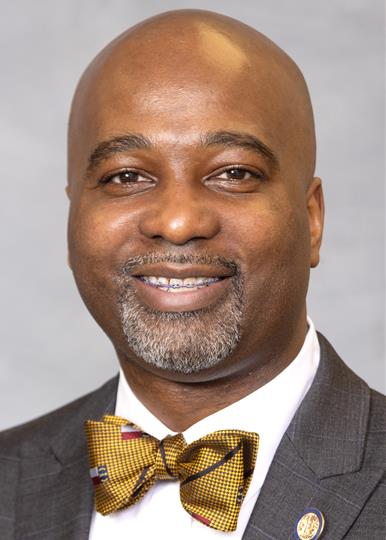
Rep. Zack Hawkins
Sponsored bills
Maddy summaryThis bill requires North Carolina state agencies and local governments to only purchase U.S. and North Carolina flags made entirely in the United States using domestically grown or produced materials. It prohibits using public funds for any U.S. or state flags not 100% manufactured in America from domestic materials. The rule applies to all new flag purchases starting October 1, 2025. It directly affects all government offices responsible for buying flags with public money.
Maddy summaryHB 160 requires North Carolina's University of North Carolina School of Medicine Area Health Education Centers (NC AHEC) to create and share evidence-based information about sudden unexpected death in epilepsy (SUDEP) with all healthcare practitioners in the state. This includes current risk factors, conditions, and contact details for epilepsy support organizations, available on NC AHEC's website. Healthcare providers treating epilepsy patients will directly receive this standardized resource, which must be compiled by consulting medical boards and professional societies. NC AHEC must report the completed resource to the legislature by September 1, 2025.
Maddy summaryHB 823 amends North Carolina law to create two types of specialized districts: "research and production service districts" (for business/development areas) and "urban research service districts" (URSDs). It allows counties to establish these districts to provide services like infrastructure, utilities, and public facilities beyond standard county offerings, directly affecting residents and businesses within the districts. Key mechanisms include requiring advisory committees (with at least 10 members, including a developer representative), setting rules for multi-county district creation, and permitting developers to act as agents for service provision under county approval. The bill focuses on structuring district governance and service delivery without altering tax mechanisms or funding sources.
Maddy summaryHB 335 expands eligibility for emergency judges in North Carolina by allowing retired judges who previously served in both Superior Court and District Court to qualify for emergency judge roles on either court. Currently, retired judges could only serve as emergency judges on the specific court they retired from, but this bill removes that restriction for judges with dual court experience. The change directly affects retired judges who held positions in both court systems before retiring, making them eligible to be assigned to emergency duties in either court. This adjustment streamlines the pool of available judges for temporary court needs without altering compensation or other existing rules.
Maddy summaryHB 807 raises teacher salaries for the 2025-2026 school year with new pay scales based on experience and adds supplements for certified teachers, school nurses, counselors, and specialists. It allocates $89.4 million annually and $109.2 million as a one-time fund to provide weighted, per-child funding for children with disabilities based on the cost of services provided. The bill also mandates free breakfast and lunch for all public school students, funded through state appropriations tied to school food authority evaluations, and includes funding for a one-to-one device refresh in public schools.
Maddy summaryHB 790 prohibits the sale of tobacco, vape, and alternative nicotine products within 1,000 feet of any public or nonpublic school building. It directly affects vape and tobacco shops located near schools, banning sales in those zones while excluding home schools and colleges. The law includes an exception for incidental sales tied to a business's primary operations but classifies violations as Class 2 misdemeanors. The bill takes effect December 1, 2025, and applies to offenses occurring on or after that date.
Maddy summaryHB 796, the Student Mental Health Line Awareness Act, requires all North Carolina public schools serving grades 6-12 to print three specific suicide prevention contact numbers on new student identification cards. The mandated information includes the 988 Lifeline (call/text), Crisis Text Line (text HOME to 741741), and the NC Statewide Warmline (1-855-733-7762), displayed prominently on the ID. Schools must verify these numbers are current annually and use updated contact information. The bill applies to local school boards, charter schools, regional schools, and laboratory schools, but explicitly states it does not require issuing student IDs. It takes effect for the 2025-2026 school year.
Maddy summaryHB 815 revises North Carolina's Opportunity Scholarship Program, which provides state-funded vouchers for private school tuition. It expands eligibility to include students in foster care, military families, and those previously enrolled in public school, while prioritizing low-income students (households at or below 200% of the federal free/reduced lunch income threshold) for full tuition coverage (90% for full-time, 45% for part-time). Nonpublic schools receiving funds must meet reporting standards, and the program now requires schools to document student enrollment and academic progress. This bill directly affects low-income families, military-connected students, and participating private schools seeking state-funded tuition assistance.
Maddy summaryHB 792 appropriates $10 million (to the NC Clean Energy Innovation and Research Fund) and $4.5 million (to the One North Carolina Fund) for competitive grants in North Carolina's 2025-2026 fiscal year. The funds target small businesses (under 100 employees), nonprofits, local governments, and state agencies to support clean energy innovation, renewable technology deployment, and energy efficiency projects. Key provisions include requiring matching funds for some grants and prioritizing workforce development in the clean energy sector. The grants aim to grow North Carolina's green economy through business development and market expansion in renewable energy. Funds not spent by June 30, 2027, will revert to the state's general fund.