

Maddy summaryHB 473 protects patients' and healthcare providers' rights to access and provide assisted reproductive technology (ART), including in vitro fertilization (IVF), by prohibiting state interference. It defines ART broadly and explicitly states that fertilized eggs or embryos outside the uterus are not considered "human beings" under North Carolina law. The bill also appropriates $500,000 annually (starting July 2025) from the state General Fund to increase Medicaid maternal support services (the Baby Love Program), matching $913,000 in federal funds for the 2025-2027 biennium. This legislation directly affects patients seeking ART, healthcare providers offering these services, and Medicaid beneficiaries receiving maternal support.
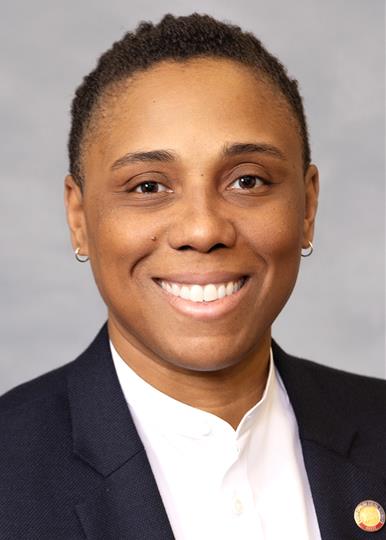
Rep. Vernetta Alston
Sponsored bills
Maddy summaryHB 448 creates a temporary sales tax exemption in North Carolina for specific firearm storage equipment designed to prevent unauthorized access. The exemption applies to devices like gun safes, lockboxes, biometric locks, and similar home-use storage, but excludes display cases. It directly affects firearm owners purchasing qualifying storage solutions, eliminating the state sales tax on these items. The exemption is limited to sales between October 1, 2025, and October 1, 2026.
Maddy summaryHB 446 prevents law enforcement from sharing booking photographs (taken during initial arrest) with websites or publications that require payment to remove the photos. It requires those "pay-to-remove" sites to delete such photos within seven business days if the person was not convicted (and provides proof of dismissal, acquittal, or expungement). Sites that fail to comply face civil penalties, including $100 per day for each day the photo remains visible. This directly affects individuals arrested but not convicted and "pay-to-remove" online platforms.
Maddy summaryHB 416 appropriates $30,000 from the state General Fund for the 2025-2026 fiscal year to provide a directed grant to the Boys & Girls Clubs of Durham and Orange Counties. The funds will support a six-part youth development program focusing on teen recruitment, emotional safety, leadership, trauma-informed practices, cultural inclusion, and college/career readiness for area youth. This bill directly affects the Boys & Girls Clubs in those counties and the young people they serve, becoming effective July 1, 2025.
Maddy summaryHB 420 allocates $4.3 million annually to fund teacher recruitment programs like "Grow-Your-Own" and "2+2" pathways in high-need schools, targeting efforts to recruit and prepare new educators. It requires the State Board of Education to develop a teacher licensure and compensation reform plan by March 2026, including pathways for new teachers and retention strategies. The bill also funds a study to expand educator preparation programs to graduate 5,000 in-state teachers annually, with a focus on increasing diversity among educators. These provisions directly affect public schools, teacher preparation programs, and prospective teachers through new funding streams and policy requirements.
Maddy summaryHB 407 creates a new special license plate for Sigma Gamma Rho Sorority in North Carolina, featuring the sorority's symbol and the phrase "Greater Service, Greater Progress." It sets a $20 additional fee for this plate (same as other Divine Nine sororities/fraternities), with half the fee going to the Special Registration Plate Account and half to the Collegiate and Cultural Attraction Plate Account. Proceeds from the plate sales will fund the Sigma Gamma Rho Sorority National Education Fund. This bill directly affects vehicle owners who choose this plate, adding it to North Carolina's list of special registration options.
Maddy summaryHB 137, the "Gabe Torres Act," expands death benefits under North Carolina's Public Safety Employees' Death Benefits Act to include public safety workers (like police, fire, and emergency personnel) who are killed while traveling to or from work. The bill amends the law to define "official duties" to explicitly cover commuting between home and work, as well as travel for training or responding to emergencies. It also appropriates $300,000 in recurring funds for these expanded benefits, effective July 1, 2025. This change directly affects eligible families of covered public safety employees who die during work-related travel, ensuring they qualify for death benefits previously limited to on-duty incidents.
Maddy summaryHB 276 expands the definition of "killed in the line of duty" for firefighters to include deaths caused by specific cancers that previously qualified them for benefits under North Carolina's Firefighters' Cancer Insurance Program. The bill adds seven specific cancers (like mesothelioma and testicular cancer) to the list and includes any cancer diagnosis that already provided benefits under the existing program. It also formally links the Firefighters' Health Benefits Pilot Program to the Cancer Insurance Program, ensuring consistent coverage, and appropriates $2 million annually for related death benefits starting July 1, 2025. This change directly affects firefighters diagnosed with covered cancers and their families, who will now qualify for death benefits under the Public Safety Employees' Death Benefits Act.
Maddy summaryHB 361 allocates $1.8 million for training county register of deeds employees, $500,000 for a public awareness campaign about real property fraud, and $30 million in grants to county offices for technology upgrades. The grants will fund digitizing records, purchasing scanning equipment, upgrading software, enhancing digital security, and improving network systems to prevent deed and title fraud. An additional $1 million is reserved for county offices without existing fraud detection systems. The bill becomes effective July 1, 2025, directly affecting county register of deeds offices and the public through reduced fraud risks.
Maddy summaryHB 365, the Workforce Education Act, revises North Carolina's community college funding model to base allocations on student enrollment in workforce-focused programs like career training and continuing education, starting in 2025-2026. It creates an Enrollment Increase Reserve (funded with $6 million initially) to provide additional support to colleges experiencing enrollment growth exceeding 5% or 325 students, preventing funds from reverting to the general budget. The bill also expands funding for cooperative high schools in underserved areas, with tiered payments based on county development status (e.g., $740,000 for first high schools in "Tier One" regions). These changes directly affect community colleges, public school students accessing career programs, and participating high schools seeking to expand workforce education opportunities.