

Maddy summaryHB 2 requires North Carolina public high schools to accept cash for admission to interscholastic athletic events and provide free entry to seniors with a Tar Heel Card (issued by the Department of Health and Human Services). It directly affects students, families, and seniors attending high school sports events by changing payment rules for admission fees. The bill mandates that schools must accept cash at the gate and honor Tar Heel Cards for free admission upon presentation. These requirements apply starting the 2025-2026 school year. The law amends state education rules governing athletic activity fees.
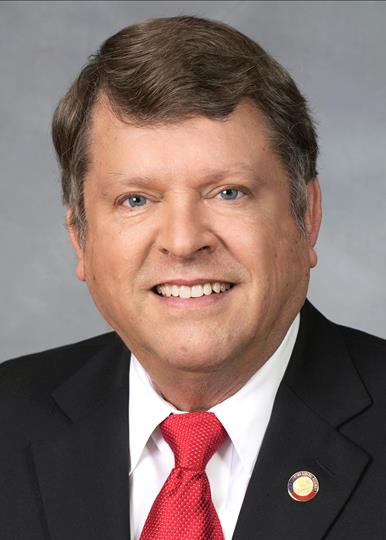
Rep. Larry Strickland
Sponsored bills
Maddy summaryHB 296 establishes a $89.5 million program to provide financial assistance to North Carolina corn farmers who suffered crop losses due to 2024 disasters like drought and hurricanes in USDA-designated disaster counties. Farmers must verify losses using USDA forms or equivalent documentation within 45 days, with payments calculated using county yield averages and state price data. Funds can only be used for agricultural recovery expenses like replanting or equipment repair, and recipients must provide proof of eligible spending. The program builds on existing state disaster funds and requires strict documentation to prevent misuse, with potential audits and repayment for inaccurate claims.
Maddy summaryHB 277 grants Johnston County Schools flexibility to set an earlier school start date (as early as August 19, instead of the standard August 26) if they demonstrate "good cause" through documented emergency closures (8+ days in 4 of the last 10 years). It also allows the district to administer standardized assessments earlier if they conclude the fall semester before December 31, while maintaining required assessment timing windows for other courses. The bill specifically applies only to Johnston County Schools, effective for the 2025-2026 school year. This is a targeted procedural adjustment for one school district, not a statewide policy change.
Maddy summaryHB 130 establishes a $475 million program to provide financial assistance to North Carolina farmers who suffered crop losses from natural disasters in 2024. It directly affects farmers in counties designated by the USDA as disaster areas, requiring verified losses of eligible agricultural commodities (like crops, livestock, or specialty plants) planted but not harvested by January 1, 2024. The program uses county and state yield/price averages to calculate payments, mandates submission of USDA Form 578 or equivalent documentation within 30 days, and allocates funds from state reserves (Stabilization, IT, and Economic Development) to cover verified losses. Farmers must provide documentation for verification, and the Department of Agriculture may audit claims to ensure proper use of funds, with refunds required for inaccurate information.
Maddy summaryHB 159 establishes a $75 million grant program within North Carolina's Department of Transportation to improve subdivision streets that don't meet state highway standards and aren't maintained by local governments. It directly affects counties and municipalities with these "orphan roads," providing funds for repairs up to $250,000 per subdivision, requiring a 25% local match (25 cents for every dollar awarded). Once roads meet standards, ownership transfers to the state or local government for ongoing maintenance. The program runs from July 2025 through June 2030, with unspent funds rolling over to the Highway Fund.
Maddy summaryHB 61 increases penalties for assaulting certain emergency personnel with a firearm in North Carolina. It reclassifies assaults against law enforcement officers, probation/parole officers, National Guard members, detention facility staff, emergency medical technicians, medical responders, firefighters, and law enforcement telecommunicators as a Class B1 felony (instead of Class D) when committed during their duties. The bill specifically targets firearm assaults, making them punishable by more severe prison sentences. This law takes effect December 1, 2025, for offenses occurring on or after that date.
Maddy summaryHB 66 would shorten North Carolina's early voting period by changing the start date from the third Thursday before an election to the second Monday before the election. It specifies that voters may only cast early ballots between 8:00 a.m. and 3:00 p.m. on the last Saturday before an election. This bill directly affects voters in North Carolina elections by reducing the window for early in-person voting. The change applies to all elections held on or after the law's effective date. The bill modifies existing voting procedures without altering election administration rules beyond the early voting timeframe.
Maddy summaryHB 36 requires North Carolina's Department of Veterans and Military Affairs to improve maintenance at all four state veterans cemeteries, directly affecting veterans' families and cemetery operations. The bill mandates addressing specific issues like headstone installation delays, equipment damage to graves, drainage problems, debris, and poor grounds appearance, while allowing military groups to volunteer for upkeep. It also directs the department to review and adjust funeral service policies, including chapel-only options, service duration, attendee limits, and grave visitation rules during services. The department must submit a report on these changes to legislative committees by October 1, 2025.
Maddy summaryThis is a commemorative resolution (not a policy bill) honoring former North Carolina House Representative Joseph "Joe" Robert John, Sr., who served District 40 from 2017-2025 and died January 20, 2025. The resolution expresses the House's appreciation for his public service, extends sympathy to his family, and formally recognizes his contributions to North Carolina's judiciary, criminal justice, and community. It has no policy impact or new legal provisions - its purpose is solely to memorialize his career and legacy. The resolution was adopted unanimously by the House on January 29, 2025.
Maddy summaryThis amendment to House Bill 10 allocates $278,994 annually from the state's General Fund to hire two full-time jail inspectors for the 2023-2025 fiscal period. The funds are directed to the Department of Health and Human Services to support the Division of Health Services Regulation in its construction section. These positions become effective on July 1, 2023, and the amendment also updates the bill's title to reflect the addition of these inspector roles.