

Maddy summaryHB 152 aims to regulate how health benefit plans in North Carolina cover Transcranial Magnetic Stimulation (TMS) services. If an insurer chooses to cover TMS, the bill requires them to cover all procedures performed by properly licensed healthcare providers, regardless of their medical specialty, as long as TMS is within their scope of practice. It prohibits insurers from penalizing providers solely based on their specialty when submitting TMS claims. However, the bill maintains that insurers retain discretion over whether to cover TMS, for which conditions, and at what reimbursement rates.
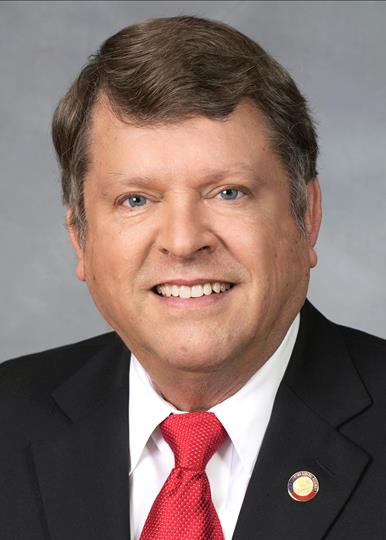
Rep. Larry Strickland
Sponsored bills
Maddy summaryHouse Bill 703 allows State veterans cemeteries to sell monuments and memorials directly to honor individuals interred within them. This bill permits the sale of items such as memorial trees, granite or marble markers, and benches, though not headstones. State veterans cemeteries can establish stylistic guidelines for these items and must not charge more than the market rate. The funds generated from these sales will be retained by the selling cemetery and dedicated solely to its maintenance, improvement, and care. This act becomes effective on October 1, 2025.
Maddy summaryHB 69, the Military and Veterans Educational Promise Act, provides two key benefits for military-affiliated individuals and veterans at North Carolina's University of North Carolina (UNC) schools. First, it requires UNC institutions to allow eligible military members (including reservists) and their spouses to defer admission for up to five years (for active duty) or two years (for reserve service) upon enrollment notice. Second, it establishes in-state tuition rates for honorably discharged veterans who served at least 90 days in the military, graduated from a North Carolina high school after 2004, had a North Carolina duty station, or received a Purple Heart. The bill applies to all UNC institutions beginning in the 2025-2026 academic year.
Maddy summaryHB 695 amends the allocation of 911 funds to support the state's VIPER public safety radio network. This bill requires the 911 Board to allocate a minimum of 20% of total 911 service charges to the State Highway Patrol. These funds are designated for the support and maintenance of the VIPER system, specifically for its role in 911 services, ensuring interoperability among 911 systems, and facilitating first responder dispatch. This change aims to enhance emergency communications and dispatch capabilities throughout the state and becomes effective July 1, 2025.
Maddy summaryHB 113 creates a joint legislative committee to study potential changes to North Carolina's Medicaid program if federal funding decreases. The 12-member committee (six senators appointed by the Senate President Pro Tempore, six representatives appointed by the House Speaker) will examine cost-saving options like reducing optional services, adjusting provider payments, or improving managed care efficiency. It must submit a final report with recommendations to the General Assembly by April 30, 2026, but the bill itself does not make any direct policy changes to Medicaid. This is a procedural measure establishing a study body, not a policy enactment.
Maddy summaryHB 895 creates North Carolina's Emergency Citizen Pilot Training Program, which establishes certification standards for volunteer pilots to assist in disaster response. The program, administered by the Division of Emergency Management, will train pilots on safe emergency operations (including flight paths, communication, and coordination with state/federal teams), require a $500 fee per participant, and maintain a registry of certified pilots who complete continuing training to maintain active status. It directly affects volunteer pilots who qualify, granting them certification to participate in disaster efforts and providing new leave rights from civilian jobs during emergencies. The bill also expands the definition of "emergency management worker" to include certified pilots and requires the program to be operational by January 1, 2027.
Maddy summaryHB 753 allows eligible North Carolina law enforcement officers aged 59.5 or older to continue receiving retirement benefits while remaining actively employed. Retired officers who separated from service for at least six months may return to duty and retain their retirement benefits. The bill requires employers to cover both employee and employer retirement contributions during this period and clarifies that beneficiaries remain eligible for death benefits under specific conditions. It directly affects current and retired state/local law enforcement officers meeting age and service criteria.
Maddy summaryHB 780 appropriates $2 million to expand the All Pro Dad program in North Carolina through Family First, Inc., funding school-based chapters, father-child engagement events, and parenting resources. It also creates the "Responsible Fatherhood NC" program under the Department of Health and Human Services, requiring a nonprofit manager to run a statewide media campaign, provide father-focused resources, and promote existing fatherhood initiatives. The bill directs grants to community organizations addressing fathers' needs - such as employment, child support, and parenting skills - with priority given to areas facing high unemployment, incarceration, or single-parent households. The program directly supports North Carolina fathers and their children, aiming to improve family well-being through increased paternal involvement.
Maddy summaryHB 564 provides a 2% cost-of-living adjustment for retirees in North Carolina's Teachers' and State Employees' Retirement System, Consolidated Judicial Retirement System, and Legislative Retirement System. It increases retirement payments for retirees who retired on or before specific dates (July 1, 2024, for most systems, or January 1, 2025, for the Legislative system) and offers a prorated increase for those retiring between July 1, 2024, and June 30, 2025. The bill appropriates $106.2 million from the General Fund to fund this adjustment, effective July 1, 2025. This policy change directly affects current retirees in these systems by increasing their monthly benefits.
Maddy summaryHB 542 appropriates $7.5 million annually from the ARPA Temporary Savings Fund for the 2025-2027 fiscal biennium to expand mental and behavioral health services for children, families, and staff in North Carolina child care facilities and out-of-school programs. The funds, managed by the North Carolina Partnership for Children (NCPC), must supplement existing services and cannot replace current funding, with unused funds remaining available until fully spent. NCPC must distribute the funds to local partnerships and submit annual progress reports detailing services provided, participants served, and recommendations for future initiatives. The bill also establishes a special fund to hold unexpended funds, allowing NCPC to retain up to $5 million in cash annually for future use.