

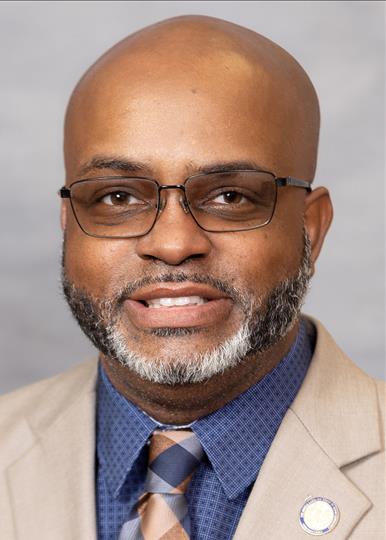
Photo of Rodney Pierce
D North Carolina House · District 27 On the 2026 ballot

Rep. Rodney Pierce

Compare
Total votes
481
all sessions
Attendance
100%
2 missed
Higher than 78% of chamber peers
With party
95%
of cast votes
Near the chamber average
Bipartisan score
3%
crosses aisle rarely
Near the chamber average
Sponsored
320
bills & resolutions
Higher than 89% of chamber peers
Committees
4
assignments
320 bills and resolutions

Sponsored bills

Total
320
Primary
20
Co-sponsor
300
This page
320
matching current filters
Co-sponsor HB 1166
In committee · North Carolina House · Co-sponsor
Reorganize and Fund Rare Disease Advisory Council.

Maddy summaryHB 1166 reorganizes the North Carolina Advisory Council on Rare Diseases by moving it from the University of North Carolina at Chapel Hill to the Department of Health and Human Services. The bill establishes a 19-member council with diverse representation, including physicians, researchers, patients, caregivers, and industry representatives, who will advise state officials on research, diagnosis, treatment, and education for rare diseases. It also provides funding for the council's operating expenses and sets rules for membership terms, meetings, and the selection of a chair.

In committee May 12, 2026 1 co-sponsor
Co-sponsor HB 433
Signed into law · North Carolina House · Co-sponsor
State Fiscal Recovery Fund/NC Pandemic Recovery Office Revisions.

Maddy summaryHouse Bill 433 allows licensed registered nurses (RNs) to serve as school nurses in North Carolina public schools. The bill prohibits the State Board of Education from requiring a four-year degree for school nurse employment. It specifies that RNs with at least two years of experience in a hospital or health clinic can work as school nurses without needing additional certifications or licenses. These qualified registered nurses will be paid under the certified school nurse pay scale.

Signed into law May 12, 2026 1 co-sponsor
Co-sponsor HB 1195
In committee · North Carolina House · Co-sponsor
MOMnibus 3.5.

Maddy summaryThis bill establishes a grant program within the North Carolina Department of Health and Human Services to fund community organizations focused on improving maternal health outcomes for Black women. The program provides financial awards ranging from $10,000 to $50,000 to support initiatives that address social determinants of health, such as housing, transportation, nutrition, and access to childcare. Eligible applicants must be community-based groups led by Black women that offer evidence-based services including doula support, mental health care, and culturally respectful training for health workers. The legislation also requires the department to provide technical assistance to grant recipients and submit annual reports on fund usage and program effectiveness.

In committee May 5, 2026 1 co-sponsor
Co-sponsor HB 1197
In committee · North Carolina House · Co-sponsor
Revise NC Teaching Fellows Program.

Maddy summaryHB 1197 updates the North Carolina Teaching Fellows Program by increasing forgivable loan amounts for future students and establishing stricter criteria for selecting partner teacher training institutions. Under the new rules, eligible students can receive up to $10,000 per academic year, while the program will only partner with schools that meet specific performance standards, such as high licensure pass rates and alignment with the Science of Reading. Additionally, the bill mandates a study by the Friday Institute to investigate why some participants choose to repay their loans in cash rather than fulfilling their service obligations. These changes are set to take effect for the 2026-2027 academic year, with previous program revisions applied retroactively to current participants.

In committee May 5, 2026 1 co-sponsor
Primary HB 1184
In committee · North Carolina House · Lead sponsor
Voucher School Transparency Act.

Maddy summaryHB 1184, known as the Voucher School Transparency Act, requires nonpublic schools in North Carolina that receive Opportunity Scholarship funds to submit detailed annual reports to the State Board of Education. These schools must provide financial documentation, standardized test scores for students in grades three and higher, and specific data on graduation rates, teacher licensure, and student demographics. The bill also mandates that schools with at least 70 scholarship recipients or $100,000 in funding undergo annual financial audits, while smaller schools are audited every three years. Additionally, the legislation requires these institutions to conduct criminal background checks for staff, maintain physical facilities within the state, and share safety plans with local law enforcement.

In committee May 5, 2026 0 co-sponsors
Primary HB 1209
In committee · North Carolina House · Lead sponsor
Strengthen Education by Embedded New Teacher Support.

Maddy summaryHB 1209 appropriates $1 million in recurring state funds starting in the 2026-2027 fiscal year to expand the North Carolina New Teacher Support Program. The money is directed to the University of North Carolina Board of Governors to provide embedded instructional coaching and professional development for beginning teachers within local school districts. Key provisions include partnering with teacher training programs to extend support after graduation, aligning coaching with evidence-based practices, and prioritizing high-need rural areas to help retain new educators. This legislation aims to create a more coherent system for teacher development by connecting pre-service training with ongoing in-district support.

In committee May 5, 2026 0 co-sponsors
Co-sponsor HB 1172
In committee · North Carolina House · Co-sponsor
The Ciji Graham Act.

Maddy summaryHB 1172, known as the Ciji Graham Act, establishes a High-Risk Pregnancy Care Navigation Program in North Carolina to assist patients with high-risk pregnancies by providing licensed nurse consultants who help coordinate care and address access barriers. The bill also creates a statewide pregnancy consultation hotline for healthcare providers and community organizations to offer real-time clinical guidance and referrals, alongside a centralized digital hub containing clinical guidelines and provider directories. Funded through the state's General Fund starting in the 2026-2027 fiscal year, these measures aim to improve maternal health outcomes and reduce disparities by ensuring timely access to specialized care and resources.

In committee May 4, 2026 1 co-sponsor
Co-sponsor HB 1179
In committee · North Carolina House · Co-sponsor
Senior Property Tax Relief Modernization Act.

Maddy summaryHB 1179 modifies North Carolina's property tax relief programs to help seniors and disabled homeowners by allowing them to combine two existing benefits and removing a strict income cutoff that previously denied aid to those just above the limit. The bill introduces a gradual phaseout for the elderly homestead exclusion, reducing benefits by 3.33% for every 1% of income earned above 55% of the state median, while also permitting eligible owners to stack this relief with the circuit breaker program. Additionally, the legislation clarifies rules for seniors living in shared or inherited properties to ensure they can receive full relief if no other non-spouse owner resides there. To offset the increased costs for local governments, the bill requires the state to reimburse counties for revenue losses and provides funding to support more frequent property tax reappraisals.

In committee May 4, 2026 1 co-sponsor
Co-sponsor HB 1139
In committee · North Carolina House · Co-sponsor
Learning and Enrichment in Afterschool Programs.

Maddy summaryThis bill creates a new advisory council and grant program in North Carolina to support high-quality after-school activities for children and youth up to age 18. The legislation establishes a dedicated fund that will receive state appropriations, federal money, private donations, and any future legal settlements from social media companies, with the Department of Public Instruction managing the distribution of these funds. Eligible organizations, such as community groups and schools, can apply for grants to run structured programs that focus on positive youth development, provided they serve rural or underserved areas and meet specific quality standards. The program includes a two-year limit on individual grants, requires regular evaluation of participant outcomes, and allows for renewal based on performance, while ensuring that new funding supplements rather than replaces existing resources.

In committee May 4, 2026 1 co-sponsor
Co-sponsor HB 1153
In committee · North Carolina House · Co-sponsor
Budgeting Accountability and Transparency.

Maddy summaryHB 1153 aims to increase transparency in North Carolina's state budget process by requiring more public involvement before final budget votes. The bill mandates that the General Assembly hold at least one public hearing and three committee meetings while also providing a week for citizens to submit comments online. Additionally, it makes requests for funding from state agencies and legislators public records once the budget is enacted, though it preserves legal protections for attorney-client communications. To support these new requirements, the legislation allocates $250,000 annually to the Legislative Services Commission for maintaining the online comment portal and covering hearing expenses.

In committee May 4, 2026 1 co-sponsor
Showing 21 to 30 of 320 bills
Previous 1 … 2 3 4 … 32 Next