

Maddy summaryHB 231 establishes North Carolina's participation in the Social Work Interstate Licensure Compact, allowing licensed social workers from participating states to practice across state lines without obtaining separate licenses in each state. The bill directly affects licensed social workers seeking to provide services in multiple states, particularly those serving military families or addressing workforce shortages. Key provisions include mutual recognition of licenses among member states, accountability for social workers practicing where clients are located, and streamlined processes for disciplinary information sharing. This reduces duplicate licensing requirements while maintaining state authority to protect public health and safety through existing licensure systems.
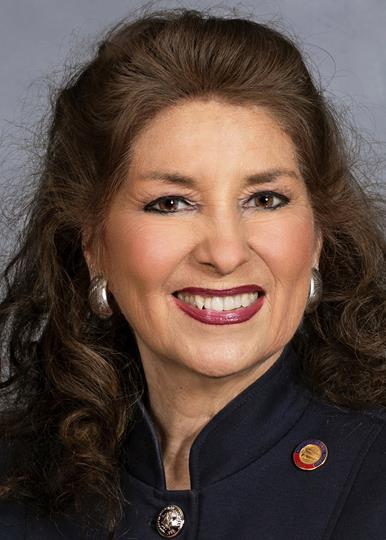
Rep. Donna White
Sponsored bills
Maddy summaryHB 150 allows certain educational organizations to quickly obtain unused federal equipment and property for educational use. It specifically exempts qualifying nonprofits (including 501(c)(3) groups focused on education) from standard state transfer rules when acquiring such items directly from federal agencies. The bill removes barriers in existing law that previously required these organizations to follow lengthy processes for federal surplus materials. This change applies only to property used for educational purposes, not for resale or other commercial activities. The bill does not alter federal acquisition rules but streamlines the state-level process for eligible schools and nonprofits.
Maddy summaryHB 569 requires PFAS manufacturers (those who produce PFAS compounds like GenX) to pay public water systems for cleaning up PFAS contamination in drinking water when levels exceed EPA safety limits. It allows the Environmental Quality Secretary to order polluters to cover actual cleanup costs, including technology to reduce PFAS levels, and applies retroactively to expenses since 2017. The bill appropriates $300,000 for implementation and mandates annual reports on fund use, with water systems refunding ratepayers when manufacturers cover costs. This directly affects water systems burdened by PFAS cleanup, PFAS manufacturers deemed responsible, and ratepayers who may see reduced future water rates.
Maddy summaryHouse Bill 754 aims to protect disabled and older adults from financial exploitation. It empowers financial institutions to take action when they reasonably suspect such exploitation by updating relevant laws. Financial institutions are required to report suspected cases to law enforcement and social services, and they can contact designated "trusted contacts." The bill also allows these institutions to temporarily delay or refuse suspicious transactions for up to 30 days and grants them immunity from liability for these good-faith actions.
Maddy summaryHouse Bill 597 designates the osprey (Pandion haliaetus) as the official state raptor of North Carolina. This bill amends Chapter 145 of the General Statutes to formally adopt the osprey as a state symbol.
Maddy summaryHouse Joint Resolution 379 is an application from the State of North Carolina to the U.S. Congress. It requests that Congress call a "convention of the states" as outlined in Article V of the U.S. Constitution. The purpose of this convention would be to propose new amendments to the Constitution. These amendments would focus on imposing fiscal restraints on the federal government, limiting its power, and setting term limits for federal officials and members of Congress. This application is considered ongoing until two-thirds of the states submit similar requests.
Maddy summaryHouse Bill 818 aims to standardize access to new birth certificates for adopted individuals, making the process similar to those who are not adopted. It directs the State Registrar to prepare a new birth certificate for adoptees that lists their adoptive parents and contains no reference to the adoption itself. The bill specifies that certified copies of these new birth certificates can be provided to the adoptee, their children, adoptive parents, and other immediate adoptive family members. It also ensures original birth certificates and adoption records remain sealed, while counties receive copies of the new certificate to replace the original. This act is intended to apply to new birth certificates for persons adopted before, on, or after October 1, 2025.
Maddy summaryHouse Bill 214, known as the "Faithful Article V Commissioner Act," creates rules for North Carolina's participation in a convention for proposing amendments to the U.S. Constitution. It outlines how commissioners and alternates are to be selected by the General Assembly, their qualifications, and their ethical obligations. The bill strictly defines the scope of authority for these commissioners, limiting them to the specific issues outlined in their commission and the convention's call. Commissioners must take an oath to abide by these limits, and exceeding their defined authority is deemed a Class I felony.
Maddy summaryHouse Bill 841 requires the North Carolina Collaboratory to conduct a comprehensive statewide study on shellfish aquaculture leasing regulations. This study will evaluate existing rules, current bans (moratoriums) on new leases, and best practices from other states. It aims to balance economic development, environmental protection, and public access to coastal waters, considering impacts on fishing, boating, property values, and the environment. The Collaboratory must consult with various stakeholders, including shellfish growers, fishermen, and property owners, and will submit an interim report by December 2025 and a final report with recommendations by May 2026.
Maddy summaryThis bill, titled Reagan's Law, aims to improve access to prosthetic and orthotic devices for North Carolinians with limb loss or limb difference by requiring most health benefit plans to cover these devices and related care. Key provisions mandate that plans cover all materials, instruction, and repairs for prosthetics and orthotics, allow for multiple devices based on medical needs, and prohibit denying claims for these devices that would otherwise be covered for non-disabled individuals seeking similar medical treatment. The legislation also requires insurers to provide coverage for device replacements when medically necessary due to changes in the insured's condition or device damage, without limiting coverage based on the device's age or useful lifetime. Additionally, the bill repeals state requirements for health plans to cover emergency care that duplicates federal law, aligning state regulations with federal standards.