

Maddy summaryHB 230 creates a new felony offense for individuals who commit a domestic violence misdemeanor (under G.S. 14-32.5) and have two or more prior domestic violence convictions within the past 15 years. The first conviction under this law is a Class H felony, with penalties increasing for subsequent offenses (up to Class C felony). The bill also expands police authority to make warrantless arrests for domestic violence misdemeanors when officers have probable cause to believe the crime occurred. This directly affects repeat domestic violence offenders in North Carolina, with the law taking effect December 1, 2025.
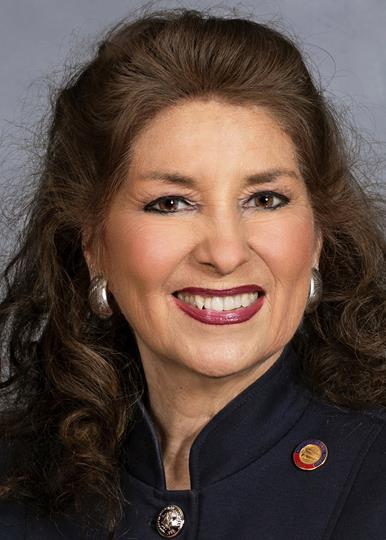
Rep. Donna White
Sponsored bills
Maddy summaryHB 229 adjusts North Carolina's Medicaid reimbursement rates for ambulatory surgical centers (ASCs), requiring payments to be at least 95% of the current Medicare Ambulatory Surgical Centers fee schedule. This change directly affects ASCs by increasing their Medicaid payments, with the state appropriating $10.476 million annually from the General Fund to cover the cost and match $19.135 million in federal funds each year for the 2025-2027 fiscal biennium. The bill mandates these rate adjustments to take effect on July 1, 2025, ensuring ASCs receive consistent reimbursement aligned with Medicare rates. The legislation focuses solely on establishing the new payment structure and funding mechanism, without altering eligibility or services.
Maddy summaryHB 235 targets fraudulent real estate deeds and property transfers in North Carolina. It creates a new civil process allowing property owners to file lawsuits (without lawyers) to have false recordings removed from public records, with courts able to issue emergency orders within 72 hours. The bill also requires tax certification from county tax collectors before recording deeds in 30 specific counties (like Buncombe and Wake), unless handled by a licensed attorney. Violating these rules can lead to criminal charges, with penalties ranging from Class G (under $100k property) to Class C felonies (over $100k).
Maddy summaryHJR 157 is a procedural resolution inviting Governor Josh Stein to address a joint session of the North Carolina General Assembly on March 12, 2025. It directs a committee of five House members and five Senate members to extend the invitation and specifies that the governor's cabinet, Council of State members, and state judges may attend. This resolution does not create new policy or affect any laws; it solely schedules a ceremonial address. The invitation is effective upon ratification, as noted in the resolution's text.
Maddy summaryHB 130 establishes a $475 million program to provide financial assistance to North Carolina farmers who suffered crop losses from natural disasters in 2024. It directly affects farmers in counties designated by the USDA as disaster areas, requiring verified losses of eligible agricultural commodities (like crops, livestock, or specialty plants) planted but not harvested by January 1, 2024. The program uses county and state yield/price averages to calculate payments, mandates submission of USDA Form 578 or equivalent documentation within 30 days, and allocates funds from state reserves (Stabilization, IT, and Economic Development) to cover verified losses. Farmers must provide documentation for verification, and the Department of Agriculture may audit claims to ensure proper use of funds, with refunds required for inaccurate information.
Maddy summaryHB 197 appropriates $25 million annually for the 2025-2026 and 2026-2027 fiscal years to North Carolina's local health departments (LHDs) for communicable disease programs. The funding aims to address a 70% staff shortage in LHDs by enabling them to retain existing staff, hire additional public health professionals (including nurses), and expand essential services. Funds are allocated with half distributed equally among LHDs based on the number of counties served, and half distributed based on the percentage of state population each LHD serves. The bill becomes effective July 1, 2025, to support North Carolina's response to diseases like avian flu and mpox.
Maddy summaryHB 196 appropriates $1.5 million from the General Fund to the North Carolina Museum of Life and Science, Inc., for a new biotechnology exhibit and laboratory. The funds will showcase North Carolina's biotech achievements and promote STEM career interest, directly benefiting the museum and students in the state. The bill creates a specific funding mechanism for this educational project, effective July 1, 2025. As a funding allocation, it does not alter laws or regulations.
Maddy summaryHB 177 requires North Carolina's State Human Resources Commission (SHRC) to review job requirements across state agencies and identify positions where a four-year college degree is unnecessary. The bill directs the SHRC to replace degree requirements with alternative qualifications like military service, apprenticeships, or trade school training where appropriate, and to remove unnecessary degree language from job postings. This policy change directly affects state job applicants who may qualify through non-degree pathways. The SHRC must report annually starting October 2025 on progress toward reducing these barriers.
Maddy summaryHB 159 establishes a $75 million grant program within North Carolina's Department of Transportation to improve subdivision streets that don't meet state highway standards and aren't maintained by local governments. It directly affects counties and municipalities with these "orphan roads," providing funds for repairs up to $250,000 per subdivision, requiring a 25% local match (25 cents for every dollar awarded). Once roads meet standards, ownership transfers to the state or local government for ongoing maintenance. The program runs from July 2025 through June 2030, with unspent funds rolling over to the Highway Fund.
Maddy summaryHB 109 reclassifies strangulation-related assaults in North Carolina by increasing penalties based on the severity of injury. It creates three felony tiers: a Class F felony for assaults causing serious bodily injury (like permanent disfigurement or coma), a Class H G felony for strangulation causing physical injury, and a Class H felony for any strangulation assault. The bill defines "serious bodily injury" and "strangulation" to clarify legal standards for prosecutors and courts. It applies to offenses committed on or after June 1, 2025, directly affecting individuals convicted of strangulation assaults.