

Maddy summaryHB 514 defines the scope of practice for Advanced Practice Registered Nurses (APRNs) in North Carolina, including nurse practitioners (NPs), certified nurse midwives (CNMs), certified registered nurse anesthetists (CRNAs), and clinical nurse specialists (CNSs). The bill explicitly outlines the specific responsibilities for each role - such as CNMs managing reproductive health care, NPs diagnosing and treating illnesses, and CRNAs administering anesthesia - removing ambiguity in current law. It directly affects over 20,000 APRNs in North Carolina who currently face restrictions due to undefined practice parameters. The legislation aims to align North Carolina with 36 other states that have clarified APRN authority without compromising patient safety, as supported by research cited in the bill. This statutory definition is intended to improve healthcare access and reduce costs by enabling APRNs to practice to the full extent of their training.
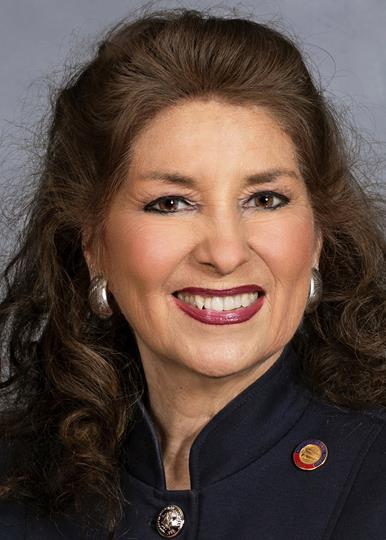
Rep. Donna White
Sponsored bills
Maddy summaryHB 511 establishes new salary levels for full-time magistrates in North Carolina, directly affecting these court officers who handle minor cases like traffic violations and small claims. The bill appropriates $11.5 million annually from the General Fund for 2025-2027 to fund these increases, with specific salary steps outlined in the law. Magistrates will receive raises every two years for the first three experience levels and every four years for higher levels, starting at $47,228 for new hires and reaching $90,498 for the highest step. The changes take effect July 1, 2025, and apply to magistrates working at least 40 hours weekly.
Maddy summaryHB 498 creates a retirement credit for North Carolina teachers who served in the military. It allows veterans to count up to four years of active duty service toward their state retirement system, provided they weren’t dishonorably discharged, served before becoming a teacher, and meet licensure requirements. The bill modifies the retirement system to include this credit, requiring employers to pay a lump sum covering the retirement system’s increased liability for the credited service. This directly affects military veterans transitioning to teaching careers in North Carolina, making their prior service count toward retirement benefits.
Maddy summaryHB 466 creates a special license plate for North Carolina vehicle owners commemorating the 1776 Halifax Resolves, the first official colonial resolution supporting independence. The plate features a blue background with a feather pen logo and "Birthplace of American Independence" text, with a $30 annual fee added to registration. Proceeds are split: $10 goes to the Special Registration Plate Account and $20 to the Collegiate and Cultural Attraction Plate Account, with the latter's funds for this plate specifically directed to Halifax County for 250th-anniversary events. This is a commemorative plate option, not a policy change affecting laws or regulations.
Maddy summaryHB 47, the Disaster Recovery Act of 2025 - Part I, allocates $524 million from the Helene Fund to support recovery efforts in North Carolina counties impacted by Hurricane Helene. The bill directs funds to specific programs including home reconstruction ($120 million), agricultural crop loss assistance ($200 million), road and bridge repairs ($100 million), small business infrastructure grants ($55 million), debris removal ($20 million), fire department equipment ($10 million), and tourism promotion ($4 million). These resources directly assist residents, farmers, local governments, and businesses in designated hurricane-affected counties by addressing immediate rebuilding needs and supporting economic recovery. The bill requires programs to align with federal disaster recovery guidelines to maximize potential federal reimbursement, with reporting requirements for certain initiatives.
Maddy summaryHB 184 allows small North Carolina sawmills (those milling under 1 million board feet annually) to sell ungraded lumber directly to homeowners for residential construction. The bill amends building codes to permit this ungraded "dimension lumber" in one- and two-family homes and certain small structures, provided mills meet specific requirements. These include operators holding state-approved lumber grading training certifications, marking lumber with detailed specifications (species, mill ID, PS20 compliance), and providing purchaser certificates. Code officials must review construction for safety compliance (excluding grade-stamp requirements) and are protected from liability for structural issues related to ungraded lumber use. The law aims to support local sawmills while maintaining safety standards through defined labeling, training, and oversight.
Maddy summaryHB 186, the "Stars and Stripes Commitment Act," requires all North Carolina public schools (including charter, regional, and laboratory schools) to schedule the daily recitation of the Pledge of Allegiance within one hour of the start of the instructional day. It also mandates that schools display U.S. and North Carolina flags in classrooms when available and provide age-appropriate instruction about the flag and pledge’s meaning. The bill applies to all school governing bodies and state education board meetings, requiring the pledge to open each meeting. Crucially, it explicitly states the policy does not compel anyone to stand, salute, or recite the pledge. The law takes effect for the 2025-2026 school year.
Maddy summaryHB 449 increases penalties for computer solicitation of minors, making second offenses or those involving actual meetings Class D felonies (up from Class H). It requires sex offender registration petitions to be filed with courts and placed on criminal dockets for timely review. The bill also creates new offenses: "habitual indecent exposure" (Class F felony for two prior convictions) and "aggravated habitual indecent exposure" (Class E felony), both mandating sex offender registration. These changes directly affect individuals convicted of repeated indecent exposure or online solicitation of minors in North Carolina.
Maddy summaryHB 430 would raise North Carolina's legal sales age for all tobacco and nicotine products (including e-cigarettes and vaping devices) to 21. It requires retailers to obtain a tobacco sales permit and verify customers' ages using acceptable ID. The bill directly affects tobacco retailers (who must get permits) and youth under 21 (who would be barred from purchasing these products). Key provisions include defining "vapor products" and establishing penalties for violations, such as fines up to $1,000 for repeat offenses.
Maddy summaryHB 453 increases Medicaid reimbursement rates for two specific services in North Carolina. It raises the rate for personal care services (e.g., help with daily tasks) to $7.50 per 15-minute increment for beneficiaries in programs like State Plan Personal Care Services and Community Alternatives programs. It also increases private duty nursing rates to $16.25 per 15 minutes for both children under 21 and adults, using state funds to match federal support. The changes, effective July 1, 2025, will directly affect Medicaid beneficiaries receiving these services through approved programs.